
TJ Klune
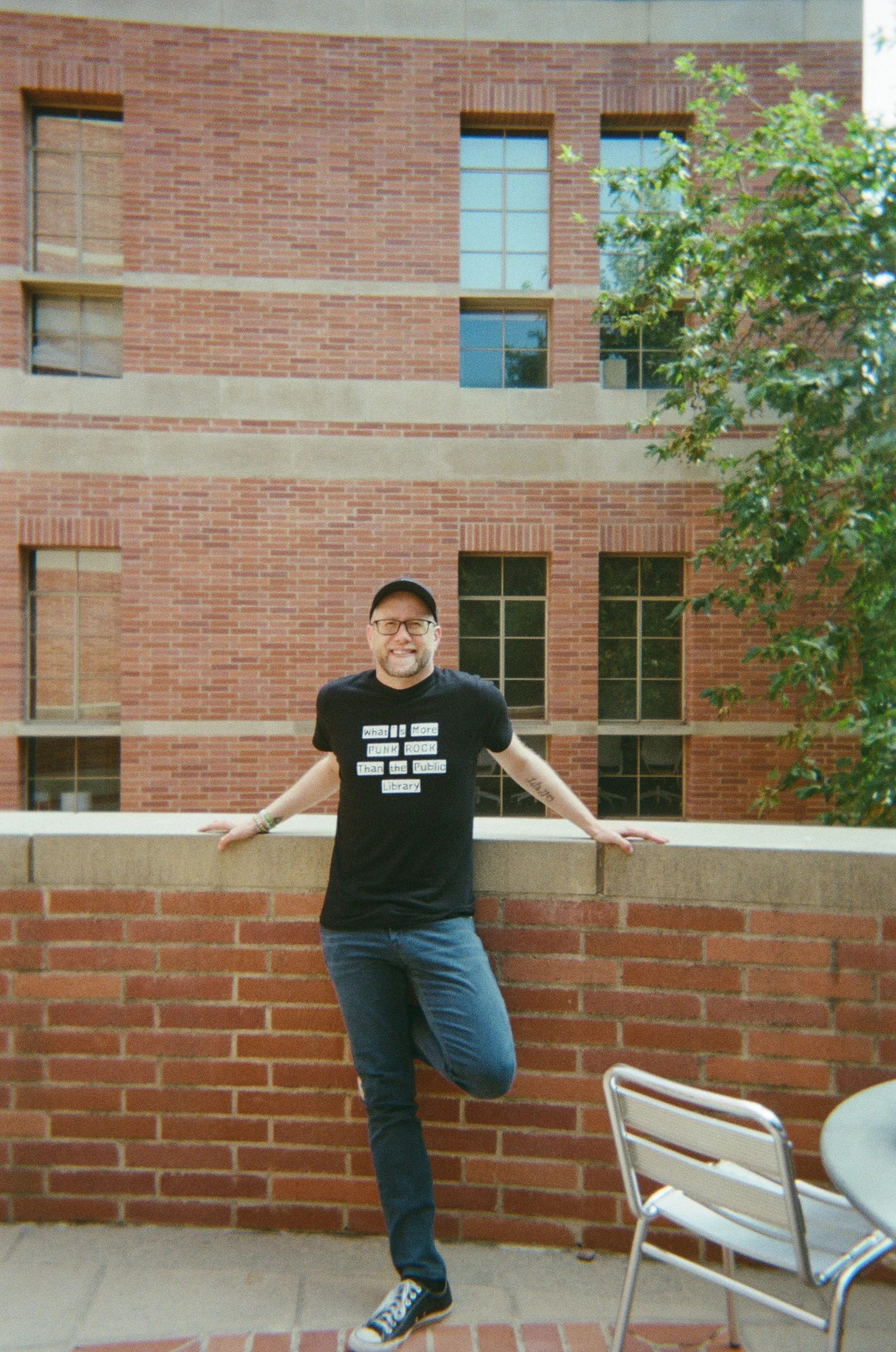
TJ Klune
on We Burned So Bright, queerness in the industry, and looking to the stars
Late last year, Cariann and I had a long talk about bringing l’Odet back for its second life and what that would look like. As it is said again and again, we do this outside of our full-time day jobs because we love it—so when she told me she was game, but I had to start interviewing too, well: color me shocked. The first person I thought of was TJ Klune, the author of cozy fantasy—real world struggles made with soft edges. He’s an outspoken queer man with thoughts on a system that is failing so many, but isn’t afraid to hide from the discomfort it brings him, and to bring voice to the injustices of it. During our chat, both light and heavy, TJ walked me through the navigation of Hollywood, why the concept of found family has created a thread between each universe he creates, and what it means to look to the stars for a little bit of hope. I have to thank Cariann for trusting me with l’Odet and I have to thank TJ both as a reader and as a person who got to sit and speak with him across the table from his genius—all of us who are touched by your thoughts are different because of it. I’m forever in awe of you both. Here’s to my first interview and our first interview with an author. — Kass, 2026 ◇
〰️
Kass Ringo: The first book I actually read of yours was [In the Lives of] Puppets, which I felt like was the perfect introduction.
TJ Klune: I think so, too.
Kass: I haven’t gone far back into the YA. I’ve only read your new adult stuff.
TJ: I’m happy with that. My young adult foray with The Extraordinaries series was an interesting experiment, but I don’t think I’ll ever do that again. I like the adult aspect. And The House in the Cerulean Sea and In the Lives of Puppets, those are books that can be read by anyone.
Kass: Totally! I’ve given out a lot of your books as gifts. Because I’m like, “I think this works for this scenario, I think you should read this, it will help.” So, I have a lot of gratitude for your books and just so much fun with them.
TJ: Thank you for saying so.
Kass: One of the main things I wanted to talk to you about—my favorite [of your work] is the Green Creek series.
TJ: Oh, holy hell, dude! Absolutely.
Kass: While I was researching, I found a quote from you about how you really wanted to republish Green Creek because it has “emotionally devastated a large number of people, so let’s make it even worse.” I just wanted to let you know that it worked. [Laughs]
TJ: [Laughs] I originally started writing the first book in 2014. And the first book came out in 2016. And then over the course of the next four years, I released the remaining three books in that series. I was not expecting the response for those books. Even on the indie published scene, they were a big deal for some reason. They sold a lot of copies! And the thing I found so interesting about it was how people were like “this book hurt me on a molecular level and I want to share it with everybody else so they understand what happens.”
Kass: [Laughs]
TJ: When I do events or anything like that, that series—to this day—mutiple people tell me that series made them cry on public transportation. I don’t know why they choose to listen to that on public transportation, I’m a cry-in-private person. [Laughs]
Kass: Absolutely same.
TJ: It’s been weird. I never expected that series to do what it has. And then to get them republished. Tor was like, “yes, we want to do all of your back catalog.” And I said no, not all of it! You can have some of it. And we started with the Green Creek series. That fandom was rabid before, and now it’s just more rabid than it ever was. It’s hysterical to me that those books are the ones that really got me my name on the map before The House in the Cerulean Sea came out.
Kass: Yeah, I feel like when I was doing the research, I didn’t realize that was the case with that series. There was a big surge about The Extraordinaries, then Cerulean Sea, then I feel like there was that middle. But knowing that the [Green Creek] series did that—like, I get it. I completely get it. I devoured them. And when you’re reading books like that, you’re like, I don’t know why I’m doing this to myself. I should probably take a beat.
TJ: Exactly! [Laughs] You know what’s so funny about that? I really don’t like books that do that to me. That being said, every year, I reread the first book that ever made me cry, so I can make sure I’m still human. And that is Where the Red Fern Grows by Wilson Rawls. Do you know that book?
Kass: I’ve never read it!
TJ: Wilson Rawls only wrote two books, one of which was Where the Red Fern Grows. It is often considered, at least by me but I think a large group of people, the saddest dog book ever written.
Kass: Okay, I probably won’t read it because it’s about a dog. [Laughs]
TJ: It was written in the 1940s/1950s. It’s like Old Yeller, it’s up there with the preeminent dog book of pre-2000s. But guess what, it’s super sad! I reread that book once a year just to make sure it still makes me cry, and it still does. Every year.
Kass: I’ve heard that you use doesthedogdie.com, which I also use.
TJ: All the time! The reason is because—have you seen the movie I Am Legend with Will Smith?
Kass: Unfortunately, yeah.
TJ: You know what happens in that movie! I did not know that going in.
Kass: I can see it in my head right now.
TJ: And it is horrific. Here, let me show you this. This is my baby, my honey. [Shows Kass a photo of his dog] I can’t watch movies where stuff like that happens, I can’t play video games when stuff like that happens. It’s just too much for me! Doesthedogdie.com is the greatest website that’s ever existed.
Kass: So can you tell me if the dog dies in [Where the Red Fern Grows]?
TJ: Yes, both of them do. The book is about a boy named Billy, he lives in the Ozarks and he’s raising two red coonhounds. The book is just about them growing up and it’s a coming of age story. One dog dies protecting Billy from a mountain lion attack and the second dog dies of a broken heart after the first dog dies.
Kass: Oh my god.
TJ: Before they leave the Ozarks to go out into the world, they go back to where the dogs are buried and there’s a red fern growing up from where they were buried. It’s remarkable. It’s a wonderful piece of fiction, but it’s the only thing that gets me going in terms of waterworks. Because of that, anytime something happens with animals, I’m like are we sure we had to do this? I get you’re trying to make a point, but… It sucks because I love horror. It’s my favorite genre.
Kass: Same.
TJ: A lot of people like to do stuff to animals in horror books and things like that. Nah.
Kass: I have a dog as well, Graham. He just turned eleven.
TJ: Mine turns eleven in October!
Kass: So, I [also] can’t watch anything like that. Friends will text me and be like this movie is amazing, you probably shouldn’t watch it because something happens to a dog in it. I’m like, okay, perfect! Thanks for letting me know.
TJ: I have a book coming out in January 2027 from the point of view of a dog, and the opening line of that book is, “I promise the dog does not die in this.” Because I will never do that to anyone, ever. Ever.
Kass: Will there still be waterworks, though?
TJ: Oh yeah. Well, it’s me! Come on! It’s the most self-indulgent thing I’ve written because, basically, I wrote it about my dog. What’s really cool is we’re putting together how it’s going to look on the inside, and in the afterword that I wrote—that’s basically an ode to my dog—I have his original adoption forms and the blurb about him. I have the letter that the animal control officer who found him nearly starved to death in the woods wrote about how she hopes he finds a good home. We’re printing that in the back of the book so you can see his journey to where he is now. He’s in my author photos in my books! He’s so famous and he doesn’t even know it.I’m so excited about it.
Kass: That’s incredible. I’m so excited. Very last thing on Green Creek—we got a little far away but it’s okay. I have to just call out Elizabeth Bennett. She is… Well, I didn’t want to dive too far into found family, because I know you speak on that a lot. I’m not super close to [much of] my family—not in an estrangement type of way, I’m just different from them so we’re not close. I don’t think I realized how important my found family was or even recognized them as found family until my mid-to-late twenties.
TJ: That’s a crazy thing to realize. That the people you consider your family aren’t blood. Because that’s how mine is. Aside from my sister, my nephew, and my brother—that’s it in terms of our family blood—everyone else we consider our family isn’t related to us by blood.
Kass: And when I think back on Elizabeth Bennett, it’s kinda like she was this emotional lighthouse.
TJ: She was the anchor! Of the entire series.
Kass: One hundred percent. I know I’m constantly looking for that emotional anchor, that female figure in my life. I mean, my mom and I talk—we’re close-ish. But we just don’t have that foundation in our relationship. Seeing that in Elizabeth and continuously looking for it in other people—that may not necessarily be healthy—but finding it in the people I do have… is that where that came from for you?
TJ: It is! Because I have not spoken to my mother since November of 2012. That was the last time I saw her. My mother is a bipolar alcoholic addict.
Kass: Same.
TJ: She did not protect me as a child. She did not protect my sister as a child. My father died when I was five and she remarried to the man who would adopt us and give us the last name Klune. Him and his entire family were homophobes, racists, mysoginists—hardcore. Like, the worst of the worst.
Kass: And this was in Oregon?
TJ: Yep, all in Oregon. So, I didn’t get to have that maternal…anything. I didn’t! I want to say this to be fair—my sister got it worse from our mother. I got it worse from our stepdad. We were dirt poor, we lived below the poverty line in rural Oregon. When poverty becomes part of the identity of who you are, there’s a stink to it. And me, I knew I was gay by the time I was ten—even if I didn’t know what that meant. I knew I had undiagnosed ADHD because they refused to take me to get tested. So, I knew I was different. But when you’re a kid, all you think about is how different you are than everybody else. You’re othering yourself. You can’t find ways to relate to your peers because you don’t think anybody is like you. To go home and to realize that I didn’t have a safe place there either… it has informed my writing. I think that there are times when I have written maternal figures to be monsters, but there are times when I write a book like Green Creek and I needed that emotional anchor and it had to be that feminine energy. If I had the balls, if I could go back in time, I think the biggest mistake I ever made was not making Elizabeth Bennett the alpha instead of Thomas Bennett. And I would not have killed her off. It still would have been Thomas in the first book and everything like that, but I think that is one of my biggest regrets when it came to my writing because it would have made sense. Those books are all filled with people with daddy issues making terrible decisions about anything and everything.
Kass: [Laughs]
TJ: So I get it. It’s kinda par for the course. But Elizabeth Bennett is the focal point and the anchor of those books, even though there is no book that follows her character explicitly.
Kass: You feel her in every page of it.
TJ: Right! And you can kinda say the same thing with Thomas even though he is, in the first book, an infallible figure and in the second book we see from a different perspective and see he’s made some horrendous mistakes and decisions. Some of them have been quite detrimental to some of the other characters. But Elizabeth was always this constant throughout the entire thing. When you write things like that, at least for me, it’s almost like wish fulfillment. Like, I wish I could have had that. You know when you see people online and they have, like, big, huge extended families and everyone is cheering and everything like that? I never had that. I’ve never known what that’s like. So, when I write something like the Green Creek series, it’s me imagining what that would be like to have that kind of support. I had to get [the support] I have now by dragging myself through broken glass to be able to get here. I can’t imagine how different things would be! I wouldn’t have parental issues, that’s for damn sure, in almost every single one of my books if my parents were totally chill and normal people. [Laughs]
Kass: [Laughs] I think it’s incredible that you were able to write her the way that you did, though. Even if it was wish fulfillment—to me, the depth you gave her felt… known.
TJ: Right! And she almost felt like this tragic figure, like a Greek kind of tragic figure.
Kass: Oh my god, yeah, I can see that.
TJ: At the end of the day, through her own grace, through her own power, through the love and anger that she had towards all these different things that are happening in this world—she was able to, I don’t want to say move past the grief, but she was able to understand the grief and understand that it effects everybody differently. That while her husband is gone, she still has children, she still has all these other people in her family that will now look to her. In the Greek Creek series, I wanted to write about the fall of kings and queens. That’s what the whole series is about to me. The fact that, by the end of this series, there’s no such thing as the Bennett clan being the all-powerful—they’ve basically stepped aside because for so many years they’ve done it a certain way. And let’s be honest, it wasn’t working out too great. I like the idea of the whole Bennett family—Thomas and his whole family behind him—that it’s time for somebody else to have their turn.
Kass: That’s such cool insight to have looking back on reading it.
TJ: Like I said, I started that first book twelve years ago and it’s crazy to me that, in this day and age in the year of our Lord 2026, we can still talk about the Green Creek series. That’s wild to me.
Kass: I think we’ll be talking about the Green Creek series for a long time. [Laughs]
TJ: Two of the biggest questions I get: will there ever be another book in that series? No. Because I would have to put them through more crap. I don’t want to do that! Everything is perfect where it is. And two: will there ever be adaptations? I hope so! One day. But to be quite honest, I highly doubt it because a) it would have to be big budget, b) it would have to be a large cast of characters, and the killer is that c) it would have to be queer. Almost everyone in the story is queer. And they will never do that. What I’ve learned about Hollywood, in general, is “what about middle America? What about the bible belt? What do they think? Will they watch?” It is what it is. The last offer I had on the Greek Creek series was that they wanted to take all four books and make it into two 90-minute films. [Laughs]
Kass: There’s no way!
TJ: If there’s ever going to be an adaptation, this is me throwing it out to the universe: there needs to be ten episodes, each season, four seasons to cover all four books. Forty episodes to tell the entire story.
Kass: I don’t think that’s a lot to ask for!
TJ: I don’t think so either! Come on!
Kass: That was another thing I wanted to talk about, though—you’ve been pretty vocal on social media about the conversations around potentially adapting some of your work. And I appreciate when you post, you know, ‘this is what people are trying to do—cut out the queer stories’, or these really important pieces. And you just announced the Cerulean Sea tv show. How hard was that?
TJ: It was the hardest thing in the world. House on the Cerulean Sea came out in March 2020. In June 2020, it was bought by Disney. 20th Century Fox and Disney wanted to turn it into a ten-episode, live action tv show for Disney+. For three years, they had that. It was under an initial two-year contract, and then they asked for an extra year and I was like okay, just give me your Disney money, I guess. So they did. Then toward the very end of the third year, Bob Iger himself was like, “Nah, I don’t want to do this.” We got the rights back and wanted to give it a little bit of time. Then we started shopping it out. We were told ‘it’s too edgy,’ ‘it’s not edgy enough.’ But the main thing we were told, mostly, was ‘we don’t know how to position the anti-christ, the six-year old anti-christ in the show’ I was like, he’s a child! He’s a kid. He’s a kid who happens to do magical things. Thankfully, we finally met with Warner Brothers. I always wanted it to be animated to begin with—why does everything have to be live action? And it’s traditional animation, it’s not 3D animation. It’s hand-drawn, 2D animation. What’s so cool about working with Warner Brothers is that I got to select the writer. I got to select the artists who are going to be involved. I signed with them a year ago and we’re already this far. In the past year, they’ve gone farther than anybody else. In the Lives of Puppets was with Village Roadshow, even before the book was published, and it was going to be a movie directed by Lana Wachowski, one of the creators of the Matrix. It was going to be produced by Billy Porter and we had the writer of the remake of the Lilo & Stitch movie that made a billion dollars. And we were told no. A big reason we were told no is because Netflix had just put out The Electric State, that movie with Chris Pratt about robots. It was a horrible movie that everybody hated and they were like ‘we don’t wanna do that again now.’ I was like, mine is good! Then it just fell apart. Hollywood is a place where books rarely get adapted. Big budgeted books would rarely get adapted, and then when you add in queerness on top, that’s like third strike and you’re out, man.
Kass: Wow.
And that’s what this book—this tiny little book—is about. It’s about how, no matter what happens, whether you’re rich or poor, whether you are good or evil, in this book everybody’s ending comes at the same time, in the same way.
TJ: But we were told back in 2015/2016, when Love, Simon was made into a movie, ‘look, this will open doors for other queer writers.’ Great, cool. To me, that meant queer men, trans men who are telling stories about queer men to have their own stories. And then Love, Victor came out on Hulu, people said it would open doors. Red, While, & Royal Blue by Casey McQuiston came out, they said it would open doors. Heartstopper by Alice Oseman came out—oh, it’s going to open doors for you. Now we’re at Heated Rivalry, and people are saying ‘it’s going to open doors for you.’ I am a queer man, this is my thing. Now, I know Becky Albertalli and Casey McQuiston personally. They are amazing women. They are amazing queer writers and are such cool people. My issue isn’t necessarily with the gender. My issue is that it seems like queer male creatives are becoming content rather than creatives. If you paid any attention online during the discourse when Heated Rivalry was airing, it was ‘this show is for women! This isn’t for men, this is for us. A woman wrote it.’ Gay men were trying to be critical of the show and were being piled on by straight, white women who felt they had ownership over the show.
Rachel Reid, the author, is represented by my literary agency. My film agent is also her film agent. My film agent, Shawn Daly, was the one who helped broker the Heated Rivalry deal. I’ll be honest—it felt a little bit like, ‘why not me then?’ Why haven’t you done the same thing for me? Again, it comes back down to things like budget… I write very different things than normal romance, and I get that. But to be told over and over again, ‘doors are going to open for you’ when they are writing about people like me… why do I need to have doors open for me when I am the one who is living this experience? It’s very weird. Now, I’ve noticed that there have been a few more queer novels picked up—queer, male romance novels written by women. I am the only queer male author that I know of that has a film deal or a tv show deal. I don’t know any other queer male writers that are having their books adapted.
Kass: That’s insane.
TJ: Adam Silvera, who wrote We Both Die at the End—I remember seeing that years ago he announced he was writing and going to be doing that, but I haven’t heard anything about that recently so I don’t know if that’s still a thing. But I can’t think of another queer male author who is having their books adapted in this space. Of course, I’m not counting Call Me By Your Name. I will count Aristotle and Dante Discover the Secrets of the Universe which was a young adult novel that was adapted some years ago. There are tons of queer male writers out there, but their stories aren’t being adapted. I don’t know why that is. I don’t know why queer men aren’t getting the same level of involvement in adapting their works as women are, writing about queer men.
Kass: In general I want to think that it’s shocking, but it’s almost just… not.
TJ: And I want to say—I think anyone can write any story they want to. If anything, this is probably coming from a place of professional jealousy. But the bigger idea, I’m trying to think about it as a whole, I’m just thinking why aren’t queer men’s work being adapted at the same rate that straight and queer women’s romance is being adapted? Is it because people think romance is just for women? It’s not! I have a very large male readership. I just don't know where the logic comes from that queer men can’t have the same thing that women are getting writing about queer men.
Kass: I’m not trying to brush over any of this, but do they ever try to blame it on the fantasy aspect, or anything like that? Do they say adapting fantasy is harder than a hockey romance?
TJ: I mean, you have to. It’s budget. Again, I think Heated Rivalry was infamously filmed on a very small budget. Let’s say we do Under the Whispering Door—it’s all set in one location, but you would still have all the ghosts, the house and how it has to look, you’d have to have all the different fantasy elements that come into it. And that would increase the budget. Whereas with shows like Heated Rivalry or Love, Simon, Heartstopper—the most money you’re spending is the cast. I really think it does come down to the science fiction/fantasy aspect of it. But let’s say that’s the case. Then why aren’t there queer men who write romcoms, romances getting their books adapted, you know?
Kass: Absolutely, yeah. In an ideal world, if the opportunity opened up for you to choose someone to write, direct, and put out one of your books, do you have a dream for that?
TJ: Spike Jonze. For We Burned So Bright, my book that just came out. Spike Jonze made the best book to film adaptation in Where the Wild Things Are, but he has not directed a movie in like twelve years. I’m the type of stalker where I’ll go to his Wikipedia page every few months to see if there’s anything new. He does a lot of music stuff now and music videos. I would love to be able to work with him.
Kass: That sounds amazing.
TJ: I think he’s one of the coolest directors in the world.
Kass: I’ve also heard that you’re a big A24 fan.
TJ: Oh god, yes! Have you seen the previews for the movie Mother Mary with Anne Hathaway?
Kass: Yeah!
TJ: The guy who directed that, Dave Lowry, also directed one of my favorite movies of all time—The Green Knight with Dev Patel.
Kass: Yes! No one has seen that movie!
TJ: I have! I’ve seen it like 300 times!
Kass: Oh my god, it’s incredible.
TJ: He would be amazing to do something like that. I mean, I’d love to be able to say ‘yes! Why don’t you come and work with me! Let’s do that.’ That would be cool.
Kass: I see Green Creek, again, Green Creek. To picture it as a slow burn, A24-esque horror type vibe—that would just be so cool.
TJ: And then there’d be flashbacks. It would be almost like Lost in a way. Dual timelines going through it.
Kass: But we’ll pivot to We Burned So Bright, what I’ve read about it, alongside found family [as a theme], this is also about leaving home rather than finding one, it seems like.
TJ: Exactly. This book exists because of my editor and because of Lucy Baker Parnassus from The House in the Cerulean Sea. The reason being is because when I was editing Somewhere Beyond the Sea, the sequel, Lucy has a line in it where he says something to the effect of ‘black holes can’t be seen with the naked eye.’ My editor fact checks everything I do, so she was like yep, you’re right. And we got into a bit of back and forth about how crazy space is and blah, blah, blah.
Kass: As it goes. [Laughs]
TJ: As it happens! In a note she wrote at the very end, she goes ‘did you know there’s a one in a trillion chance that a black hole would find its way to the milky way galaxy?’ And of course, to everybody in the world, that would be, like, oh that’s never gonna happen. But to me, it was like there’s a chance?! There’s a chance!
Kass: Same! As you said that, I was like gut to the floor. [Laughs]
TJ: So, I wasn’t expecting to write this book. I wrote this book in three weeks. It’s a short novel—170 pages. You know, it was three weeks, it was very fast. It’s very different, especially if you only know my books from 2020 on. Some people would prefer me to write books like that over and over and over again. And I get it. But that would bore the shit out of me!
Kass: Of course!
TJ: I have ADHD. Boredom and ADHD is something that’s never a good thing. I want to continually challenge myself to become a better writer. I want to challenge myself to do new things and I want to challenge my readers to read new things! We Burned So Bright is a short novel about the end of the world following two 70-year-old men and it exists because of my editor and because I have questions about humans. About humanity. About why all of us feel like, especially now, everything is chaos all the time, every single day, no matter what. And it’s felt that way since—some people will say 2020. Some people will say it was 2015 when Trump came into office. Some people will go back and say it’s 9/11. Some people will go further and say it was Columbine. Will go back even further and say the HIV and AIDS crisis. You know? When have we not lived in a world filled with chaos? The reason that it feels more chaotic now is because of our phones! We can doomscroll until we have given ourselves terminal depression. And this is such a tangent, I apologize.
Kass: No, please!
TJ: I don’t think that we were ever supposed to have as much information thrown at us as we do now. I don’t think we have evolved to the point where that is something we can actually handle. I wanted to explore why people break. The reason being is because of how many people I saw break during the pandemic.
Kass: I’m one of them.
TJ: But since you have, maybe not repaired yourself, but you have since laid a foundation on which you can stand. But there are many people who haven’t recovered from even that. There are many people who have broken so completely now that they are the type who were saying COVID lockdowns were a government conspiracy. They were the ones saying that vaccines were filled with whatever, you know, blah, blah, blah. These were the people eating ivermectin and horse paste during COVID.
Kass: Oh, I didn’t break then. [Laughs]
TJ: Yeah, when you said that I was like, not the way I mean it! [Laughs] Why is it that we as a society allowed, or I guess, accepted the fact that a million people died in the pandemic and we’ve just moved on? As we record this now, the president of the United States was apparently almost assassinated like a week ago. Again. And we’re going to not be talking about that next week. We’re going to move on from that. I remember when Columbine happened in 1999, I was seventeen years old and that was all anybody talked about for months and months and years. When 9/11 happened and the advent of the 24/7 newscycle, that’s all anyone talked about for years. Now when something like Sandy Hook or something like Las Vegas or something like the queer bar in Florida happens, we kinda say, “Holy shit what is going on in this world, god, America sucks,’ and then the next week we’re already onto the next thing. We don’t even register mass shootings when they happen anymore. It’s just something that we do. And I don’t know when that became the normal and why.
Kass: I’m from Vegas and I remember feeling like we weren’t talking about it for long enough.
TJ: They never figured out why that guy did the thing he did, and we’ve just kind of moved on from it.
Kass: And I think, for me personally, I feel like my generation of people and friends, now we go to places and look for the nearest exit.
TJ: Or schools that have metal detectors to be able to walk into class.
Kass: There’s like this back-of-the-brain thing toward some of what we’ve all experienced now, but again, we move on from it so quickly because we’re fed the next thing on our phone. I mean, we can all sit on Instagram and see a video from the attempted assassination and then scroll down and there’s a Mother Mary review.
TJ: You know what’s so fascinating is… I often say that I don’t like people. I like humans, I like humanity. The idea of humanity because humanity gave us music and books and art and all of that. And I think about all the terrible things that people do. But then I think about all the moments of beauty and grace. The biggest one recently was the Artemis II mission. I’ve never cried over space that much in my entire life! Except every video I could find on these astronauts. But that felt like we were all having wonder for the first time in a very long time. Yes, there were the douchebags who would comment ‘oh this isn’t real, space is fake,’ but at the same time, we were all looking up for the first time in a very long time and that’s so cool that we got to do that. Then it came back down and we’re back in reality again. I still watch all the interviews that these astronauts are doing and I just think how wonderful is it that even in the worst of times that we get to have hope like that? That is what’s at the heart of We Burned So Bright.
I don’t lie to you in this book. From the very first page you know that the world will end by the time you reach the last page. Why I did that was because I wanted you to sit with that idea, get used to that idea, to understand that no matter what, there’s not gonna be a magical fix. You can almost ignore that part of it because the ending doesn’t matter—it’s the journey that it takes to get there. It’s very trite to say that, but it’s true. It’s the beauty of the journey and I think that we often get so wrapped up in the minutiae of the chaos of the world that we forget that we’re on this journey. And yeah, we may look different on the outside, but we’re all made of the same shit on the inside. And why is it that we have to hurt or harm or do anything like that? And I’m not saying that humanity should ever be, like, a utopia because we’ll never get there. But I just think that if we learned grace, if we learned empathy, if we learned kindness and respect and had hope… I understand that’s a tall order because our entire country is run by people who don’t believe in that. They believe in destroying everything and sowing division and making things worse.
Kass: And power!
TJ: And power! But We Burned So Bright, it’s just a plea to the world to just remember, we only get one go at this! We only get one chance and shouldn’t we maybe be making the most of it? Why are we spending so much time worrying about everyone who sucks, everyone who wants to do us harm? Why are the right-wingers, the religious fundamentalists, our current government, so concerned with a trans kid who wants to play a sport in a single state? Instead of focusing on the fact that those states are ranked lowest in houselessness, food insecurity, education, finances—instead of worrying about that stuff they’re like, ‘this trans kid wants to play soccer. We have to punish him or her for doing that.’ That’s the type of people we are. We’re vindictive and cruel where we could be in the state of the Artemis II mission all the time! [Laughs]
Kass: Saying what a lot of us are thinking. [Laughs]
TJ: I told myself one day if I ever got a platform, if I only use my platform to just write books then I am doing it wrong. I have to be able to talk of things that are important, you know? People like to talk to me about grief because I write about grief and they know me to know that I am like them, am human, and have gone through stages of grief. They like to talk to me about hope and what hope can instill in people. I want my readers, I want everybody to just remember that we can do so many more powerful things together than we could ever do apart. And those people that are screaming and shouting—it’s like it says in The House on the Cerulean Sea—those people are so desperate to be heard, that’s what they do. They scream and shout. It falls back to the Mr. Rogers saying, “Look to the helpers!” Look to the people who are trying to do good things and not get credit for it. Look for the people who are doing good deeds but not posting about it online. I think that there are so many more better people than there are evil people in this world, we just don’t hear about them as much.
Kass: Because they’re not screaming to be heard about it.
TJ: Right! They’re not hurting people, they’re not getting on the news because they’re not our senators, our congressmen, our presidents. You know? It’s wild to me that we would be in, like, 2008 to 2016, the Obama years, and then we go to Trump and then we go to Biden and it’s all quiet again. I never had to worry about what Biden was going to do to piss off some other part of the world right this second just saying something out of pocket. But I have to worry about that every day now.
Kass: It’s scary to wake up every morning and be like, what did I miss for the last ten hours?
TJ: Yeah, so what happened overnight? Right now I’m on a book tour, so a lot of my time is spent on a plane. When I get off the plane, I don’t know if I wanna look at the news. What happened? What’s going on with a war in Iran? What’s going on with the Strait of Hormuz? What’s going on with this and this and this? Oh, what do you mean the Supreme Court just gutted the Voter’s Rights Act?
Kass: To know that so much can happen because you go offline for five hours.
TJ: And you feel bad because you’re like, “I’m not caught up with what’s going on!” But it’s sensory overload. And that’s this book—this tiny little book is about. It’s about how, no matter what happens, whether you’re rich or poor, whether you are good or evil, in this book everybody’s ending comes at the same time, in the same way. And is that fair? Is it fair to have billionaires in bunkers, billionaires getting to fly to space, why is it fair that they get to die the same way that I do? Why is it fair that I have to die the same way they do? The poor people who live in homes with dirt floors, why is it that they never get anything through life and yet they have to die the same way that billionaires do, how the rich and powerful do? It’s not fair.
Kass: It’s not fair. That’s an incredible question to ask.
TJ: [Laughs] I think about that kind of stuff a lot! And that’s at the heart of this book. How is it fair that so many of us have so much money and so much power and get to make all the decisions for the world and yet we have to die the same way they do? That’s not fair.
Kass: Is this book set in the 2020s?
TJ: Yes, it’s set in the now.
Kass: So there’s technology, there’s the phones and everything. Wow. I can’t imagine what’s on the phone in 2026 when there’s a black hole coming to the Milky Way.
TJ: Right! There’s a very specific scene, it’s not spoiler-y, but there’s a very specific scene where the main characters Don and Rodney are talking about how no one is looking down at their cellphones, everybody is looking up now. And it’s the first time they’ve ever seen something like that in decades. Because, think about it, you’re walking down the street, you’re going to work, you’re going to class, you’re doing whatever. You’re looking at your phone. And chances are, you are visiting the same five websites that you visit every single day. And what is that doing for you?
Kass: Nothing.
TJ: Nothing! It’s there to pass the time but while you’re passing that time, things are getting worse and worse and you’re doomscrolling and things are getting more horrible. I hate this thing. [TJ holds up his phone] I hate the phone. I hate the internet. I use it! I have to. I do, I’m addicted to my phone just like every other person in the entire world is. What do you mean I haven’t checked my emails in twenty minutes? There could be something important in there that I haven’t looked at. What do you mean I haven’t looked at my Instagram again? Oh no, I’m scrolling on reels.
Kass: I know, I’ve been having such a large conversation with myself about my phone. My relationship with my phone and deleting an app. Thinking, okay, if I can delete it, I don’t need it. And then I recognize I don’t need it for three days and I’m like, well I can redownload it because I obviously don’t need it. And then it’s back on and I’m on it. [The phone] has so much power.
TJ: It controls almost every aspect of our lives!
Kass: It makes me so upset! [Laughs]
TJ: Exactly, but we’re never going to get rid of them. We need them. To live.
Kass: And they’re only gonna get worse. The fact that there are glasses!
TJ: Nope, nope, nope, don’t do that. The people wearing the Meta glasses. No, I don’t want that. I don’t want to be part of any of that. I am very much a luddite. I do not do well with technology. When smartphones first became a thing in, like, 2012/2013, I got my first one in 2015. I thought the App Store was a physical location you had to go to to get apps on your phone. [Laughs]
Kass: You would think. You would think! [Laughs] That’s what a store is!
TJ: You can imagine my surprise when I asked for the address of that at the phone store and they’re like, “Uhhhhh…” Technology and me have never meshed. Am I on Instagram looking at the Dodo on Instagram looking at sad animal stories end happily? Yes, I am. Because it can make me happy! Seeing trans people and queer people marching in the streets, seeing activists and advocates doing great and wonderful things in their communities, yes, that’s amazing. And then I scroll and it’s all like, ‘Here’s the top ten reasons why your Republican senators wish you were dead.’ [Laughs]
Kass: The whiplash.
TJ: Yeah, so, We Burned So Bright may be a very small book but it is a book that I put all these kinds of thoughts and questions into. Like what, in the end, is important? Even if there is no savior coming, what is important at the end of the day? And I think, whether you are queer or not, whether or not you like to read about the end of the world, I think there’s one thing that everybody can relate to. I’m sure everybody has had the thought exercise of ‘what would I do if the world was coming to an end?’ What if I was in this story and I just got news that I only have ten days, twenty days, thirty days… what would I do? What would you do if you only had ten days left? Let’s say you found out the world was ending tomorrow. What would you do in the next twenty four hours?
Kass: I’m genuinely only thinking about my dog. [Laughs]
TJ: Yeah, me too! [Laughs]
Kass: For me I’m thinking, I’m so mad the world is ending because that means my dog dies. That’s what I’m upset about.
TJ: Exactly.
Kass: I’m fine with me, I mean, my whole thought process around death is I can wrap my head around my own, but I can’t wrap my head around other people’s. And specifically my dog. He’s eleven, he’s a Corgi mix, like I know the dog life expectancy.
TJ: We have more time behind us than we do ahead of us, with our pets.
Kass: His name is Graham Cracker, anyone that talks to me about him, I’m like ‘he has 30 years left.’ If you can’t say that to me, don’t talk to me about it. [Laughs]
TJ: I don’t have a velcro dog, he has a velcro human. I am obsessed with my dog and everything that he is. That’s what I would do. I live in the Cascade Moutnains in Washington state. I would just go into the woods with my dog. That would be my happiness. I would call my family, my friends, of course. But after that… I just love trees to a very unhealthy degree so I would just go sit out under a tree with my dog and wait.
Kass: I would want to be in my house, I wouldn’t want to be running around. I wouldn’t want to be in my car going somewhere.
TJ: I wouldn’t want to be in an RV roadtrip across the United States like my characters are.
Kass: I’d just want to be in my house, try to go to sleep before the end actually comes.
TJ: Exactly. I think that there is a stunning, quiet inevitably over a situation like that. The closest anybody will ever know to what that feels like these days is the pandemic. What we went through for two years—especially for that first year, we didn’t know what was going on, before the vaccines were put out—we were all in our homes buying every single piece of toilet paper that existed and then wiping down cereal boxes the entire time. I think that is a very good snapshot of how the end of the world would be if something cataclysmic was coming.
Kass: I think so, too.
TJ: What would people be pushed into doing when they realized there is no savior coming? Some people might break, some people might finally feel free for the first time in their entire lives!
Kass: I don’t know if I’d break or if I’d feel free.
TJ: I don’t know either. I can say I’d want to go sit in the woods with my dog, but would I be hysterical? Would I be calm? Would I not believe it’s happening? Or would I just be like, you know what? This fucking tracks. [Laughs] You know?
Kass: I think I’d be in straight denial. I’d still hunker down, I wouldn’t be business as usual, but I’d still be like nah, let’s just see. Well, that’s going to be a really fun read for me I think! [Laughs]
TJ: It is! It is a heavy read, but at the end of the day, something that I instill in this book that I try to do in every book is hope. And it was harder than normal, because this is a book where the world ends at the very end, but I have heard from readers and think that I’ve succeeded that even at this ending, there is still hope. Not that the world could be saved, but maybe you could do one thing to set something right. Maybe that relief will be enough.
Kass: And the whole conversation around death is so important because we don’t talk about it enough. We avoid it in full.
TJ: Absolutely. We don’t want to because why do we wanna talk about something that makes us sad? You know, after my novel Under the Whispering Door came out, I had a lot, and still do to this day have people write to me with their stories of grief. And I wondered why that was at first. But then I realized that it is that much easier to tell a stranger something hard, than it is to tell somebody that you love. I am, in a way, kind of like a therapist. I’m not in any way qualified to be a therapist and I don’t dispense therapeutic advice, but when you go to therapy, you tell them things that you might not even tell your partner. Because they are there not to judge you. They are there as kind of a stranger to do that. I learned that I’m a stranger—they know me through my books, but technically, I’m a stranger. And they know I’m not going to judge them for whatever they tell me.
Kass: And you’ve made them feel seen in some way.
TJ: Exactly! Because they know that I’ve experienced whatever they’re going through. Maybe not the exact same thing, but a similar thing. I’ve already seen the same thing happening with We Burned So Bright. The book’s only been out since Tuesday and I’ve already gotten dozens and dozens of messages from people with “This is what I think I would do,” “This is what I would miss,” “This is what I would hope would happen,” “This is where I would go,” and I love that.
Kass: It’s so exciting that people get to the end of the book and want to message you.
TJ: Yeah. It’s the most humbling thing in the world next to when I have people tell me that my books got them back into reading. Those two things are some of the most humbling things that a reader can ever tell an author. Specifically me. Because I know that feeling. I grew up reading Stephen King, at far too young an age, and I remember getting to the end of a Stephen King book or a Robert McCammon book or a Diana Wynne Jones book and being like, “I have so much to tell the author.” I have so much I want to say to them! Now, I can just email them! And I do that. Or I post on my Instagram about a book that I’ve really loved and tag the author and say, “You’re fucking cool for writing this book.” I get it. As much as I am an author, I am also a reader. I know how it feels to get to the end of a book and either just shake the author by the throat or just, like, tell them I think they’re the coolest person in the world.
Kass: Admittedly, I have to say that when I finished Green Creek, I did Instragram message you. I think I just thanked you for the characters.
TJ: Do you know why I don’t look at Instragram messages?
Kass: No, I don’t know.
TJ: Because I kind of feel like I have an idea of how it feels to be a woman online because I have a lot of men sending me nudes. All the time.
Kass: Oh my god.
TJ: Green Creek specifically. I’ve had men send me pictures of their erect, full selves next to my book saying, “This is what you did to me. What do you think you wanna do about it?”
Kass: Jesus Christ.
TJ: So, I don’t look at direct messages anymore.
Kass: And that’s fine!
TJ: Nobody, and I mean nobody, wants an unexpected penis. [Laughs]
Kass: [Laughs] I can relate! Not on the same level, but…
TJ: [Laughs] Exactly.
Kass: I can confirm that’s not what my [Instagram message] was. [Laughs]
TJ: Well, for the next one! [Laughs]
Kass: [Laughs] Well, I don’t want to take up too much of your time. I just have some fun flash questions for the end.
TJ: Yes! Go!
Kass: Is there a hill you’re willing to die on?
TJ: Absolutely! Fan fiction is a valid form of literature and everybody should be respecting it. I hate the so-called literati who look down on things like romance, fan fiction. If we want to go back a little bit, when Fifty Shades of Grey came out and people were like, “Ew.” That book got more people to read that maybe hadn’t picked up a book in years! The same thing I think when people bitched and complained about Rebecca Yarros’s book. They said, “Oh, that’s not real fantasy, that’s romantasy.” Do you know how many people picked up those books and read them that hadn’t picked up a book in years?
Kass: Or the ACOTAR series.
TJ: Yeah, Sarah J. Maas. Or even whatever you think about Colleen Hoover books. Do you know how many people she’s gotten to read books? Instead of denigrating authors who get popular, we should be celebrating the authors who do that work. And we should also be celebrating those who do work like writing 250,000 word fan fictions and putting them out for free.
Kass: I am a fan fiction reader, so I love hearing that. My go-to is—I’m a huge Buffy fan.
TJ: I’m sorry the Buffy reboot got cancelled.
Kass: I’m not… terribly mad about it.
TJ: Neither am I. Not everything needs to be rebooted! I’m waiting for the day they announce they’re rebooting Lost and I’m going to lose my fucking mind. [Laughs]
Kass: [Laughs] But I like to go in and, everyone has their thoughts on season six and seven [of Buffy], mine are primarily on season seven. I like to just read fixits. You don’t have to build the world anymore because we’re already in the world, but you can really get in on the characters and the relationships. I still think it’s a perfect show front to back—it changed culture—but there are things about that season that… these characters wouldn’t have done this, these things wouldn’t have happened, you can feel the Joss Whedon in the last two seasons of it that no one likes.
TJ: Yeah. What I love about fan fiction is, like you said, it has pre-built worlds, pre-built characters who act a certain way. Not only does it allow burgeoning writers to get a feel for writing because it can actually help them focus on things like dialogue rather than world building—they have the entire world already built for them. And! It’s a space where queer people and queer writers go and fix canon where they never get to be in. They get to put queer people into whatever show, whatever property. I just think fan fiction is not only necessary and vital, it’s just freakin’ cool and the people who write it and do it for the love of their fandom, knowing they aren’t going to be making money off of it. They’re the coolest people in the world. They are artists, pure and simple.
Kass: Some fan fictions are the best writing you will find.
TJ: I’ve read fan fiction that has moved me to tears and given me goosebumps. And I’ve read traditionally published, popular litfic books that are the most trashy things I’ve ever read. My hill that I’m willing to die on is that people who look down on fan fiction should not be allowed to have opinions. [Laughs]
Kass: I’m gonna stand with you on that hill. Do you have a piece of comfort media that you go to when you need it?
TJ: Oh no, yes! And people think I’m weird because of it. My favorite comfort show of all time is Breaking Bad. I love Breaking Bad to a very weird degree. I’ve seen it and Better Call Saul through dozens, well maybe not dozens…
Kass: I just wouldn’t link those to what you write. [Laughs]
TJ: I know! But I know almost every scene in Breaking Bad by heart. I just love that story. I love that world. I love everything having to do with it. Recently, my new obsession has become their new show Pluribus on AppleTV which I think is just freaking amazing.
Kass: I never finished Breaking Bad.
TJ: [Betrayed scream]
Kass: I’ll do it!
TJ: And somehow, Better Call Saul is even better! I don’t know how they did it, but it’s even better.
Kass: Okay. I’ll watch. Last one—trademark Letterboxd. What would your Letterboxd top four be if you got asked? I’m the type of person who sits in front of my mirror and I’m like, “If Letterboxd found me for some reason, and then asked me my top four…”
TJ: Absolutely. Creature from the Black Lagoon. I love old, black and white monster movies. Children of Men by Alfonzo Cuaron, I think is one of the best post-apocalyptic movies ever made. It Follows, one of my favorite horror movies of all time. And… Jurassic Park. I was twelve years old when that movie came out and for five years my entire personality was dinosaurs. I think it’s the most perfect movie ever made. There’s not a single thing that I would change. It still holds up to this day and, thankfully, we can ignore the Chris Pratt Jurrasic World movies. Because Jurrasic Park exists and is still amazing.
Kass: I love those answers.
TJ: I do too. [Laughs]
Kass: You’re like, “I nailed it.”
TJ: And if someone asked me that question tomorrow, I’d probably have four different answers. What’s your favorite horror movie of all time?
Kass: I love Hereditary.
TJ: I do too! It’s very, very good.
Kass: I was living in Chicago when I saw it, I remember walking out with my best friend when I saw it and us both just being like, “We’re different.” Like, I’m a different person now. People think I’m weird because it’s almost a piece of comfort media for me.
TJ: I mean, Breaking Bad? I get it. I absolutely get it. Now, I have to ask—did you like Beau is Afraid?
Kass: I loved it.
TJ: I didn’t!
Kass: You didn’t?! I was going to ask you the same question because I thought if there’s one person who is going to like this movie too, it’s him!
TJ: It didn’t really hit for me. His second one, Midsommar, I thought was almost better than Hereditary. There’s something about daylight horror that really freaks me out, man. Beau is Afraid—I was reading an interview and he said his dad told him, “Maybe you should stop writing your own scripts.” [Laughs] I was like oh my god, his dad didn’t like Beau is Afraid.
Kass: [Laughs] I loved it. I think it was strange enough for me to get behind.
TJ: And then next he did the Joaquin Phoenix, Pedro Pascal movie, Eddington. I loved it!
Kass: I loved it, too!
TJ: It was almost a little too soon, the COVID kinda stuff. Stephen King likes to put COVID mentions in his new book and I’m like, come on, Steve.
Kass: COVID is in a lot of books right now. I just finished one that had a pandemic aspect to it.
TJ: I don’t like it. We Burned So Bright, it takes place now/today, but I don’t talk about COVID-19 in there because I already feel like the book is sad enough.
Kass: Before we close out, is there anything else you wanted to talk about since we are near the end?
TJ: I do want to say to anyone who is queer who is reading your article that I know it’s very hard right now, especially for trans people. I know it’s very scary and I know it’s very hard right now, but something that brings me comfort is knowing the fact that we—as in the queer community, the trans community—have always been here. We will always be here. Nobody, no matter what laws they try to pass, what legislation they try to force upon us, nobody will be able to take that away. And if the heterosexual homophobes want to come for us, they should know they are in for a fight. We will not back down, ever, and they will lose.
Kass: I think many people reading this will thank you for that.
This conversation has been condensed and edited for clarity.
INTERVIEW & PHOTOS by Kass Ringo | EDITED BY CARIANN BRADLEY | design by Madeline Westfall