John Green
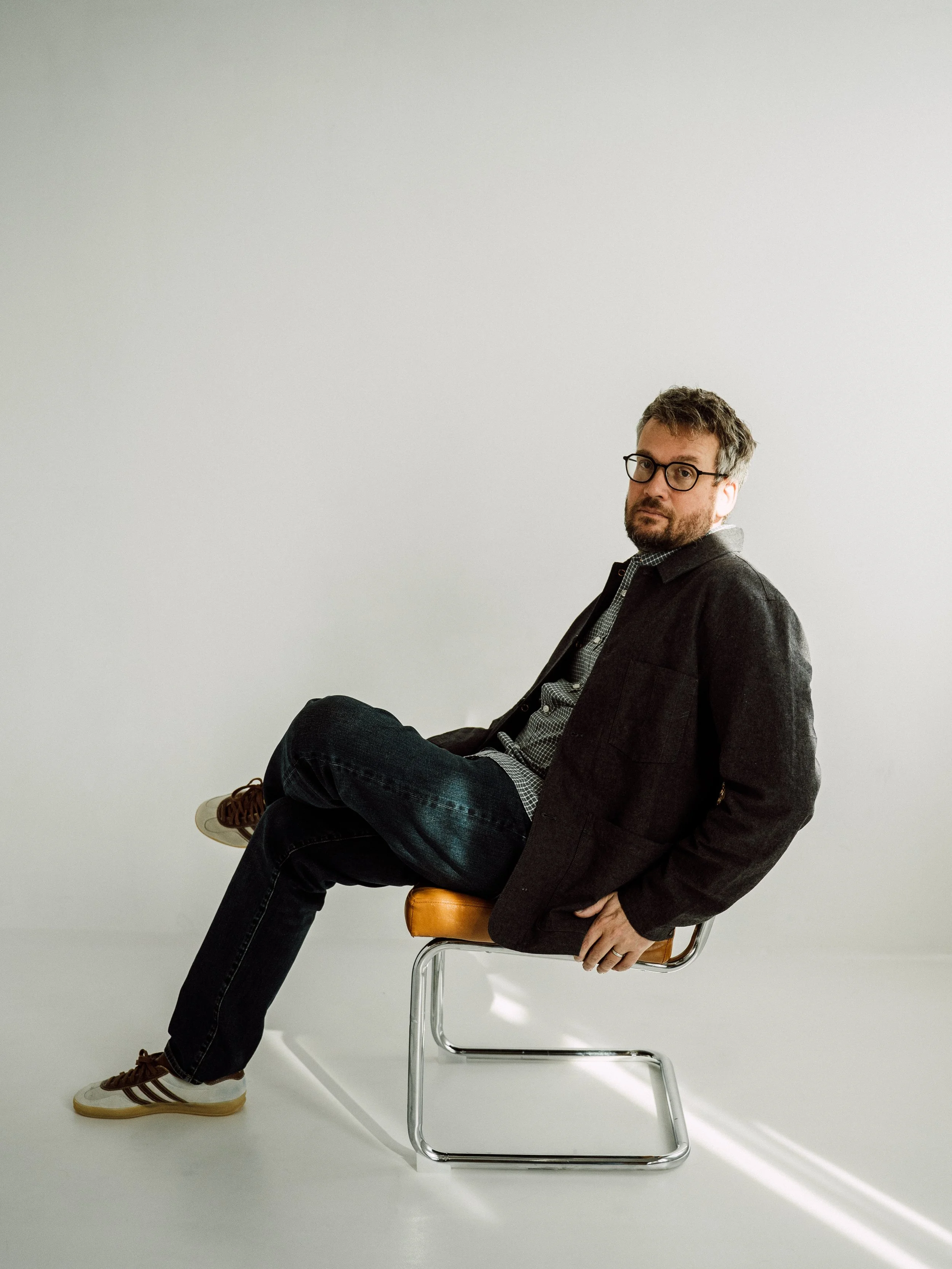
John Green
on shifting tenses and his return to fiction with Hollywood, Ending
If my life was epitomized by four Mount Rushmore heads, John Green would be one of them. Young me grew up in awe of his characters, finding myself around every corner, and adult me found awe in him as both a person and writer. There is no John Green book unread by me and so many of my generation—he is a pillar—and to have met him, talked to him about Kai and Juniper, about the relationships that have changed me… it’s easy to get lost in the idea of someone we admire, but you can’t really get lost in the search for John, because he’s pointing the flashlight. — Kass, 2026 ◇
〰️
Cariann Bradley: We're really happy to have you here and it's an honor.
John Green: Thank you! I'm thrilled to be here.
Cariann: Both Kass and I had the opportunity to read [Hollywood, Ending] before this, so that was really exciting, and Pittsburgh was a large setting of the book. I live in Pittsburgh!
John: Oh, nice! I love Pittsburgh.
Cariann: Yeah, it's great! The last time I was at the Carnegie Museum, I was sitting in front of Monet's Water Lilies for probably too long. I was there for enough time to where I started to feel uncomfortable and like I might be taking up too much of the painting’s time. And I was just thinking about how art changes over time. It's one thing when it's a concept and then it's another thing when the person is making it and then it becomes another thing when hundreds of people get to sit in front of it and apply it as a framework to their life. It just takes on this whole other life. And so, that brings me to my first question, which is—since this is your foray back into fiction for the first time in almost ten years, I was wondering what project are you most grateful made it into the world? Maybe for different reasons, maybe you wouldn't be able to write it now or it's just taken on a different kind of meaning to you. But yeah, that's what I wanted to start with today.
John: Yeah, I think that the book of mine that has resonated the most widely is not necessarily the book of mine that has resonated most deeply. So, I guess the answer to your question is more like there's always somebody I really want to read the book—like with The Fault in Our Stars, it was young people living with cancer or serious illness and living with life-limiting illnesses and how they responded to the book. WithTurtles All the Way Down, it was other people who also have anxiety disorders or OCD like I do. I think with this book it's other people who make art. It’s other people who are interested in art, who are interested in creation—what we give up when we create something, but also what the creation gives to us.
I also have sat for far too long in front of artworks at the Carnegie Museum of Art and I think you're right. It was interesting. I went to the Carnegie in 2014 when they were filming “The Fault in Our Stars” and then I went back when I was researching [Hollywood, Ending] and then I went back again right before I finished the book just to make sure that I was right about everything. And the third time that I went, the pictures hadn't changed, but I had, and that always fascinates me about art. The way the text doesn't change, but I do.
Cariann: That's what I felt sitting in front of the Water Lillies. I was thinking about how much I had changed since I had seen another version of it in Paris when I was studying abroad and it's fascinating that it stays the same, but we're the ones who are changing,
Well, we both got to read the book and I'd really love to dive in. I thought we could start with what stuck out to Kass and I the most. I think we took different things away from the book. If that's interesting to you, we can give you what stuck with us and then see what it sparks for you.
John: Completely.
Cariann: Kass, do you want to go first?
Kass Ringo: Sure! Again, thank you so much. Being able to read it in advance was incredible and I'm actually a longtime reader, so it was very exciting.
For me, with Hollywood, Ending—before reading the book, I was out of town, got back, and went and saw the new “Spider-Man” with my fiancé. I had said something to a friend I was discussing it with afterward regarding friendship being muscle memory; I had that kind of feeling just sitting in me after seeing the movie and then I went straight into [Hollywood, Ending]. Throughout the book, I kept thinking of the idea that the people who are our people, you just know and you come back to them in ways, and I feel like it can almost go back to what you guys were just discussing—it could be a friend that you haven't seen in a while and then you go back and you're changed and they're changed but the friendship almost still feels the same.
John: Yeah.
Kass: You don't really have to question it and you can fall right back into it. I felt that way with Juniper and Kai. Watching them go through what was a very condensed amount of time and then knowing that after I put the book away, that friendship will still be there. And there's almost like the trauma-bond of watching Kai go through this junket but having Juniper there as kind of a pillar for him. It's like they both brought their own baggage into this friendship and then, and I've experienced this myself with my own friends, now they are walking through the rest of it together and adding more things into that suitcase with the weight kind of dispersed. That kept coming back to me: friendship is muscle memory. Kai and Juniper will always find themselves connected.
John: Yeah. I did want to write about how challenging some of those circumstances can be and how the people who carry you through them become very important to you regardless, and that's certainly been the case for me. Whether it's a—I've never had a press junket as hard as Kai and Juniper’s, but they don't rank among the easiest experiences I've ever had either. I wanted to write about the way that some love—sometimes it's romantic love, sometimes it's not—carries you through and gets you through what you have to get through. And we can be that for each other in really astonishing ways. We can sacrifice for each other and have compassion for each other in really profound ways. And that's really what I wanted to be at the heart of the novel: when you're in your early twenties, how do you find those grounding relationships that are going to carry you through?
Kass: Totally. Yeah. I have those relationships of my own and I've never even done a press junket. [Laughs]
John: [Laughs] Yeah, if you can get them without a press junket, all the better.
Kass: Cariann, over to you.
Cariann: I think the epilogue really stuck out a lot to me. I mean, of course, it's the thing that we're left with [as readers], but I feel like the heart of all my creative work is survival. It's about surviving and what we've survived and connecting with other people who have survived similar things. Even this interview series started because I wanted to interview a musician, Sharon Van Etten, who's amazing, because I knew she had survived similar things to me and it was almost like a reminder that someone out there is doing it, so that means I must be able to do it. I felt that to be a really present theme of the book. And when we were doing prep for this, something that Kass said was that your work is all so intentional, like you're releasing it at a specific time for a specific reason. I know you had been working on Hollywood, Ending for a while. What was it that finally felt finished to you about it? And why was it that you needed to bring this message now?
John: Well, I guess, two answers. I mean, first off, when we live through trauma, one of the challenges of it is that people who hurt us try to make us feel isolated and try to make us feel like we are alone and there is no support for us. And when you discover that support, it can be very empowering, and I wanted Kai and Juniper both to discover that support and realize that they aren't as alone as people might have made them feel.
I set it in the past, in 2019, because I don't know anything about contemporary Hollywood—I don't really want to deal with a world where there's only two kinds of movies: like a horror movie that costs a million dollars and “Spider-Man” that costs five-hundred million or whatever. I wanted to write about the sort of mid-list movies that were so much a part of my own adolescence. I wanted to write about a part of Hollywood that I do think is ending. And so that was part of why I wanted to write it now.
The biggest reason I wanted to write it now is that I feel like this used to be a problem for movie stars, right? It used to be that the challenges of public attention and the tension between a private and a public life were movie star problems, which is to say they were not problems for most of us. But now it is a problem for most of us because we all participate in the social internet. Whether we participate by posting, whether we participate by commenting, or just by liking and structuring our algorithms and other people's algorithms, we're all participating in it—or most of us are. And that has profound implications for the social order we share. It no longer felt like I was writing about problems of other people. It felt like I was writing about challenges that we're all living with.
Cariann: Kass and I are working on another creative project and something I've been talking to my therapist about is how scared I am to put something else out into the world, like how the state of being a public figure is super terrifying. Honestly, something I've been working on for over a year is having enough confidence, or even just self-assurance, so that if I were to put something out into the world and people hated it, that I wouldn't also believe that I should hate myself.
John: It's really hard to make a distinction between your work and yourself. I've found that's really hard. I still struggle with it. And I'm forty-eight, so I should have worked my way through it, but somehow I haven't.
Cariann: Yes, it's scary and to some degree a little bit self-sabotaging to keep holding on to something because I'm afraid that it might not be received well. Cancel culture is just really scary! Social media is a scary place to be nowadays.
John: I think making art demands vulnerability and it's really hard to be vulnerable in public. It's hard enough to be vulnerable with those we love. It's almost impossible to be vulnerable with a public that may or may not receive that vulnerability generously. And I was thinking about that a lot as I was writing this book. I was thinking about how Kai and Juniper have a kind of bravery, but that bravery is to some extent born of naïveté—by a failure to understand how difficult it's going to get.
Cariann: I loved was Kai and Juniper's resilience. I do think that young people have a certain level of resilience because they're young, you know? Something that Kass and I kind of deliberated, too, was the mention of trauma and abuse. Because I know that those are themes in this book, but something that Kass said to me this weekend when we were prepping for this was like, “If I were interviewing Kai, I wouldn't want to ask [him that].”
John: Yeah, I appreciate that. I think that's the right call. [Laughs]
Cariann: Yeah, I think that’s powerful.
John: Because it's pretty clear that Kai doesn't want to talk about it, right? I've experienced this with OCD. And y'all are free to ask me about OCD, don't feel weird about it now that I'm bringing this up. But I use this in the book because every time somebody asked me about having OCD, they would say, "You've been very public about having OCD." And then that was their sort of way into saying, "Ergo, it is okay for me to ask you this super personal question about whether you also experience anxiety when kissing someone like the character in your novel does."
I am fascinated, as somebody who doesn't act, by how people are able to inhabit these characters so fully. I don't understand the trick that they're doing. Whatever magic trick they're doing is a miracle to me, right? So, it doesn't seem like a trick to me. It seems like actual magic. We all want to get to the bottom of it and we all suspect that at the bottom of it is some kind of coded autobiography. But I like the idea of not asking. I like the idea of asking about the process of creating the art rather than the biographical facts of creating the art which is sort of, to me, a little irrelevant. Like yes, I have OCD. Yes, the main character in Turtles All the Way Down has OCD. Yes, I could never have written the novel without that, but that isn't the most interesting part of the novel.
Cariann: We spent some time thinking about it and we were like, what would we want? I wanted to ask you—what is the way to go about interviewing someone in the right way when it comes to that sort of thing? I guess you answered [it], asking about the actual art and creating it.
John: Yeah, like I said, I'm comfortable talking about OCD but I draw the line where I draw the line, and so some of it is that you have to have the right media training and you have to have all that stuff so that you know where to draw the line. Kai has that support, but then it turns out that he doesn't have the choice that he thought he had.
Cariann: The book made me think a lot about the work that we do. And it is part of my mission, of having these conversations, to just have a normal conversation with someone that's maybe not just about their press junket or not about their current projects but also about their lives. But also, it made me really think that asking someone to be vulnerable publicly does cost something.
John: It does cost something. But I think one of the things that they learn, hopefully in the book too, is that it also gives something, right? Like yes, it has cost me something to talk about mental illness in public. It's also given me a lot. It's made me understand that I'm not alone. I think that the value proposition is really complicated for both interviewer and interviewee. I've been thinking a lot about how meta that whole thing is. That now you're interviewing me, like, hyperconscious of my analysis of interviews. [Laughs]
Cariann: [Laughs] Yeah, it is also like, with l’Odet, part of the shtick since it began was I wanted to share as much as I was asking someone else to share, right? But that's also tough, because some people don't want to share. Some people just want to talk about their projects and they don't want to get ‘quote, unquote’ deep and that's okay.
John: There was this great Ask Me Anything on Reddit years ago, when celebrities still did Ask Me Anything before they realized that this was a catastrophe, where I think it was Woody Harrelson was asked a number of questions and he was like, “I only want to talk about Rampart. I only want to talk about the movie I'm making.” And I was like, man, in 2023, you can't do that! That's not how it works anymore. Like, you don't control the narrative. And that's another reason why I think the book feels relevant now, is that it used to be that celebrities could kind of control the narrative, right? I mean, Tom Cruise has controlled the narrative around Tom Cruise for fifty years. That is less the case now for young celebrities. And that can be pretty tough, I think.
Kass: Cariann primarily does the [l’Odet] interviews and we've been lucky enough to speak to a couple of younger, upcoming celebrities as we've revamped l’Odet this year and you can feel the difference a little bit between, I guess it could be called media training, the way younger people speak and how they've grown up with technology and are very aware of everything. The next generation of people are astounding. The amount of awareness they have is incredible yet also kind of scary at times. And we've felt that with the younger people we've talked to. They're so aware of themselves and everything around them and how they say something.
John: Careful. Yeah. You have to be careful. I mean, I've said some things that I regretted in press junkets when I was tired and not paying attention and that stuff sticks with you. They write about it. [Kai and Juniper] talk about in the book—that stuff always sticks with you.
Cariann: I want to ask you a question that I would ask Kai about Andy Warhol Never Gets Old, but I want to ask you about this book. I think if I were to interview Kai and ask him a question, I would say every creative project costs something. It takes something to make it and that was particularly evident in the press tour for Andy War Never Gets Old… but what did it give you? What was its gift that you did not have before making it? How would that apply to you writing [Hollywood, Ending]?
John: Without spoiling the book too much, there's a lot of tense changes in it and it's been hard for me to change tenses around some of my experiences. It's been hard to put… there's a great Fauklner line. I'm sorry, I'm not speaking in complete sentences, but there's a great Faulkner line where he says, “The past is never dead. It's not even past.” And that idea of the past being in the present tense has dominated a lot of my adult life.
The gift that this book gave me was being able to shift tenses a little bit, if that makes sense. That makes sense to you because you've read the book. It probably doesn't make sense to your readers. [Laughs]
Cariann: Even outside of that, it's a beautiful sentiment, so I think it will land regardless.
John: All right. Good, good, good.
Kass: I kind of stole something from Cariann’s playbook and it jumps ahead a little bit, so now I'm going to mess up Care's flow. [Laughs] But Cariann always asks my favorite question at the end of every interview. It's so simple. She just asks, "What is lighting you up right now?" And if I was able to ask Kai that question, and I mean we would have ultimately asked you this question, so feel free to answer now, but I would have wanted to ask him what is lighting him up among all this? What is bringing him comfort and joy and structure among the chaos?
John: And I think the answer is pretty simple for Kai. I think the answer is that he loves watching movies with someone he loves and he loves looking at art with someone he loves. There's a magic to not looking at each other, but looking at the same thing at the same time. That's almost more intimate than looking at each other. My wife and I were watching a stupid TV show last night and I was like, “This isn't very good, but we're sort of making it better by watching it together.” It's sort of more entertaining because you're here and we can joke. We can have this sort of meta script around the work of art.
I desperately wanted for [Kai and Juniper] to get that time —to be enthralled together, not looking at each other, but looking at art together, because that's been a huge part of my life.
Kass: I love that. It feels very prominent in the book, those moments.
John: Yeah! And I got to write about a lot of my favorite movies. I got to write about movies I love and movies I despise and movies that I think are not very good but still eminently watchable. [Laughs] It was really fun to write about art.
Cariann: I would imagine that putting out a book is so much different than actually writing it.
John: Yeah. You go from living in your basement to… not. I was actually talking to Rachel Reid, the author of Heated Rivalry, yesterday and we were talking about how weird it is to go from sitting alone all day long, trying to not even be inside of your body. Like trying to not even be inside of your own head, but trying to occupy other people's minds, and then going into a mode of promoting something where you are asked to be not only yourself, but a heightened version of yourself.
And I was remembering that one time I was walking through the grocery store, maybe ten years ago, and at the other end of the aisle a young woman started screaming and I figured there must be an emergency, and so I looked behind me to try to understand what the emergency was and then I slowly realized that I was the emergency. And that feeling of coming into your body suddenly in a public/private space like that—that is the feeling of transitioning from writing a book to publishing one.
Cariann: I would imagine that it asks for a particular kind of resilience… like you’re having to embody a different character.
John: Yeah, for sure. And figure out what it means to embody yourself, which is its own complexity, right? Because everybody has a distance between their lived self and their performed self. Everybody feels different when they're being perceived or when they're conscious of being perceived. It is weird. But I mean, I like touring. I like meeting readers. I like a lot of the aspects of that stuff and I'm enjoying this interview. So, there are enjoyable things about it.
Cariann: Thank you for saying that.
“I wanted to write about the way that some love—sometimes it's romantic love, sometimes it's not—carries you through and gets you through what you have to get through. And we can be that for each other in really astonishing ways. We can sacrifice for each other and have compassion for each other in really profound ways.”
Kass: Care mentioned at the top of this that this is your first adult fiction. It's been a while since you wrote fiction. You're going to be perceived a little differently from the YA audience to the adult audience now. Is there a different type of mental state to get into for that?
John: That's an interesting question. I think that fiction is very different from non-fiction in general. Paradoxically, fiction is more intimate for me. That's part of it. As far as the difference between writing for adults and for teenagers, it's not a huge difference for me. The characters in this book had twenty-two-year-old problems instead of seventeen-year-old problems. So, now it's a book for adults instead of a book for teenagers. I don't have twenty-two-year-old problems or seventeen-year-old problems. [Laughs] I'm still trying to imagine what it's like to be someone else, not what it's like to be myself. But I do think that there's definitely a different level of anticipation and nervousness around fiction, for me. This is a lot more intense. Waiting for audience feedback is a lot more intense than it was with either of my non-fiction books. And it's stressful. I'm not going to pretend that it's not stressful.
Kass: Well, you're playing it really cool here, so thank you.
John: Oh, good. [Laughs]
Kass: The interview's going great on both ends. [Laughs]
John: Great. [Laughs]
Cariann: I don't read much because I'm doing a lot of writing, which is a problem that I have that I think is a personal issue I need to sort out, but I'm always scared to be reading while I'm writing because I don't want it to bleed into what I'm writing. It's a whole complex I have, I guess. But I loved this book and it just made me think about the work that Kass and I do together and mostly how I'm so grateful to have found her and to have found a partner to do it with. And it just makes me feel less alone and so I'm very, very grateful.
John: Art in collaboration is so much better, because it reflects the truth that art is always collaboration. I love this artist—some would say that she would reject the term artist—Hilma af Klint. She was the first abstractionist before Kandinsky. She was painting abstract forms that were meant to… sort of take you to a mystical place, a sort of mystic Christianity. And there's this huge fight now because lots of people are saying, well, actually Hilma af Klint might not have made these paintings by herself. She might have made them with a collaborator or even several collaborators. And some of the most famous paintings might not be painted by her. And I don't care! [Laughs]
I understand that there's a thing that has to be worked out with who gets the royalties and everything and there's financial considerations and copyright. Whatever, whatever, whatever. But all art is collaborative. Nothing is made by one individual sitting in an ivory tower who's never interacted with any other individual. Everything is made out of collaboration and cooperation. And that is the human superpower. And I love the moments where art, the notion of the singular artist, just falls apart.
This book is dedicated to Elyse, who's on the call, because there's no way I could have survived those times without Elyse. My publisher, my editor, to the designer, to the cover designer. So many people participate in the creation of a book. My spouse, who read the early drafts and changed a bunch of stuff. So many people participate in the creation of a book. Only one person's name is on the cover. And I find that one of the reasons I wanted to write about movies is because it's such an openly collaborative form of art—that you see that there is no Kai without Juniper. And there is no Kai and Juniper without Matthew Malone. They all need each other in order to make the movie.
Cariann: Damn, that was bars. That was really good. [Laughs]
Kass: [Laughs]
Cariann: That was a really good answer. [Laughs] We talk a lot to actors about how it's a team sport.
John: Your scene partner matters so much. I read a lot about acting and talked to a lot of my actor friends. And that's one of the things I took away: it's really about listening. It's really about interacting with your scene partner.
Kass: Did any of the experiences or observations that you applied to the book come from some of the adaptations you've been able to make?
John: Yeah, of course. I don't think there's any way I could have made this book without being on a lot of movie sets. I've been really fortunate to always be welcome on the sets of the adaptations of my books. And I love, genuinely, the people who worked on those movies. From the actors to the crew. It's such an intense experience, such a beautiful experience. I wanted to reflect the beauty but also the hardship, because it is also really hard to make movies. But when you make something together—and you guys know this because you make something together—there is an emotional connection that goes with that that is so profound and that's a lot of what Kai and Juniper experience [in Hollywood, Ending].
Kass: Yeah, it really is. I think of Cariann a lot when I do anything. You mentioned humans being human is like a superpower and I feel like you really feel that near the end of the book when Kai leaves. He takes the power back and leaves and it feels like he's not a part of the machine in that moment. And the way I found Cariann was through the original site Midnight Woman and she had shared her story. I had been in a circumstance where I needed to share my own, and I found a safe space to do that and we just connected somehow. I was an anonymous submitter, but we found each other because I was so in awe of the work that she does. I guess you can feel it in both Juniper and Kai's point of views because you feel the awe that they feel for the other person and it's never an envy or a jealousy. It's just like, I couldn't quote it off the top of my head, but the way Kai wants to describe Juniper versus how he's told to describe Juniper. It's that depth of like I see you in a way that maybe others don't see you or you see yourself. There are words that you just can't even use to explain the affection you have for someone else.
John: A lot of the adjectives I think Sarah, my wife, would use to describe me are not adjectives that people would see as usually like, "Oh, that's so sweet." And same with Sarah. I wouldn't necessarily use adjectives where it's like, "Oh, you know, that's so nice." Instead, it's more like, "I see you for who you are and I love you for who you are." And you know, Kai sees Juniper as careful, which she is, and ambitious, which she is. But he doesn't see those things as bad like the world sees them as bad, especially in women, but he understands that precisely who she is is precisely who he loves.
Kass: And that's how I feel about you, Care.
John: Awwww.
Cariann: I don't know how to take compliments. That's so kind.
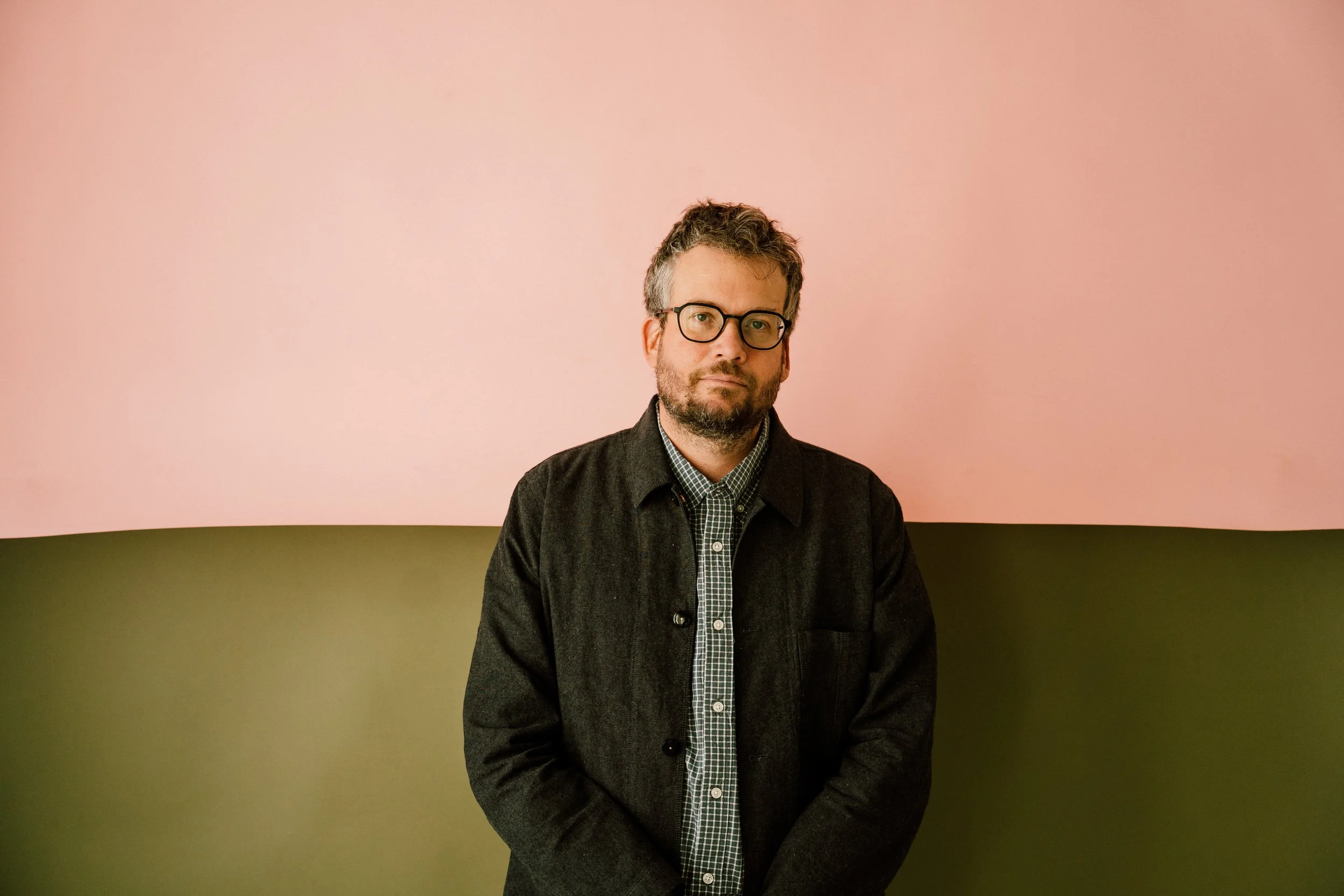
Cariann: I also highlighted in the book where Kai describes Juniper's presence as how someone's voice changes when they read poems out loud. I thought that was one of the most beautiful ways to describe someone.
John: Oh, thanks. My friend Kaveh Akbar, the brilliant poet, he does a magic trick when he does readings where he recites a poem from memory and the air changes in the room. And I was thinking about that when I was writing that line.
Cariann: I always feel so silly when I read poems out loud. I'm like, why is my voice changing like that?
John: Yeah, but it does. It just does because the language demands it.
Cariann: Was there anything that we didn't touch on today that you wanted to discuss? I want to make sure anything you wanted to talk about, we got to it.
John: This has been such a cool conversation and I really appreciate y'all bringing yourselves to it as well as asking me questions.
Cariann: Thank you. I just feel lucky that we get to have forty-five minutes of someone's time and that we got the privilege of reading your book and that we all got to sit here together and I am very, very lucky to do this and thank you. Thank you so much.
John: Thank you, too. Are you gonna ask me what’s lighting me up?
Kass: [Laughs] Well, okay. I have one more question right before that question. It's more of like a self-indulgent type question, but [there’s] a clip of you saying something about how do authors realize that when they write a certain sentence that it's going to like, change everything?
John: [Laughs]
Kass: And you said that about “Slowly and then all at once.” And I started with Looking for Alaska and so, “If people were rain, I was drizzle and she was a hurricane.”
John: I almost cut that line!
Kass: I’m so glad you didn’t!
John: I was within inches of cutting it and my editor—who's still my editor—made me keep it.
Cariann: And thank god for them.
John: [Laughs]
Kass: As soon as I finished [Hollywood, Ending] I was like, he did it again with “I am here, you are there, and the door is ajar.” You did it again!
John: Well, I would argue that Emily Dickinson did 90% of the work, but if I did the last 10%, I'm grateful.
Kass: I'm just, I think… I don't know much about junkets or anything like this, but I think that might come up a little bit for you and that's going to stick with people.
John: Great. I love that. I love that line. I actually read that poem on my friend Ed Coleman's arm. He has the last stanza of that poem tattooed on his arm. He got it after he had a serious health issue and he's a high school English teacher, and I'd read the poem before but something about reading it on his arm made it hit differently. [Laughs]
Kass: Intimate!
John: Yeah, exactly.
Kass: Okay. And now we will ask you what's lighting you up right now.
John: Oh man. That's a good question. And, I mean, I am very driven by worry… which has its upsides and downsides. But at the moment, the first thing I think about when I wake up in the morning is how we can get the US government to actually spend the money that Congress appropriates on tuberculosis care? That's kind of lighting me up at the moment.
What else? I should think of an answer that's about art, though. Oh, I just read this great book! I just read this great book by Robin Wasserman called Some of Us May Never Die, which is a banger title and a hell of a book. It really lit me up. It was my constant companion for the last week. So, I'll say Robin Wasserman's book.
Kass: Okay. I'm gonna have to read it because of that banger title.
John: It's so good. The book is so good, too. But it does have an amazing title. Robin should really title all of my books. She's very good at it.
Cariann: Hollywood, Ending is pretty good though.
John: Thank you. Thank you. I think the comma has to do a lot of work, but hopefully it does that work.
Cariann: John, thank you. Thank you so much for your time and your candor and your openness. We really appreciate it.
John: Yeah, it's been fun to talk with you.
Kass: Yeah, thank you so so much. Such a privilege.
John: I'm going to take my daughter to the orthodontist now. That's what I’m doing next. [Laughs]
Kass: [Laughs] Oh, have fun!
Cariann: Have so much fun at the orthodontist.
John: It's gonna be a blast. All right, y'all. Take care.
This conversation has been condensed and edited for clarity.
INTERVIEWED AND EDITED BY Kass Ringo AND CARIANN BRADLEY | PHOTOS BY CARLY BUTLER | design by Madeline Westfall