
Kerri Kenney-Silver
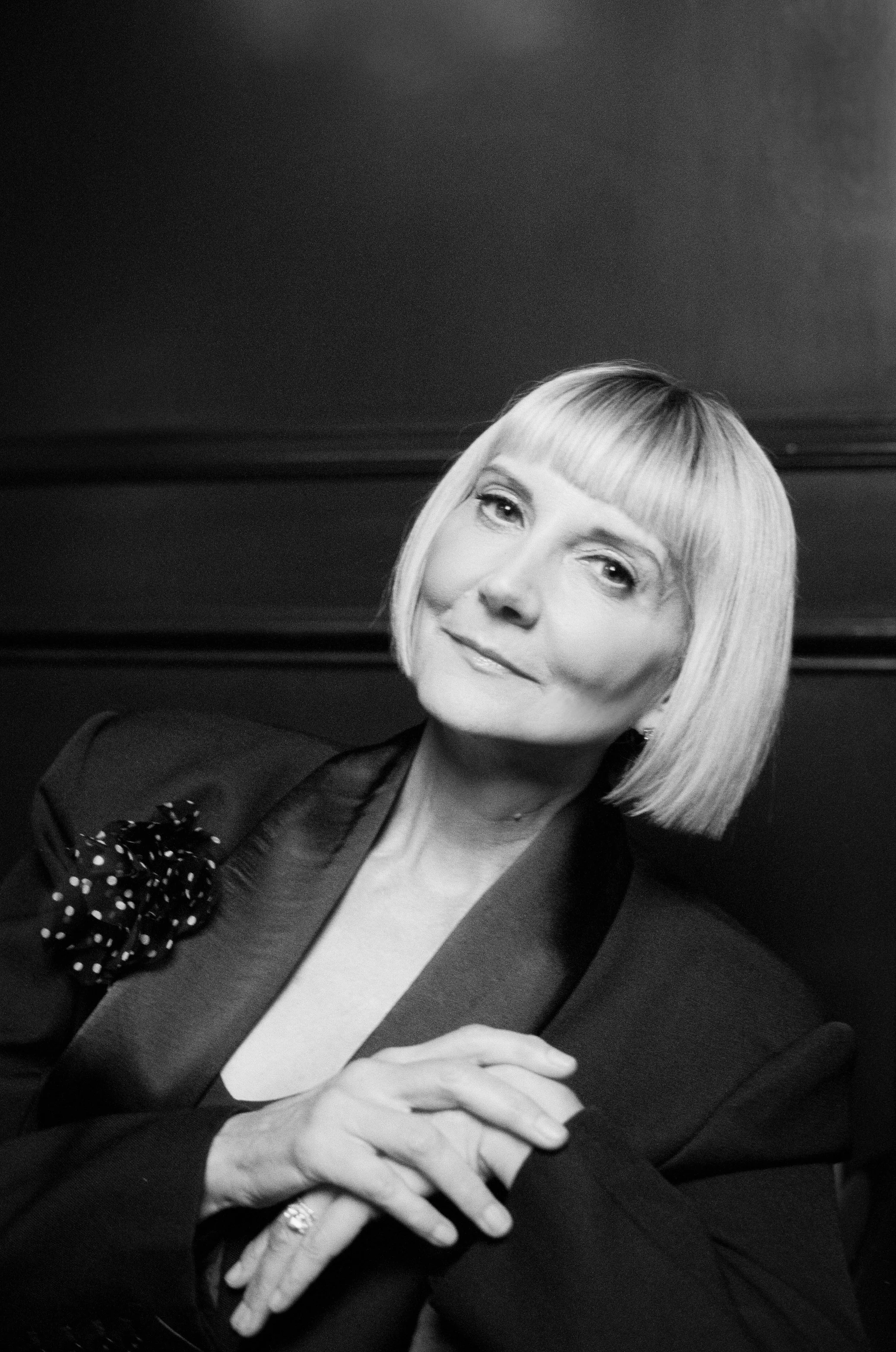
Kerri Kenney-Silver
on The Four Seasons, chosen family, and letting the armor down
There's a moment near the end of my conversation with Kerri where she talks about standing in an aquarium, looking at a tank of jellyfish, thinking: they have no secrets. Circular tank, lights from every angle, every organ visible. And she said that's her character Anne in The Four Seasons, in a lot of ways: the effort of trying to shore up the armor, straighten the posture, deflect the conversation, and none of it working, because everything is just under the surface anyway. Most days, I feel similarly. At thirty-one, this was not the plan, not the version of my life I sketched out at twenty, when "success" still had a shape I thought I could clearly see. I used to think the goal was opacity. Look put-together, keep the insides hidden. But somewhere between moving back home and spending more time with my mom, aunt, and uncle than with people my own age, I started to suspect the opposite was true: that the people who seem most at peace are the ones who stopped trying to hide in the tank.
That's what I loved talking to Kerri about. Not just the show, but the fact of someone twenty years further down the road telling me none of this is linear. That two things can be true at once. Now when I crane my neck to try and envision a perfect future for myself, I'm honored to have had this conversation, and I remind myself that I don't have to look too hard. Everything will come in its own season. Thank you to Kerri and her incredible team for making this conversation possible. — Cariann, 2026 ◇
〰️
Cariann Bradley: I must tell you, I watched the first season of The Four Seasons unprompted when it came out last year. I loved it. So, having you here is really exciting.
Kerri Kenney-Silver: Oh, thank you. The older people on the show—we're loving the response that we're getting from people of your generation. We were worried that we'd be kind of pigeonholed as a show about, you know, older people, and so, who wants to see that except older people? And it's not only made me feel even more proud of the show, but it's made me feel hope for humanity to be quite honest with you, that younger people are enjoying and maybe getting the message about chosen family and longevity in relationships and that nothing is easy and that you can bounce back from anything. I just think all the messages are so important for any age and it's so beautifully fed to you like warm soup. It makes me happy.
Cariann: Yeah, absolutely. I did want to tell you, maybe unlike people my age, I spend most of my time with middle-aged people. [Laughs] I live with my mom, and I spend a lot of time with my aunt and uncle, and I feel like that generation is the most untapped comedy generation. The quotes that I have written down in my phone of things that my mom and my aunt and my uncle have said are hilarious. I just love being with them. And I think the older I get, the more I realize how wise they are, and how I love spending time with them.
I was talking to my aunt a little bit ago and she was talking to me about how when her mom, my grandma, passed away, there was this tree in her backyard and it just looked so gnarled and scary and every time she looked out the window, she felt afraid. When my nana finally passed away, my aunt looked out and realized [the tree] wasn't so scary anymore. The things I've learned about grief and life and how we're all kind of just doing this for the first time, I feel like are themes in The Four Seasons that I love and really resonate with as well.
Kerri: I think that's beautiful. We have one child and we have the same relationship. They're about to turn twenty-one and I think part of it was, you know, having an only child, they spend a lot of time around adults. Also, our friends are fun! We have a fun chosen-family. My husband and I are both in the business, it's a fun place. It's a circus family. And I think there's so much to be learned by spending time with all generations, with young people, with older people that I feel like we kind of got away from that in America. Certain cultures still do it just culturally; they sort of live in the same area and all spend time together. But by and large, it seems the way you do it now is you go to college, you move away, and maybe you come back now and again, but there is something really beautiful about spending time.
I mean, I'm also a little biased. I do happen to think Gen X is a fabulous generation, as I think yours is as well, but I'm proud to be of this generation because I think we've raised our kids to want to be around us. Our parents, not that they didn't want to be around us, it just wasn't culturally, you know—you didn't see toys when you walked into a house. There was a playroom, possibly, or some toys in the bedroom, but now we've really kind of built our lives around our children, a lot of us. And I think it's pretty amazing because now we have these full-grown buddies hanging out with us and actually listening to what we have to say, whether they think it's ridiculous advice or not. And I'll tell you, hang onto that… because I love that you even notice that your [aunt] told that story and you absorbed that story because my mom passed away almost ten years ago and she was my best friend. And I think of the millions of stories she told me. I was an only child and so it was all on me to sort of absorb this family history and I'm left with photographs that I'm like, "Oh, what? She told me who this is. I don't remember who this is and I have no one to turn to to ask." So, I think it's really beautiful that you're absorbing those things and taking the good parts. I think it's good for you and the older generation.
I think that's something about this show. The relationship between Anne and Ginny is so confusing at first and then makes so much sense. Erika [Henningsen], the actress who plays Ginny, and I have a very close relationship off the show as well. We all do, the whole cast, but she and I—I think because of the intensity of feeling between those two characters really has connected us. I don't see her as someone in her thirties. I don't think she looks at me and goes, "Oh, I'm going to go to lunch with my friend who's in her fifties." You know? We just have a friendship. And yeah, this show, I'm glad it's teaching you things because it's certainly teaching me things that I'm so grateful for.
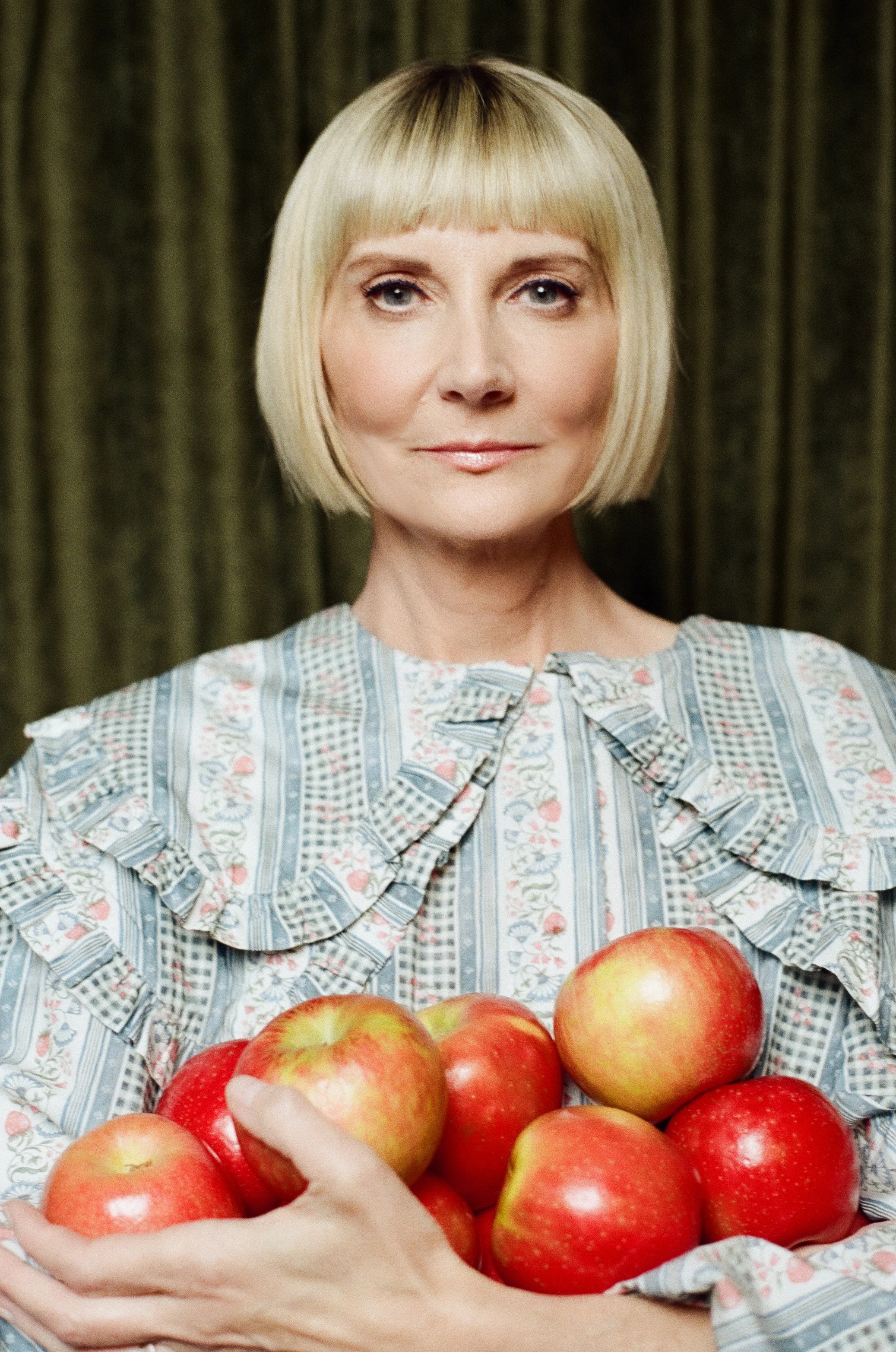
Cariann: The relationship between Anne and Ginny is really fascinating to me because I feel like the show does such an important job of exploring disenfranchised grief. [Anne and Nick] were no longer technically married when Nick passed away and he'd kind of moved on. It explores this idea of like, does [Anne] get to be upset? Does she get to be mad? And in those instances, it all comes down to: two things can be true. Like, I can be devastated that I lost someone I built a life with, but I can also see that life has changed and maybe my feelings need to change and I need to unfurl in this way. I found that really, really moving because grief is just not linear. You know, people expect you to heal on a schedule. I've loved watching Anne's journey in that way.
Kerri: Well, that's a great quote. I love that—two things can be true. That could almost be a secondary title for the show because it seems to be the case for all of the relationships. You know, is Danny right? Is Claude right? Well, they're both kind of right. When you're with someone long enough friendship-wise or in a romantic relationship, one day one person may be the bad guy and the next day the other person may be the bad guy and then maybe there really is no bad guy. Maybe, we just all are doing the best we can.
My feelings about Tina Fey, Lang Fisher, Tracy Wigfield, they are absolutely… I have no words for how brilliant I think their writing is and the whole staff. It's the same staff as the first season, second season, and now they've written the third season. It shocks me every time and yet it always makes perfect sense. The fact that there can be absolute devastating pain in one moment and then it's immediately dispersed with a ridiculously timed, perfect joke—it's precision to me! It's chemistry. It's science. It's brilliant. So, to get to play a journey like that, any actor would feel lucky, but what I loved about digging into Anne's journey was that I love something that is not clear-cut, that isn't black and white. She needs this, you know, I am trying to get this person to like me. If they don't like me, my life is over. If they like me, my life is made. I need to get this job. I need to get this. Those are all important things to play in a story. But to get to play a story where, like you said, there is absolutely no road map for this kind of pain and Anne being scattered to begin with, sort of as a genetically made-up, beautifully scattered butterfly.
It's hard for her anyway. She's lost so much all at once. She lost her husband, which she knew years ago, but wasn't willing to admit to herself. She loses his love and his commitment and their life together when he says no at the vow renewal. And in a sense, she's losing her daughter who is going off to school. You know, it's a different kind of loss. It's a growth. It's a necessity. It's a celebration, but it's a loss for her. Things are not going to be the same. And then for [Nick] to actually die is a whole other kind of loss. Whether he had stayed with her or not, they were together for so long.
It's getting to play those moments where the waves keep coming and knocking you over. It's hilarious and devastating to watch and it's even more fun to play. I'm never at a loss for what is happening here? What should I be? There's so much to be digging into it. It's like you never have to sit with the script and say, "Okay, well, what would she, you know, try and find the discourse here?" It's like she's just trying to stand up.
Cariann: I love the character because she's kind of everything at once. The levity that you bring to the character… I quote, “with this plantar fasciitis?!” all the time, by the way.
Kerri: [Laughs]
Cariann: The levity that you bring to the character makes her feel like a real person and it makes those stories palatable because stories about grief are really hard. So, any way that we can take it and laugh and also be changed and touched by it is really, really important. So yeah, props to the writers on the show as well.
Kerri: Yeah, no kidding. I mean, you can spend thirty takes trying to deliver a bad line and it'll, at the end of the day, just be as good as the writing. But, you know, every day, every minute, every second that I have the script on my lap or I'm standing in front of the camera while we're rolling, I am just praying that I can come up to the material—that I can meet the material. It's a joke at the end of every day. As Tina and I are walking out, I'm like, “I hope I didn't break your TV show today!” It's so, so good. The map is so clear, the comedy is so clear that, you know, it's mine to screw up, in other words. So, I'm grateful that it seems to be resonating with people.
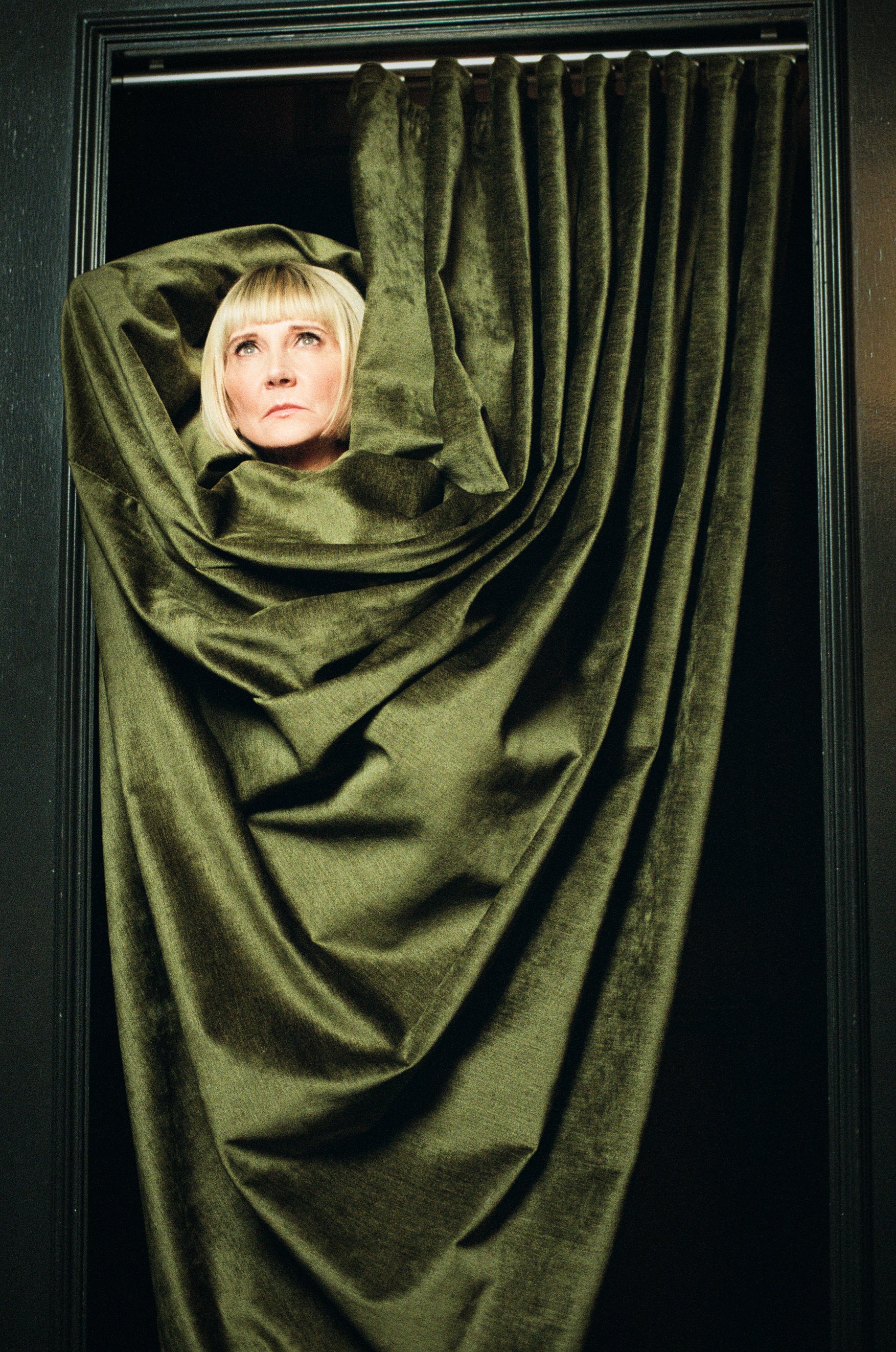
But another thing that I love about Anne is that because there are so many layers to what's happening, she always sort of reminds me like… we were at the aquarium the other night and there was this pool of jellyfish and I was looking at them and thinking they have no secrets. Those jellyfish, they're under the lights. It's a circular tank. Everyone's standing around them and you can literally see right through them. I can see every organ. I can see every movement. And I feel like Anne is that in a lot of ways, where everything is just under the surface. Doesn't matter how hard she tries to, you know, shore up the armor or straighten her posture or deflect the conversation. Everything is just under the surface. And that's a testament to the writing. That's how we can bounce from a dramatic moment to a moment of comedy so easily because it's all right there. It's all completely available to her. And I think that's one of the things that used to drive Nick crazy too, right?
Cariann: I think that's what I relate to a lot is that, even me, at thirty-one living with my mom, this isn't really the trajectory of how I saw my life going. I went to college, I moved out, I moved out of state, ended up getting laid off, and then moving back in with my mom a couple years ago. And it's been such a gift, but also, watching some of my friends become self-employed and make six figures in their first year and be so successful—I'm still just trying to get my footing even though I don't really know what that looks like.
Sometimes I do kind of feel like an open wound. Like, at any moment, anything could crack my facade and I could just burst open. I feel like that's the cycle of life, right? Just because you get to a certain age where you have a certain kind of success doesn't mean that you're not going to be knocked on your ass and cut open again and have to re-heal yourself.
Kerri: I can tell you, just having had a couple more decades on you, that there have been a multitude of times where myself and my family have thought, "Okay, this has to be it." Like, statistically, we're good now, right? That we have a moment to sort of glide here and then the whole shoe store drops on us. It doesn't make logical sense. It's too much like a novel and you're like, if I wrote this in a script, people would say, enough, that's too much. No one, no one's going to buy that! I've been very lucky. Right out of college, we had our own TV show. I mean, that's unheard of. Unheard of. I still, to this day, don't know how they green lit that idea, that they were right, and it worked. Shocking to me. So, I've been very lucky, but it's been a lot of alt-comedy work in a sense, you know, and I've been really lucky and grooving in that genre for so long and it's been very good to me and I absolutely love it and have a full family there.
It's wonderful that at fifty years old, all of a sudden, my career hit this other level. This is around the time when as a woman, historically in television and film, I would become [an] incidental character, right? Sort of like how women become incidental after menopause. The idea of like, I just walked through that door…that person didn't even notice that I was there. That does happen. That does start to happen. And I thought it was not real. It is real in a lot of ways: that you become a bit invisible. So, I just felt like, okay, well, this will obviously be coming to a close here at a certain point, and that's just the way of it. And all of a sudden, things started taking off. I got my first of five Emmy nominations starting at fifty as a woman in this business. And it was all for a show I had been doing for almost twenty years. And [The Four Seasons] comes up, you know, at fifty-four years old. And it was just like, how can this be real?
And now I feel, because it took so long to get to this point, I feel ready and grateful and I have zero expectation and it's just gravy. It's just all gravy… or perhaps icing. It sounds more delicious, but it really is. [Laughs] It's like, oh, there's just the greatest writing I've ever seen in my life and my favorite character I've ever gotten to play and I'm doing it now. You just don't know. That’s something you can take some solace in from my career. You just take the next indicated step, you know, and you just keep moving forward. That's what we've said to our kid. You go, you go just do the best that you can do and be kind and and be an active member of your society and surround yourself with your circus people and and just hang on. It's going to be a wild ride.
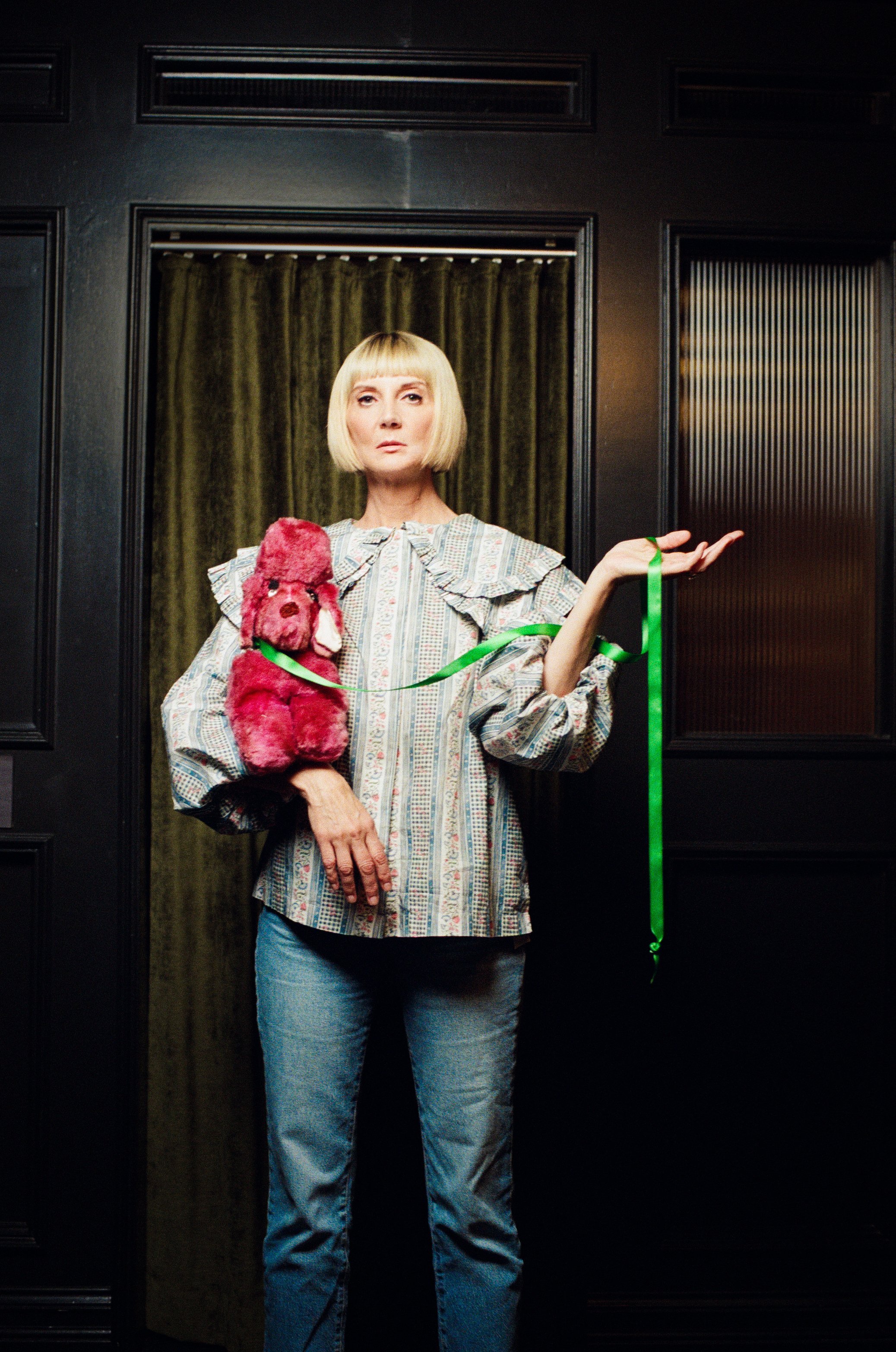
“…there's just the greatest writing I've ever seen in my life and my favorite character I've ever gotten to play and I'm doing it now. You just don't know. That’s something you can take some solace in from my career.”
Cariann: Yeah, absolutely. I know for most of your career you've taken these big comedic swings, you know, like zany comedy and Reno and things like that. And this role kind of demands a softer register. Was that something that you were looking for or just kind of fell into your lap?
Kerri: I dreamed it. That's what I say sometimes in interviews: that it really feels like a dream and I feel like I dreamed this exact scenario with, I mean really, truly, with these people, with these scripts, at this time in my life. It's what I studied to do. I went to NYU, studied at the experimental theater wing to be a dramatic actress, and started a comedy group in college and that took off. And, I mean, I’m thrilled to have that, still to this day with these guys. You know, we've been together thirty-eight years now and we still perform all the time and are in each other's movies and TV shows. We just did a live tour two years ago. We have a documentary coming out next year. I will never stop doing that, but I always kind of hoped, ah, wouldn't it be great to be able to do the thing that I haven't shown people yet? And I knew I had it in me. But you get put in a lane in this business. I think in a lot of businesses. Someone sees your capacity for something and they say, "Oh, that's what they are." You know, we don't want to confuse people or waste anybody's time.
Sherry Thomas, the casting director on this, she's a hero. She had me in and said, "I believe you can do this part." And I guess they had been seeing a lot of people who were dramatic actors and you really do have to have those moments of punch in there. So, I think Tina, knowing the world of sketch as well as she does ‘cause she's one of the people that created the world, she saw that in me, too. That there were some dark layers under there, too.
Cariann: Something that I wrote down when I was doing research on some of your recent interviews was, [and] you said something similar earlier, but you basically said that ‘the material is yours to ruin.’ Like you're just praying that you don't mess it up every day. Has it been scary stepping into this different kind of role? Has it strengthened your confidence in your capabilities?
Kerri: The first season was terrifying. Absolutely terrifying. But I will also make the caveat that, in a weird way, it wasn't as scary as it could have been, because I honestly thought I was going to get fired anyway. [Laughs] I mean, I really thought that. I thought, you know, I'm blown away that I've been given this opportunity, but there's been a mistake. So I thought, you know, just get there and do the best you can, but this is an arena that—if you were meant to be in this arena, you would have been here by now. And my first day of filming, I'm brought over to a table at the lakehouse, and we're having—it's a brunch scene before we get on the boat—and they're like, 'This is Steve Carell,' you know, he's playing your husband, 'and this is Coleman Domingo.' Nice to meet you. And I had met Tina the day before, earlier that day, doing a scene—but still, you know, had only said a few words to one another. I had met her on a Zoom prior to that, and you know, all these actors, I'm meeting for the first time right before they call action. I was out of body. It was out of body! And as soon as the scene ended, I just blurted out, 'Oh my god, I'm so nervous.' And then I was so embarrassed that I had said that. And every person sitting there said, 'I'm so glad you said something.'
You know, someone—Steve or Tina—said, 'Yeah, every time I start a new show, I'm like, what do I do with my hands when I'm talking?' You know, and it's like, oh, this is a universal experience. This is a vulnerable thing that we do. And I would say, literally from that moment on, I was like, I'm good, I'm good. And now it's just pure joy. But certainly, next, you know, when we receive our first script for the next season, which is coming very soon, and we go off and start filming very soon, it'll be back. The nerves will be back, because now it's not just a precious thing that I love and that we love—it's a precious thing that millions of people love. And so now I don't want to break it for everybody. Now the stakes are higher in a way—not around my performance and whether people like me, but around this story, around these people that [viewers] feel like they know and have a relationship to. It sounds so silly, but I really do want to honor that and see it through. So I'm trying to just stay in the excited place. It's the same crew, same everything. And it's like summer camp for us that goes till Christmas. So, I can't wait. We can't wait. A bunch of them are coming over on Sunday, and we all text each other almost every day, and so it's a big, beautiful part of our lives.
Cariann: Some of my favorite television episodes throughout shows I've loved are bottle episodes, and this show is almost structured so that every episode feels like a bottle episode, because all these people are stuck in one place—it's just really concentrated. And you've mentioned that it feels like theater almost, like play doing this. I think it could be a play, honestly!
Kerri: It makes sense because it’s Alan Alda. Alan Alda wrote and directed the original film, and Alan, he's a producer on this as well and plays my dad. But you know, Alan came from theater, and it makes sense that the original film felt like theater as well. And unlike almost any show I've ever—well, that's not true, Reno was an ensemble, too—but in Four Seasons, we're all in almost every scene. And if you're not in every scene, you're in the room next door and we're coming to you in a minute. So, thank God we all love each other. And thank God everyone is just so supportive and kind and joyful, because no one goes to their trailer—you finish a scene and you come sit back in the tent, and you're all together, and then after work, where are we going to have dinner? You know, it feels like we all hit the jackpot. I would do this show forever and ever.
Cariann: Personally, I hope you do, because I love watching it. I did want to mention that the Italian Christmas witch was my mom's favorite part…
Kerri: [Laughs]
Cariann: And we did have to rewind. She laughed so hard.
Kerri: Well tell your mom thank you! I laughed so hard, too. Every department on the show is top-tier, because Tina's been working with them for decades and decades. The prop department—props to the prop department, because they 3D-scanned my face and made hundreds of witches out of it. And I'll tell you, they didn't change it all that much. That's pretty much my face. [Laughs]
Cariann: I think they did change it a little bit!
Kerri: It was not that much. And so I have—our Christmas decorations now have a bunch of my scary face hanging around. Yeah, I thought that was brilliant. I'm pretty sure I ruined the first take, when I was standing there and the little mini Italian pickup went by with a giant head on it—I hadn't seen it yet, and I'm pretty sure I blew that take. Yeah, just brilliant. And that's a real thing, La Befana! She's a real thing.
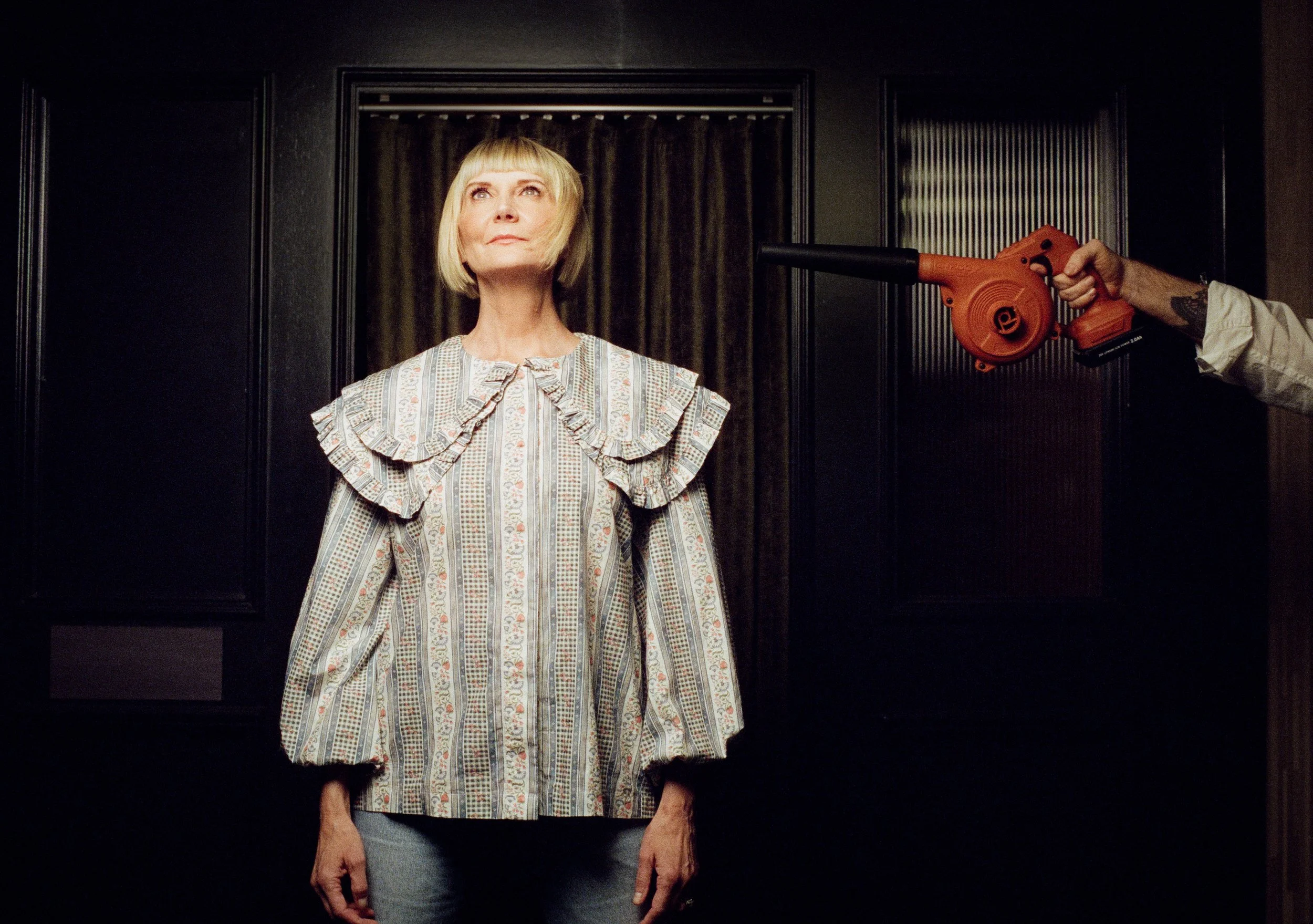
Cariann: It was so funny. I've really loved talking to you. I find a lot of hope in the fact that, you know, your character on this show is still figuring out how much she's capable of, what she has the capacity to do. And in a lot of ways, from what you've told me about your work in this phase of your career, you are figuring that out about yourself, too. And I just think that's so beautiful. There are no limits to how much we can do if we really put our minds to it and surround ourselves with the right people.
Kerri: That's absolutely true. I feel like I have no trouble in my real life being vulnerable—if anything, it's the other way around, that I have a hard time not being self-deprecating, and being, you know, strong and all that. And without a doubt, it is a universal truth that we need community. Community can also be one person. Community can be a neighbor that you see once every few weeks, but you know they're there. Some kind of community is essential for longevity and happiness. It's essential—actually, a study came out recently proving that it's absolutely essential. And so I'm just so grateful that I keep having these chances to, you know, add people to my community. It feels like I've won something, having even more people now that I call family, that I know I will know forever—who I look up to and who look out for me, and I look out for them, who I respect. Again, it doesn't have to be a huge circle. It can be one person, two people.
I had a therapist once say to me, 'Your mind is a dangerous neighborhood—you should never go in it alone.' I think our generation—Gen X, at least in my circle—is a little more open about feeling and about vulnerability, about like, 'Well, I tried that, that didn't work, I look like a real fool, let's try this.' And I hope that your generation will take from this that you just keep going, because you never know what could pop up. My motto these days is just: what if it all works out? Because it always does.
Cariann: That's so beautiful. I can't think of a better place to conclude, honestly. Was there anything you wanted to touch on today that we didn't get to talk about? I just want to make sure that if you had any other upcoming projects, or anything top of mind, that we didn't miss anything.
Kerri: I don't think so. And in fact, I want to thank you for the conversation about generations, because we don't talk about that that much in the press. And I do think it's so important, but it's also—like I said earlier, it's given me so much hope—that mostly the people who come up to me, like in airports, are people your age. And I finally asked a young guy one time—he looked like, you know, a frat kid, and I thought, what could you possibly—did your mom make you watch this? And he said, 'No, I just love the idea that maybe someday my life could be like that, with those kinds of friends.' And I was like, wow, that's pretty great.
Cariann: Yeah. Maybe life is figuring it out with your chosen family, and you're never mastering it—you're just always figuring it out.
Kerri: Yeah. Always figuring it out. And sometimes with certain people—not everybody, but sometimes with certain people—sticking it out and riding the waves is the right choice.
Cariann: It certainly makes for some good stories, too.
Kerri: Yes, exactly. You can't get away with anything with someone who's known you for that many years.
Cariann: Definitely not. Well, Kerri, thank you so much. I so appreciate this almost hour of your time. I love the show. I'm grateful for your honesty and openness, and I love Anne, and I can't wait to see where she goes next season.
Kerri: Thank you, honey. I can't wait to see what you're going to do! Keep at it, sister.
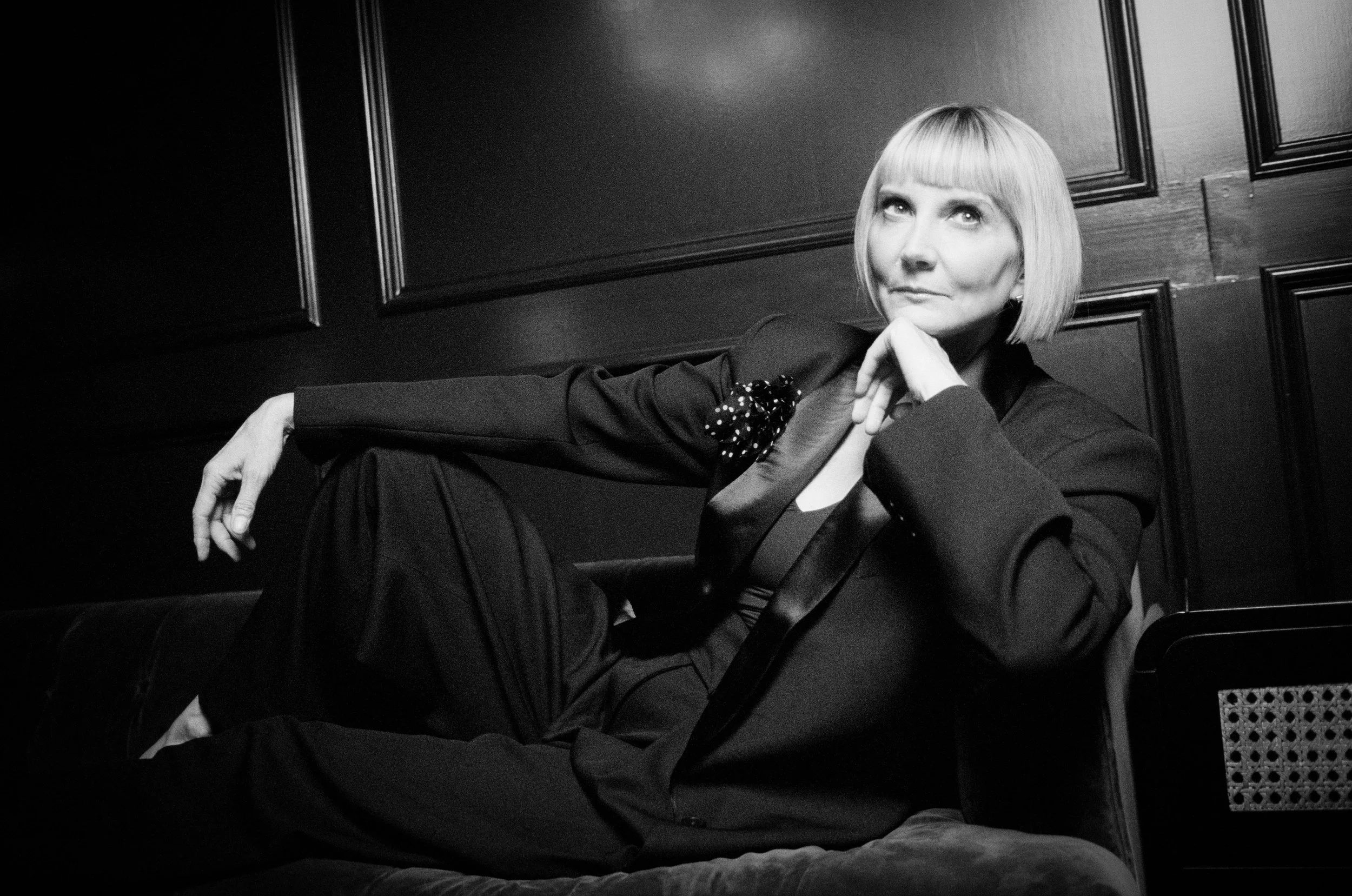
This conversation has been condensed and edited for clarity.
Interview By Cariann Bradley | edited by Kass Ringo | design by Madeline Westfall | Photos By DIMitrI TZOYTZOYROKOS & ShILOH KACHMANN | MAKEUP: JAMIE GREENBERG | HAIR: MICHAEL FORREY | STYLING: ANNABELLE HARRON