Olivie Blake
Olivie Blake
on rot, ruins, and a very Los Angeles haunting with Dreamland
I’d only read two of Olivie’s books prior to this conversation but there’s a language that is shared between a writer and their reader, and I’ve felt particularly spoken to by the way Olivie portrays women and, in turn, me. I look for myself in every woman I see in every medium because in every woman I can find the relentless, poised, and unguarded glow of what that word, woman, means to me. During this conversation, I looked into the mirror to see reflections of Anya, Regan, Olivie, and all of her characters I have yet to meet because I know, in no matter what context, I’ll feel seen in an Olivie Blake book or sitting across a table from her. — Kass, 2026 ◇
〰️
Kass Ringo: Thank you so much for your time today. I'm so excited to talk to you.
Olivie Blake: Yeah, you too. Thank you for this opportunity!
Kass: Yes, of course. So, I saw you in conversation with TJ Klune a few months ago at UCLA.
Olivie: Oh, yes!
Kass: I finished Dreamland on Monday. Congratulations on another book, by the way.
Olivie: Thank you.
Kass: I am someone who had to pull away from rating books and reviewing books. I love reading, but I want to be off my phone and reading helps me do that. I realized when I was tracking books on my phone and writing reviews, I was like, I'm doing the thing that I don't want to be doing.
But for me, [Dreamland] is a five-star read. I thought it was so good. At the very beginning of the book, the chorus says, "This is a haunting." And I think that's exactly what the reader goes through. It felt like a haunting of LA, which was so cool.
I wanted to understand those different narrative structures that you use throughout the book. That'd be so cool to learn more about.
Olivie: I'm at a point in my career where I am really focused on my next idea being something I haven't done before—something that's interesting structurally. Also, the more work I do as a novelist, the more I am interested in creating things for other mediums as well. I've written a play; I'm working on a film script. And I bring this up because when I am thinking of something, I've stopped thinking of, like, what kind of book is this? And more like, what kind of piece of art is this? And if I decide it's a book, why is it a book? So with Dreamland, it was this idea of wanting something that blends film and theater into the novel form, but that also is engaging with this the presence of a Greek chorus.
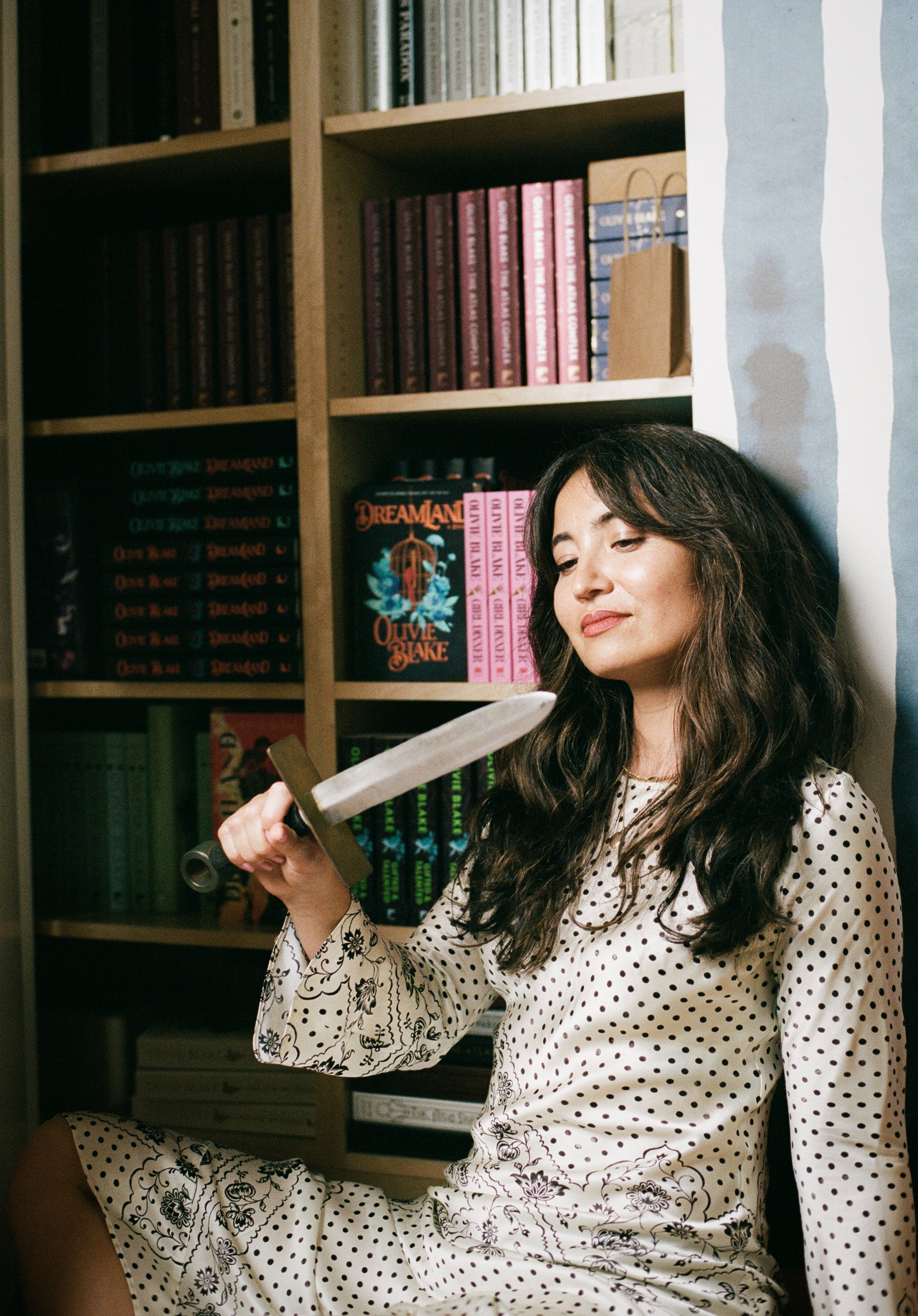
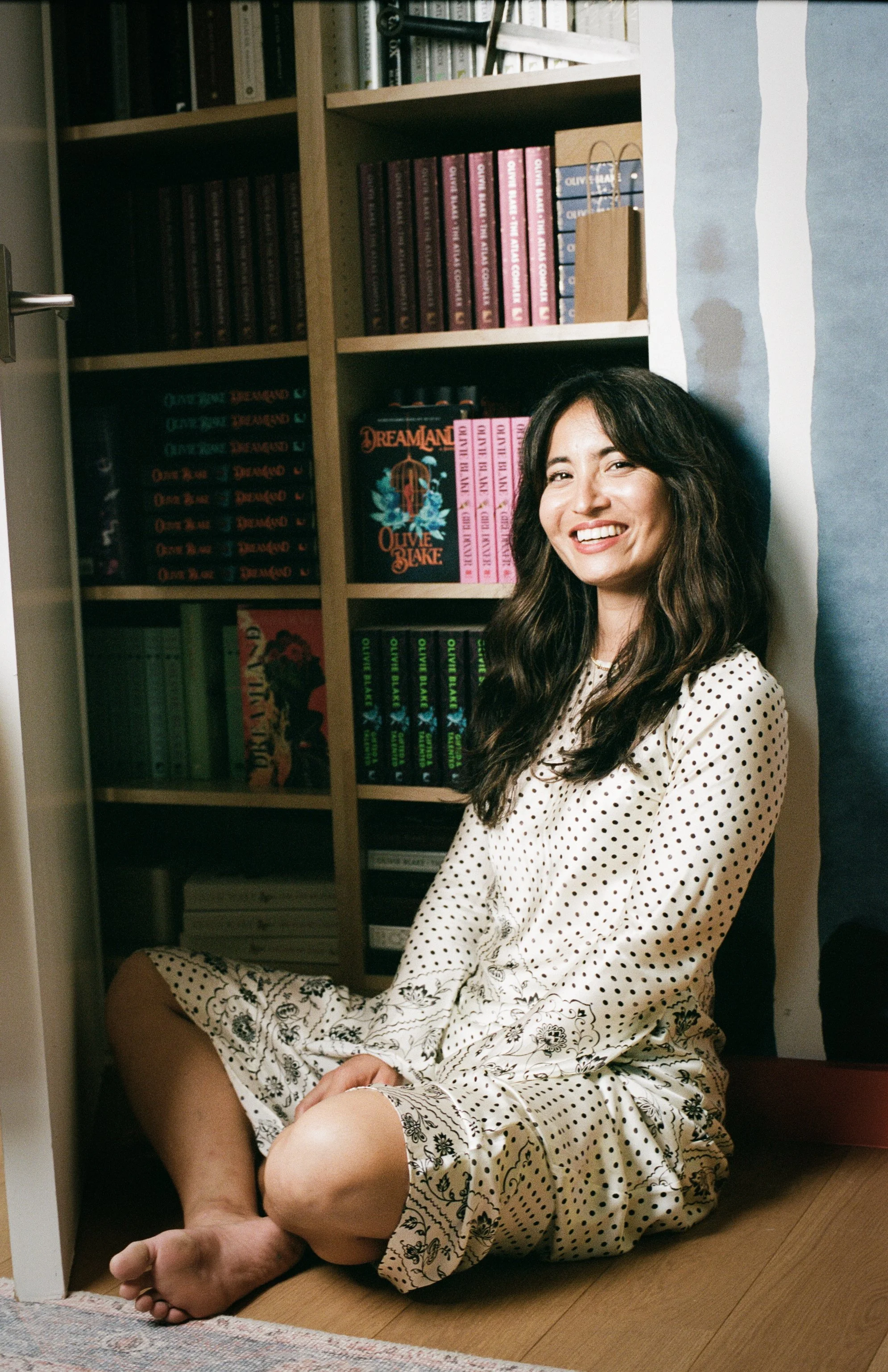
For Dreamland, it was really about the stretch, the exercise was to create something that was very atmospheric. Not to confuse atmosphere with aesthetic, though. I think, when writing something that's a Gothic, it has to have the Gothic themes. There has to be the sort of blurring of the supernatural. The macabre as something that takes an actual shape in the story. The idea of ruins in a literal way as well as reckoning with the past and those, you know, metaphorical ruins. And to engage with social taboo. I wanted it to feel like a Gothic novel, which I would say that most of my novels don't. The way that I write tends to be quite wordy—it's very dialogue-heavy. I rely a lot on unreliable narrators and voice. So, I had to find a way to create the same sense as if you're reading, you know, Rebecca by Daphne du Maurier or you're reading this very stylized thriller, but it's still me and my work and my voice. That blend was something I found in Shirley Jackson—finding a narrator who was almost dissonant with the story. They have such a strange and eccentric personality.
Anya is one of those characters. Sometimes I write a character and I'm like, this is a fairly likable character, and then sometimes I write characters that I already know Goodreads is going to hate. Anya is one of those. All of Anya's weaknesses would be perfectly fine if she were a man. She's ambitious. She's selfish. She's focused entirely on her career, on the pursuit of fame, her own vanity. She has these qualities that are not inherently negative, they're just masculine. So, on her, they look really bad. She carries this worldweary cynicism that she has no right to have, you know, which is very true for me of being a twenty-two-year-old woman and being like, I understand the world. I understand people are going to take advantage of me, and so it's fine if I do it to them. I think this is directly a result of writing Girl Dinner and writing about feminine power, and can beauty be power? Does conforming to the ideals of beauty give you any further agency? Does it give you respect? Like, what does power mean if you are using it in feminized terms? So, I think working on that allowed me to then move forward and create Anya, who's this character that's like, yeah, I understand that my power comes from being able to align with traditionally feminine qualities and to hide the things that I already know are ugly. And then also the racial element of like, I'm going to code switch so that I'm white in certain situations and I claim diversity when that is beneficial to me.
Kass: I loved Anya. I really liked her. There were multiple moments where I paused—like she's funny, but also she's aware of the fact that she's making a bad decision. Maybe she's being selfish. There's an appreciation, for whether the choices are bad or good, that she's aware she's at least making them. It's nice that there's that element of at least she's making her own choice. And it's really cool to see a lead female character do that.
Olivie: That's what makes the Gothic contemporary because I think, in a lot of Gothic novels, you get the Gothic heroine that is like, she's a virtuous person who's been put in this dangerous situation. She's here against her will. She's here because she had to marry this terrifying guy. She's here because she had to save someone else. There's this sense in the Gothic of virtue and good and evil and that good is sort of warring against evil and that love saves her. I liked the idea of Anya almost being someone who shouldn't be in this story; like she has made all the choices herself. She takes full agency for the way that this goes down, which was obviously the only way it could be done.
And you know when I say Anya is not likable, I mean to a very conventional audience.
Kass: Yes. Yeah. Yeah. Yeah.
Olivie: I love Anya. Of course, I think Anya is much closer to me than a lot of other characters I've written. There's a lot of like… it's hard sometimes because I always want distance from characters. It's not like any of them are me, but at the same time, they're all me because they all come from voices in my head. With Anya, I gave her a lot of my little quirks, like the Could I Survive It? game is like basically OCD thinking, which is something that I do as well, and the little prayers that she says to herself. I basically had just one of those—which was that when I was trying to make it as a writer instead of trying to have a more stable career; it's like there's no safety in creativity. Which is a good thing most of the time, but when you're trying to make your way through life in this economy, it's a hard thing. So, my way of not being frustrated by rejection or being plagued by the question of what if I never make it was just to focus on this beacon of, okay, well, if I never get lucky, if luck and timing never align for me, then at least I did everything else. Like, at least I brought myself to this point. And so, that's kind of where her little prayer motif comes from: that feeling of I can only control a certain percentage of this, but I'm going to make sure that percentage of what's in my power has been achieved.
Kass: It's very apparent reading her that… and I mean, of course, it's on the page and we read it that way. But having the actions back what she says was a really cool way to relate to her. Especially with it being, like you said, more contemporary. It felt—I live in LA, you live in LA—like I was inside this with her.
Olivie: I think it would have been a crime for me to not be true to LA as it actually is. There have also been people saying, to people who aren't from LA, the setting reads as if I hate it. But I think anyone who's from LA knows that's not true… It's actually funny because it's the same thing Anya says—that you're allowed to make fun of it if it belongs to you. It's been really interesting to watch how people react to the Angelino part of it. I actually wrote all of my books while living in LA, but this is the first one to actually be set in LA because I felt like I didn't have anything to say yet. I've been building up to this way of writing about a place that is much maligned, a place that is very misunderstood by people even inside of it. I felt like I had to write from a place of both love and criticism. The way you love something you really care about is not to only glamorize it or to only fault it, but to look at, how does this place make you who you are?
Kass: I feel like in LA, you're almost picking a city within a city. Once you pick a neighborhood, it's a very specific environment. That's a very specific culture. People can get really defensive of their neighborhood, or if you make LA look too good, people say you’re glamorizing it. LA does feel like one of those cities where you're not gonna win everyone over with how you write about it.
Olivie: LA is also constantly in flux. There's always neighborhoods [where] the demographic is changing. There are lots of neighborhoods that are traditionally Black that are now predominantly Hispanic. There are many places that are gentrifying. I live in Santa Monica and it's very interesting, because economically Santa Monica looks virtually depressed because so many businesses are vacant. That's something that's been happening over the course of the pandemic as well. I think that was one of the things that I tried to express with Anya, sort of her awareness that her neighborhood was shifting, which is something that happens constantly throughout LA, which is one of its major cultural pinch points, just like there's so many people coming in that its landscape is constantly changing. And so, that was also something to address because there's all these classics. I really wanted the touchstones of classic LA works. You know, I read a lot of Joan Didion and Eve Babitz and I peruse Raymond Chandler.
It's interesting to see how people would talk about LA when it was in a relatively static period…when it was just like, ah this is, you know, the thing that everybody refers to as Old Hollywood or a thing that's already foregone. I started asking myself, why are there no iconic contemporary LA works? Why is there no present-day Eve Babitz? I think it's because things don't stay still like that anymore.
Kass: Wow.
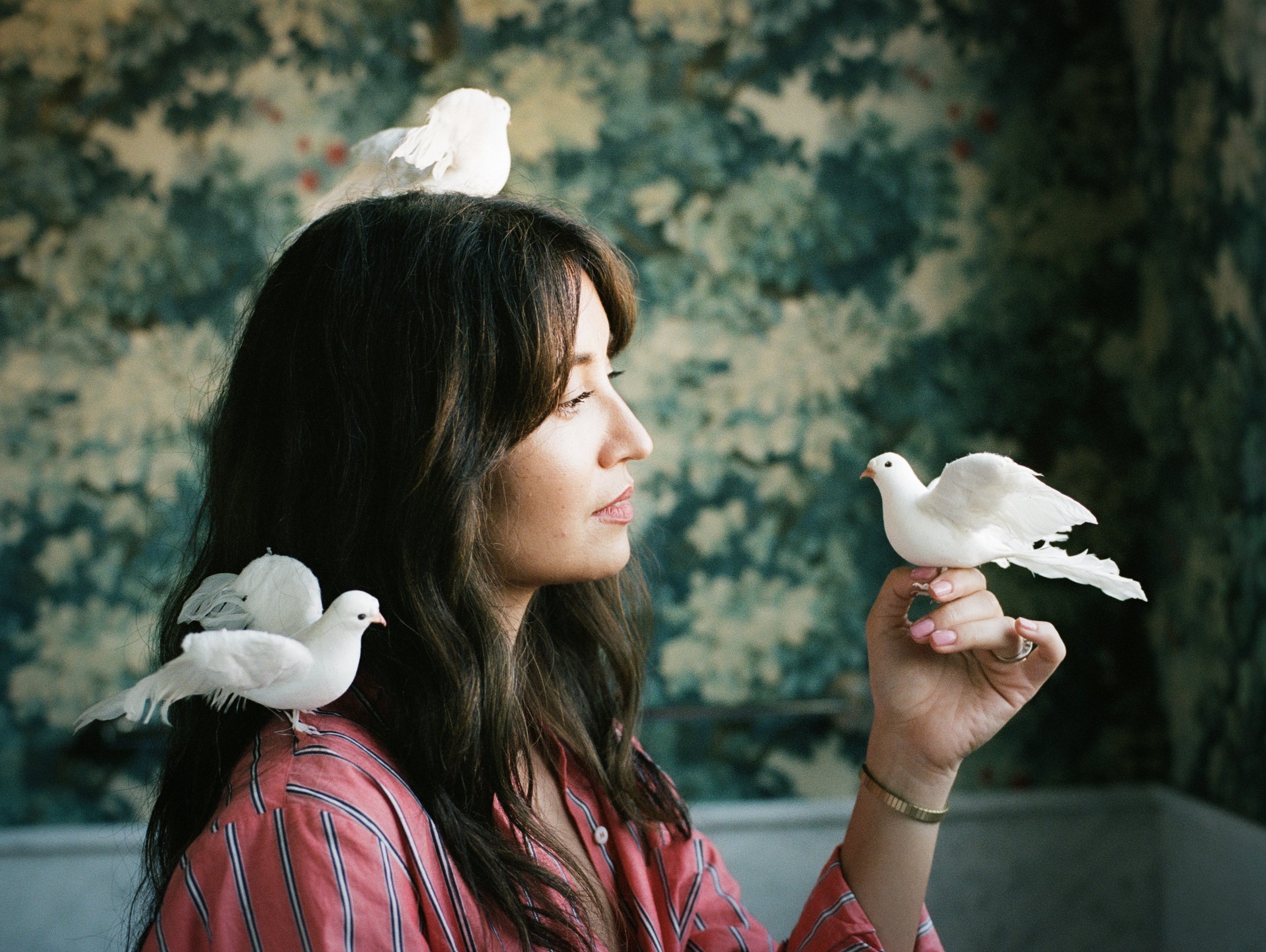
Olivie: It's really hard to capture a moment of LA.
Kass: We've touched on this a little bit, but I think as a woman reading Dreamland, it highlighted a lot of day-to-day, unobserved kind of nuances of being a woman, but was elevated by this high-concept story. It was so cool to read a female experience in that way and have to read between the lines. I think that some of my favorite media to consume is when we dissect the female experience in different ways, like if a man watches it or reads it, they could be like, "Oh yeah, that's crazy." And I'm like, "Yeah, no, this is what it is. It's just not a vampire.” I got to that three-quarterish mark, when Teddy takes Anya back to the DeWitts and I put the book down and I thought, I don't know if I'm the problem, but is Teddy the scariest person in this book?
Olivie: No, it's true. Even Anya says—there's a line in there that my editor called out, as well where she's like, "I feel safer with Jude, Jude who's a literal demon who probably killed a bunch of girls, than I do with you." She has such certainty in that moment that Teddy has no respect for her. I think that's one of those little indignities that is both true at a surface level and also very dangerous. That's someone who could have easily harmed her later. But even if he didn't, just the fact that he had no respect for her, that he…I mean, and I set the stage for that early because she knows right away when she's talking about Teddy and gives these sort of like halfass reasons for why she never dated him. Those were good reasons and she just rationalized herself out of it because of what she thought she could gain from him.
The other thing that was important about her story was to write her as someone who was very cynical and saw her cynicism as a tool, like a survival technique. She's like, I'll never be taken advantage of because I know what kind of people are out there. And then she was like, well, I know what Teddy is, but it's fine because I see it coming and then it still happens to her. And so this idea that like…you cannot demand respect from someone who's not going to give it to you. If you feel like you're being fetishized, if you're being objectified, you are an object.
It was interesting to write because that's something that I feel like I had to understand with age, you know, like that's part of what maturity is. When you're young, you're like, well, I'm desirable and that is power or I'm powerful because I'm desirable. Then you get older and that desire fades and then it's like, actually, that desire didn't bring me anything. It didn't get me anything. Maybe I was treated nicer in grocery stores or I got served at the bar faster, but how is that power? What did that really do for me? Right?
Kass: I guess Anya asks this question in the book—to Roro's art, about sensationalizing violence against women. Was that a question you had to grapple with in writing something like this? And that's not to, by any means, say that is what you did, because I don't believe that. I think it's important to tell stories like this where we see the perspective of this side. But even I can get caught up in watching things. It's usually a movie or a piece of television that if I'm watching some sort of gendered violence or anything of that nature that I wonder if I am allowing it to be normal? I'm taking it in. I'm giving it that click. I wondered if you personally had that kind of battle since it's mentioned.
Olivie: That's a really interesting question. I mean, I agree with you. I have a friend who's particularly very interested in true crime and I think it was something like we were all interested in when Serial came out. I definitely listened to that first season of Serial and I thought it was riveting. The friend and I both have backgrounds in criminal defense, right? So, there is some genuine, informed interest in the criminal justice system, but it did feel at some point that it was like, oh, we're taking it a little too far with the murder podcast and the sensationalizing. I do think there's so many think pieces about this. I have Anya bring it up because she's very online and so I wanted to sort of mimic the twenty-two-year-old. This is a Gen-Z mindset, so I'm only partially able to grasp it. But this person who has grown up with the content of discourse, right? I don't think that Anya really believes that Roro is sensationalizing these victims, but she's posing it because she's like well this is what people would say about it like a lot of. A lot of what Anya says and how she reacts to things is like she's preemptively defensive, she's like I already know the comment section is going to say this. That is a separate thing that I built into her—this way of navigating discourse.
I think there’s always the question of why do we enjoy sensationalized violence? And I think people both make more and less of it than they need to. I guess you probably do want to question how much of this you’re taking seriously. But I also really liked it as a way of posing that we never actually believe those things are going to happen to us. We never see ourselves as being possible victims. And then that ties into Anya and Teddy, where she’s like, I couldn’t possibly be a victim. I have so much more power than Teddy because he wants me so badly. And then she could very easily have been a victim to whatever he decided he wanted to do.
Dreamland is interesting because on the one hand it’s less political than a lot of my other books, which feels crazy to say, but Girl Dinner takes a hard political stance, and Newphoria, which is coming next year, also has a lot to say about technocracy and monopolies and capitalism. And so to me, Dreamland was smaller thought exercises blended into this atmospheric tapestry. I think of this not really as a statement book. This is a book about one woman and her very twisted, the taboo she’s breaking here is this idea of wanting someone who is evil. She’s really contending with the idea of evil itself and whether that’s something tangible. And whether, you know, the rot and the actual fungus in their lungs, this idea of can something just be rotten all the way through, and the idea being presented is that wealth and power, that’s the rot. But I wouldn’t say it’s, again, just all these sort of tiny ideas that are woven together. And so all of those things are true. It’s just, why do we sensationalize certain things? Why are we attracted to only certain crimes? Because you’re right, almost every true crime thing that’s horrific, it’s, oh, how have we painted the victim in order to make this crime appealing or interesting? And there’s that throughline, I think, is the part that we should be questioning. But why we enjoy it, that to me feels just sort of fundamental. We’re just curious. Human nature is to be curious, is to be interested in the psychology behind it. It’s just, why do certain cases get the interest that they do?
Kass: Absolutely. And I mean, I really appreciated that there wasn't insane detail on the murdered women. You weren't painting the picture very much of what the woman looked like.
Olivie: No woman really takes pleasure in that, right? I don't want to see violence done to what could easily be my body. That's not of interest to me. This is my frustration with… there's actually quite a few horror novels that I'm just like, why would I want this? Why was this directed at me? This is the last thing I want to see.
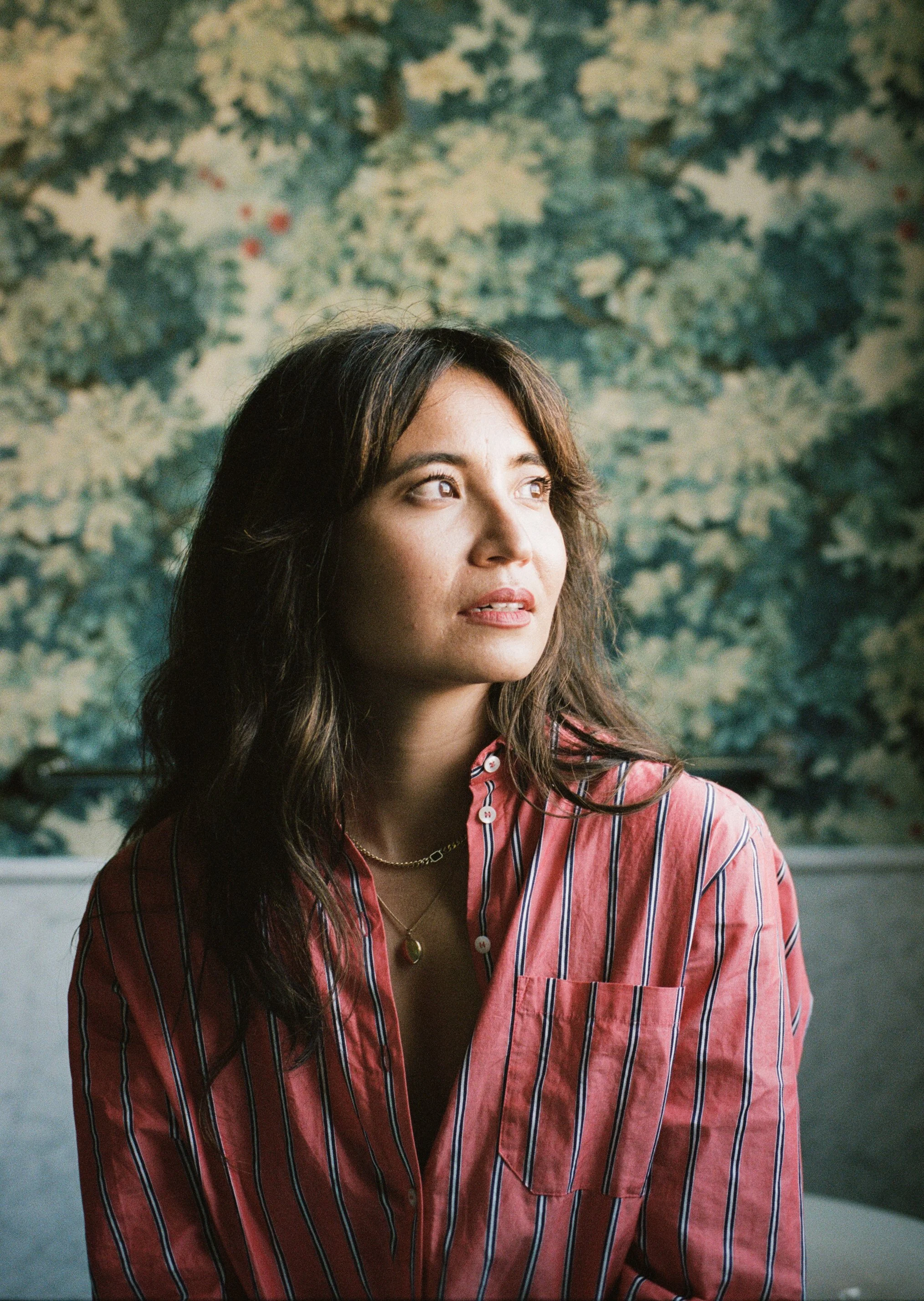
“I started asking myself, why are there no iconic contemporary LA works? Why is there no present-day Eve Babitz? I think it's because things don't stay still like that anymore.”
Kass: Yeah. And I love that we kind of lived it through the emotions of seeing those bodies or the consequences on the page—the blood under fingernails and Jude trying to understand what he did, or reading the newspaper or hearing the news of another body being found. I took it as both being able to paint your own picture if you wanted to without forcing the gore on the reader.
I also loved that it almost felt like we weren't giving the murderer what they wanted, like without knowing what the body looked like, or that exact position they were in, or how long it had been going on. And if they were all actually connected or not as like an outsider. I loved that we weren't giving the murderer the power to be read about. They know what I'm doing. They know it's me. That power complex of like, yeah, I kill people and I've gotten away with it.
Olivie: I think it was also important not to spend a lot of time on why he does this. We don’t really need to know why. It doesn’t matter why. A lot of people describe the narrative as confusing or unclear because there’s a lot of blurring between what’s dream and what’s reality. For me, that’s because there’s some stuff that doesn’t deserve the space. One of those things is the killer’s mindset, the killer’s intentions. Those things are not important to the extent that they are individual. The way they are systemic, that’s what’s important. The way that it was allowed to continue.
The character of Fred, the tech guy, was a later addition. He was always there, and then the question I was having was, why is everything getting so bad for William de Wit right now? Why is Jude just now acting out? I think it was this idea of an outsider. For me, that was the story of LA with the rise of tech, especially tech streamers that are doing everything as cheaply as they possibly can, which means not filming in Hollywood, or cancelling shows. The art is so secondary to the profit that I wanted to show the tech usurpation as a sinister element.
So the presence of Fred is as both the representative of tech generally, and money, and where the money comes from, and also his very casual disrespect of Emanuel, of every woman. That was added later, when I thought, “Oh, we need to understand why this is happening now.” The impetus for this instability, and this idea that William de Wit had been kept in moderation. His serial murders were moderated by his desire to please this woman who treated that as power. As soon as someone else came in with money and clout, there was this war that she could no longer control.
Kass: Yeah. And it’s all happening because they can.
You wrote a beautiful paragraph about love near the end of the book. One of the lines was, “once a thing is love, everything is fair,” which I thought was so interesting. I’ve experienced this, whether it be with a significant other or friends or family. The idea that if there’s a shared love, there’s—and I hate to say it this way—a payment to be had. Like, if you love me, then blank.
Maybe this is a huge question and I don’t expect you to actually know the answer, but why does love do that? As I was doing research for this, reading Dreamland and hearing some of what you’ve spoken on in the past, it’s almost like, have we glorified love past restoration? And if we were to ask Anya, would she still think that love can be pure once you understand the world? Years from now, Anya, what do you think about love?
Olivie: It was really interesting to write that paragraph because at the same time it’s being written, Jude is undermining it. He’s saying, okay, well, this is what you, the demon, have told me love is, but how can that be true? One of the things that was fun to do with Jude and Anya is that, for as much as the relationship is built on taboo, they have quite a healthy relationship. Or there is a sense that—healthy is too far a word—but they have a mutual admiration, a mutual ability to call each other out, an ability to be vulnerable. So you have Jude, who’s understanding, well, I would never do something this horrible to someone I loved. You cannot justify it with love.
I think love is a fascinating concept because love is the ultimate exchange of power, right? It’s, I value you above myself. It’s an exchange of agency, but that doesn’t make it inherently good. That doesn’t make it inherently healthy. I think toxic loves are really fascinating because at what point do you say it’s not love, it’s obsession? At what point is it about possession rather than love? It’s not like we can sit down and define love objectively. I also think the way that you view love changes culturally, moment to moment. At any given time, love itself is viewed in a different way.
So for Jude to hear, okay, this is what love is. Love justifies all things. Love validates all things. Is that true? Because there are times when, socially, it does, right? A mother’s love is one of those things that is the highest form. Anything a mother does is justifiable because it’s love. How far does that go? Is love actually contextual or is love always love?
I think it was a way of having this conversation, partially because that’s what the Gothic is. This is a romance novel. Ultimately, at its heart, this is a horrific romance novel. And so, what does it really mean to love someone? How much of yourself do you lose when you love? And then how much of this is just crime?
Kass: There’s a conversation to have about love when it comes to Anya and her mom, and watching them interact, and what you were just saying about a mother’s love and what that shared love between them actually looks like in context or in relationship, and whether it’s toxic love or not. The final conversation with her mom, with the tarot, was one of those moments where I had to take a beat, because there was so much love there. There was love on the page between them that you hadn’t felt for them up until then.
Olivie: That’s one of those moments where I haven’t given you that much insight, but it’s just enough to think, “Oh, okay. So this was love the whole time. It’s two people trying their best, but their best is pretty limited.” It also gives this feeling of, oh, what is Anya going to do next, now that her mom has these reservations about her? I write this a lot, that there’s a third-act perspective shift where it’s, oh, this person that I have accepted as rational the whole time, because she’s told me she’s rational, maybe she’s not.
That moment was important for a lot of reasons. It was important as part of the immigrant story and the feeling of conflict between the American-born child and the immigrant parent, of “we are not on the same page culturally.” We were both here, but we experienced it really differently. It’s such a pivotal scene, which is so funny for how brief it is and how theoretically irrelevant, but so much happens there that it was a really important one to write.
And particularly Anya’s sudden realization that her mom is the only person who refers to her dead grandma in the present tense. Even though she keeps saying, “I understand my mom, I understand my mom,” she missed this major factor.
Kass: Right. There’s a sense of motion with that scene that’s like, “Oh, we’ve entered the end of the book.” I don’t know how to explain it either, but it’s like a deep breath. Okay, let’s go. I’m ready for what’s next.
Olivie: Yeah.
Kass: And then this is, I guess, similar. You mentioned that Anya was named after a character. Was she actually named after a character?
Olivie: Yeah, she’s named after Anya from Buffy.
Kass: Okay, I knew it!
Olivie: I didn’t go into details too much. My real name is Alexene because I’m named after Alexis Carrington from the TV show Dynasty. So I thought it would be funny if the same thing was true for the main character of this book. When I first started writing this book, Anya was a teenager, so I had envisioned her mother watching TV in the nineties. Then when I aged her up a little bit, I thought, I don’t know if this still applies, so I’m not going to linger on it just in case. But I left it in as a little detail because that is why she’s named Anya.
Kass: And it’s fun to see that Anya isn’t the demon this time.
Olivie: Yeah. I’m actually not that well-versed in Buffy. It was more that I felt this is a show her mom would have watched, and my mom was super strict with TV and I wasn’t allowed to. One of these days I’m going to watch Buffy for the first time.
Kass: For not being well-versed in Buffy, there was an Anya element that was really cool, because she’s my favorite character from Buffy. She’s so under the radar and so underappreciated that I thought, this book is what she deserves.
Olivie: Yes. Wonderful. Yeah. It's an homage. [Laughs]
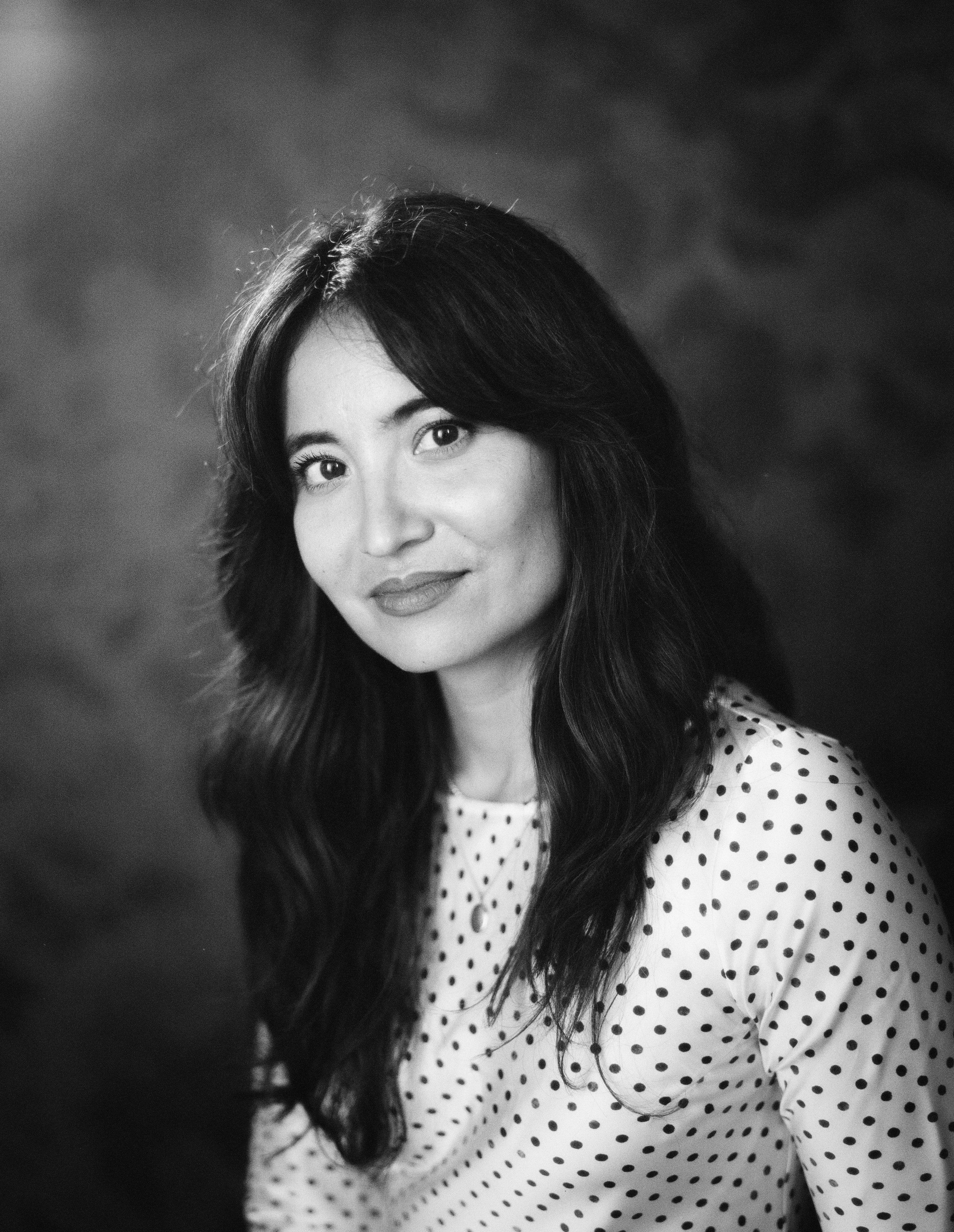
Kass: Exactly. We’ll change the dedication. We’ll get it reprinted. It’ll be great. [Laughs]
Okay, as we near the end, did you want to touch on Newphoria at all? I know we’re pretty far out from it, but yeah, such a hard pivot. [Laughs]
Olivie: No, it’s funny, because all of my books lead into each other. One of the things I’ve learned being at this for a while is that you can’t fit everything you’re thinking into one book, but there’s always something that stays with you. With Gifted and Talented, I think that’s where I started having rage about big tech. I was really angry, specifically, about big tech and fraud, and paying into a system to try to avoid rules, to avoid any sort of policy about monopolies or what they owe the citizen. This is a system that is built for fraud. The way that tech companies get evaluated is for what profit they might later down the line produce, so most of the things that are successful because they have a massive valuation are not really worthwhile until they recoup that investment. It’s this constant cycle, this big grift machine. And this was even before AI was what it is now. I was just beginning to be enraged.
Girl Dinner is really about conservative feminism. It was reactive to me and the overturning of Roe v. Wade, and the feeling of, are our rights contracting? Why is it always white women who vote this way, who actively vote against their own best interest? Is the desire to be next to power really that persuasive, rather than sharing it and having it intersectionally?
And then with Dreamland, I thought, I’m going to take a hot second and do a sexy romance. I don’t know. We’ll not overwhelm people. Then I got back to it with Newphoria.
Newphoria was inspired by someone on my publicity team accidentally saying The Hunger Games by Susanna Clarke, who wrote Jonathan Strange & Mr Norrell. I always mess that title up. They said that instead of Suzanne Collins, and I thought, “Oh, that’s hilarious. If Susanna Clarke wrote The Hunger Games, that would be a very different piece of work.” I was going to try to mimic that. But of course, I didn’t, because I’m me and neither of those authors.
What I really wanted to do was write about someone during a time when a version of the Hunger Games is happening, and the games are based on clicktivism. Basically, they are a comment about our online selves, and the idea that because of these online footprints that we have, we are unable to see each other as human beings. There’s no accountability. There’s nothing enforcing being a good person the way there is in real life. The idea behind the Senecan, which is the Hunger Games in this book, is that you can nominate people. They ask, who should compete to the death in these games? People can say Taylor Swift, and if Taylor Swift wins the most votes, she has to compete. It’s a riff on clicktivism, on virtue signaling. And it’s set in a future that I based on medieval England, so there’s a very religious undertone. Because of limited resources and the shifting of the world and lots of young people, it has an almost identical feeling to medieval England.
Kass: Okay.
Olivie: I wanted the main character to be not interested in this. He’s just doing his job. He’s a meme historian, because I thought that would be funny. He’ll make a joke to himself and say, “Haha, go off, King.” I was looking at the TV Tropes website, and there’s a trope called the Law of Funny. It’s a fanfiction rule that if it’s funny, then everything is fair game. It doesn’t matter if it makes sense. If it’s funny, it’s good. That was really the vibe with Newphoria: let’s create a satire where we can talk about everything that’s going on and where I think the world is headed if we continue to treat each other this way. If we continue to define humanity by virtue signaling rather than by how we actually treat each other.
It’s a cautionary tale about what the future really means if we’re always going to prioritize profit over people. What is the future if we lose our ability to care and to be part of a community that is in the interest of protecting others? But it’s definitely a satire. It’s meant to be funny. It’s a black comedy, I would say. I really love it. It’s a strange book. I don’t see it being commercial. I can already tell people are going to hate it, but I’m okay with that because I said what I needed to say.
Kass: I love that. I also went through some reviews to see if there was anything someone had said or asked that I wanted to bring up, and mostly it’s that people think your work is divisive, which I think is such a compliment. I think it’s so cool that you genuinely just said you’re writing what you want to write because you have something to say about it. You’re not reading into these people calling you divisive, or the unlikable characters you mentioned. You know what you want to write, and you write it. I personally am so excited for this new novel. But do you think this one scratched that tech itch for you or do you think there’s more in that realm?
Olivie: I actually already feel that. This is a book that was written from a place of rage, and now I feel more capable of doing something about it. I wrote this from a very powerless feeling, and I don’t know that I am actually any less powerless, but since I have written this and shaped my thoughts about it... Sometimes when you’re angry, the problem is just too big. Writing this book, wrangling the problem and making it into something I could say, helped. You could summarize this book in one sentence. I anticipate it being the one that gets annotated, the sentence that is why I wrote this book, which happens toward the end. Once I got there, I thought, okay, now I understand the problem, now I understand the anger, now I can do something with it. I can use it as fuel rather than as a distraction.
I don’t know what it will actually take, but I wrote this one story for Friction literary magazine. It was a Snow White retelling from the perspective of the evil queen, but the evil queen is an influencer and she’s just trying to get people to like her stuff so she can finally feel safe and like she belongs. Social media continues to poison her brain throughout the story until she meets the end of the evil queen. Someone was teaching it in a classroom, and they said that after they taught this story, three of the students deleted Instagram from their phones. I thought, that’s power. If all I do about it is that every time I write a story three people delete Instagram, cool.
Kass: I love that and I'm with you.
Olivie: I’m helping bring it down one book at a time.
Kass: Is there anything else you wanted to touch on that we didn’t touch on?
Olivie: Oh gosh. There’s so many things to say. It’s funny with this book specifically because I can almost never talk about Jude. It’s a romance, so you would think that normally in a romance you talk about both characters, but there’s nothing I can say about Jude that isn’t a spoiler. I guess, ultimately, I see this as a romance novel, which is a funny story, because my editor said, “Oh, it’s a horror novel,” and I said, “What? It’s a very sweet romance.”
Kass: I also took it as a horror. When I read that you wrote it as a romance and your editor also said, “This is a horror,” I thought, “Oh, wait. This is a horror.”
Olivie: Yeah, there you go. Sometimes you can't be in charge of deciding what your art is.
Kass: But I can look back on it now as a romance [and it] gives me a different lens on it.
Olivie: It’s probably more of a horror novel, but whatever. It was what I wanted to write at the time, which was good. It was the exercise of writing something to achieve the feeling of the sublime. That was what I was really going for. I was reading a book by the chemist who made LSD. It’s his story of how he made it. He was describing what it’s supposed to awaken in you, or what that feeling actually is. He said the closest thing he can equate it to is walking in the woods of his childhood and the light falling through the trees. The feeling of being transported is unique to everyone, right? I understood what he meant, and the sublime, that’s what I was trying to achieve: the feeling of light filtering through the trees in the woods of your childhood. It was very ambitious for me personally. I don’t know if it seems ambitious on its face, but to me it was something I really had to work to do. And so to have achieved that is like, okay, we did it.
Kass: Yeah, it's truly a great book. It's a really great book.
Olivie: Thank you. Thank you so much.
Kass: Of course. And I do just really quickly have to mention for Cariann—Alone with You in the Ether is one of her favorite books of all time. That was my first introduction to your work and it's so good. But she required that I let you know that. That's the book she hands out when she wants to recommend a book to somebody.
Olivie: I appreciate that so much. Whenever someone comes to a signing and they bring me that book, I know exactly what it means to them. Because it's what it means to me. So, it's one of those things that's like…the world isn't that big, right? Like, you can bring this to me and I know exactly what that means. So yeah, that's wonderful to hear.
Kass: I love how you just described that. That's so beautiful. That's it. It does feel so snug.
Olivie: That's a thing that allows me to keep doing what I'm doing without worrying about what the Goodreads reviews say. Alone with You and the Ether has also very divisive reviews. There's people who are like, I don't get this character. And I'm like, well, good for you! Congratulations on your mental health! But you know, there's plenty of people who did need this, and I was definitely one of them. I wrote it because I had never seen bipolar depicted the way that I felt it. At least if I write what's true to me, then maybe it'll be true to someone else. That's what writing is. It's just like, well, I have an idea. I have something to say. I'm going to tell the truth. And doing any less than that is squandering the chance.
This conversation has been condensed and edited for clarity.
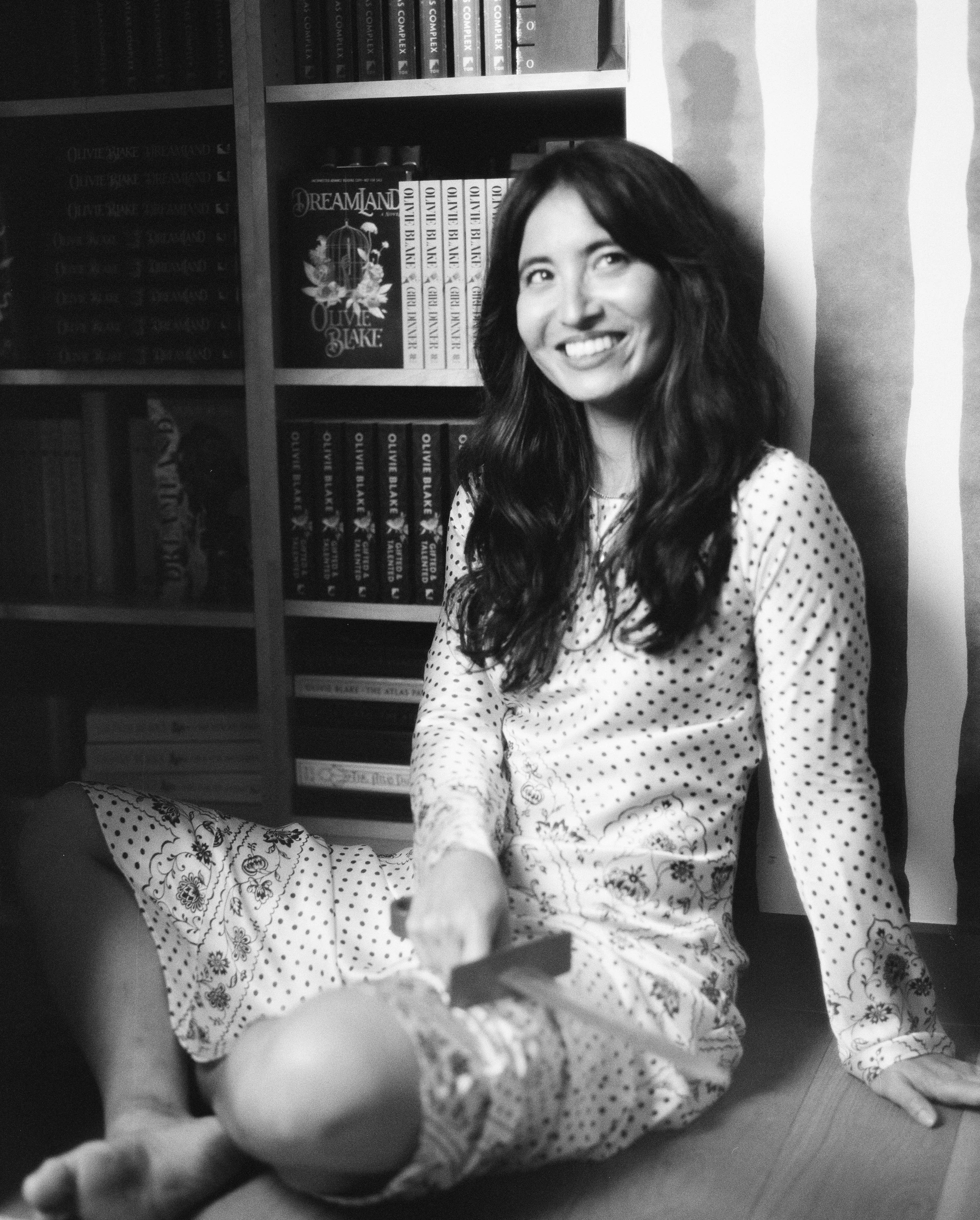
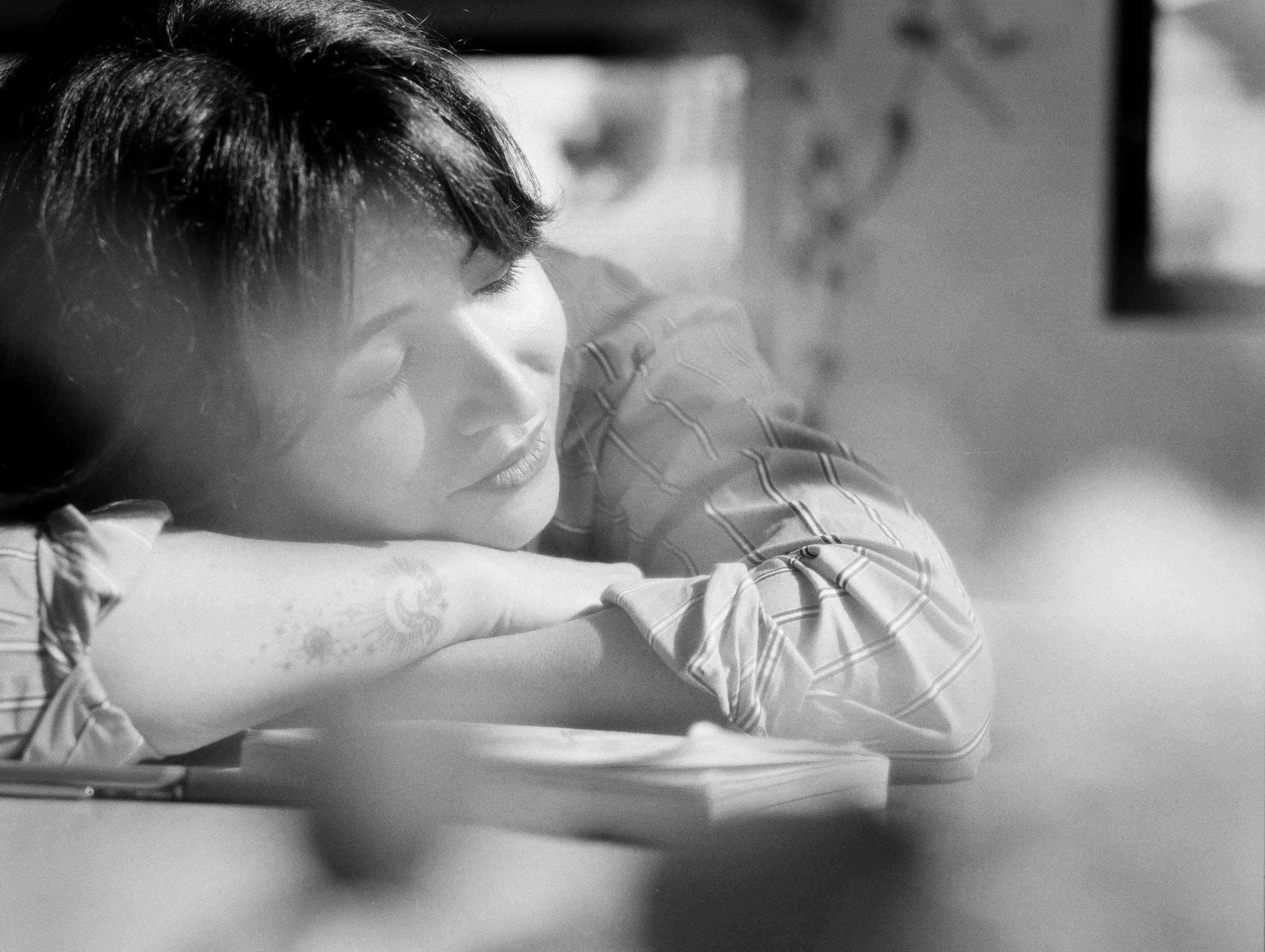
INTERVIEW BY Kass Ringo | EDITED BY CARIANN BRADLEY | PHOTOS BY Photos By DIMitrI TZOYTZOYROKOS & ShILOH KACHMANN | design by Madeline Westfall