Trinity Jo-Li Bliss

Trinity Jo-Li Bliss
on Avatar, music, and the impacts of found family
I spoke with Trinity Jo-Li Bliss in the midst of what feels like a turning point for her — between the release of Avatar: Fire and Ash and a new wave of her own music — and what struck me most was how present she is for all of it. What started as a conversation about Avatar shifted into softer territory: girlhood, instinct, and the kind of unfiltered hope so many of us spend our lives trying to get back to. Trinity talks about the character of Tuk like she’s both a mirror and a version of herself she met early and kept growing with. The way she oscillates between acting and music feels just as intuitive — guided more by feeling than formula. We found ourselves chatting freedom and community, and the permission to just go for it. At sixteen, Trinity is already part of something massive, but it’s her openness — her willingness to stay curious, to reflect, to soak in every moment — that makes her someone you want to keep watching. — Cariann, 2026 ◇
〰️
Cariann Bradley: I want to talk about Avatar, but who doesn’t right now? Everyone’s talking about it. How has the reception been since it just recently came out?
Trinity Jo-Li Bliss: It’s been really cool to experience that reception. It’s a funny thing, because most of the time I’m just at home seeing the reports of how the box office is doing, but I really love — via social media — getting to see what the fans are saying and being in my own comments section and seeing their love for my character, Tuk, for the film, and the way they feel about how this third film expands the saga. It just really makes me happy.
The other day, I went to the theater and I saw some fans totally dressed in blue facepaint, looking full Na’vi, and cosplaying as our characters. They had all of our merch, the popcorn bucket, and were getting ready to go see it in 3D. It’s those things, I guess, that get me so excited. It also seems like they’re just as passionate about getting a four and five as we are, so I have my fingers crossed for that.
Cariann: My fingers are also crossed and let me tell you, admittedly, I saw the first Avatar movie when it came out in 2009.
Trinity: Yes. [Laughs]
Cariann: When was that? Was I in eighth grade? Just so long ago. But, of course, I was like, I’m going to watch two and three to get ready for my interview with you. By the end, I was so into it. I feel like [the release] is so similar to the way that you shot it. You shot it so long ago and it took a while to come out, much like how the movies are also so long. In a world of immediate gratification, these movies really push past that in a way [on both sides].
Trinity: Yes, I think that’s why, even now that it’s been released for a month, it still doesn’t feel real to me. During the press tour, the release — there’s been so much build up and anticipation toward it that it’s hard to really process it. It’s just kind of crazy. Watching the film or reminiscing with my cast or crew members really makes me think of childhood because it was my childhood. And to be here now, it's just kind of crazy. So, I feel exactly what you’re saying. It’s a slow burn.
Cariann: Weren’t you nine or ten when you filmed these?
Trinity: I was seven when I was cast and then eight and nine for principle filming. The rest of the years I’d go back for pick ups every now and then. My last pick ups for Fire and Ash were July 2025.
Cariann: You’ve had so much time to think about it and then it actually happened. What’s that like?
Trinity: Totally. I mean, it’s also like little plot points that I’ve kept as buried secrets inside my soul, and all of a sudden we all can talk about them. It feels like an enormous amount of time and no time at all.
I also feel like I’ve changed a lot as a person and just grown so much, but I also wouldn’t be who I am at all without this Avatar family, this Avatar journey, and especially Tuk. It’s taught me so much playing her, but also taught me so much as a person getting to know her.
Cariann: I’m interested to know if there was a day on set filming that unlocked something for you that made you feel closer to Tuk.
Trinity: Oh my gosh, yes. I think I very quickly found Tuk to be a warrior. I remember we were shooting this scene in The Way of Water where we’re trying to get away from the Recoms and Lo’ak and Tuk both bite the Recom’s arm to get away. I feel like that just unlocked this warrior spirit inside of me and I was like, “Yeah, this is Tuk. This is me.”
I was really excited to just discover that side of her. It really made me understand how she has all of these role models around her, especially female role models of these warriors, and she wants to be like that, too. She never wants to be sticking behind or hoping everyone is okay. She wants to be on the front lines with them and I think that’s in everything. Even my little prop knife that I had, Tuk’s little knife that has little purple embellishments, and how she’s always ready to fight with everyone, even if it’s just her and her little knife.
I think that day I definitely discovered that in her and kept tuning into it throughout two and three, especially as I grew with her.
Cariann: Yeah, she is definitely fearless, but I mean, she’s a Sully! She’s a tiny fighter.
Trinity: In a way, I also think it’s because of how young she is. She hasn’t learned the boundaries in a lot of ways and she still has this wonderment that children have when they’re in that discovery period — they’re not really asking for permission. They’re more focused on going for it and then maybe asking for forgiveness later, and that’s why she’s so impulsive and instinctual.
Cariann: Do you like Taylor Swift at all?
Trinity: I am a huge Swiftie — through and through.
Cariann: Okay, that’s good to know because the way you talk about Tuk reminds me of this lyric from seven: —“When I was little, I used to scream as loud as I want,” or something like that.
Trinity: Yes! It is from seven. “I used to scream ferociously, anytime I wanted.”
Cariann: I’ve been thinking about that a lot, actually. I turned thirty this year and I almost feel like I’m coming back to a lot of that confidence that I had when I was younger — I miss the naiveness of my fearlessness and I’m trying to tap back into that. Tuk has a lot of that.
Trinity: Totally. I mean, I’m only sixteen, and I feel that every day. We can call it naivety, but it’s this freedom where we all were so much more instinctual, impulsive, and curious when we were little. That dreamer mindset. I always am thinking about that and how I feel when I look back on my little self which I’ve been doing a lot of on this press tour. I just think she was much more unfiltered and that really played into Tuk.
Cariann: That naivety — it’s also just, like, hope, you know? It’s just having hope. Children have so much hope and I think we just forget as we get older.
Trinity: Definitely.
Cariann: I know Zoe Saldaña mentioned [in an interview] how working on a James Cameron set is like a film education she never had until she did these movies. Does this feel like film school for you?
Trinity: It feels like everyone on the cast and crew is a master of their craft and I really love watching our director, James, do his thing. I mean, he is not only a master of his craft when it comes to the directing and writing side of things, but he’s so good at creating this environment with the actor to collaborate with him. He just wants us all to experiment and be so reactive with each other. He also knows every department on set. He loves to roll up his sleeves and get into the thick of it with everyone. That’s something that really got instilled in me from just being around him. That’s one of the things I cherished about every moment on set.
I really love what Zoe said because I can feel that in my soul. I just learned so much as a person from all of these people that were so kind and so passionate. Even just meeting people that started as PAs and now I know them and they’re doing what they want to do and have always wanted to do — like camera operator or director — all of these different things. Someone who was a PA on our set, she ended up being my first AC for my music video. Or one of the camera operators, we co-directed that same music video together.
I was always so inspired by everybody on this set and I work myself into tangents about it all because I don’t know where to start!
Cariann: What a community and a family, especially when you’re young. That’s so fascinating. Talk to me a little bit about your music and the music video that you mentioned!
Trinity: Before I get into the music video, I have this Tuk playlist I made — just how I imagine the mixtape she’d have if she was a human on Earth, and I need to share with you that seven is on it because I feel like we’re on the same wavelength.
Cariann: Oh my gosh, wait, that’s crazy! I love that you have a character playlist. I’m a writer and every character I write has a playlist.
Trinity: Yes, so I feel like we’re literally on the same brain wavelength with this. I really love music as self-expression, as a way to connect to characters. I love writing songs from characters’ [POV] or how they’ve inspired me in my own personal life.
But you asked about the music video! I really love my music being influenced by the cinematic side of things, whether it’s lyrically or bringing those lyrics to life in their visuals, their story, and their feeling in the music video world. I had so much fun doing that and I just couldn’t believe I got to be reconnected with three Avatar crew members and do this together with them. My DP, my first AC, and my co-director, we all knew each other from when I was seven. It’s pretty nuts.
For them to be like, “Trinity, who is this person you’re singing about?” while we’re making this song about that first love and kind of sweet tenderness of infatuation. [Laughs]
Cariann: They’re like, “Who is this seven-year-old singing about? But she’s not seven years old anymore, I guess! All grown up!”
Trinity: [Laughs] Seriously.
Cariann: That’s so cool, though. I’m still friends with people that I worked with at my first job. Those connections are so important. You stay connected. You reconnect on different creative projects. It’s just the creative community. It’s what’s so important about it.
Trinity: I love that way you described it — creative community. That’s so on-point.
Cariann: Also music being a big way in for you, I mean, that tracks. I didn’t really even think about that, but do you have dreams of merging music and acting in a way past even doing music videos and things like that?
Trinity: I would love to! For so long, almost since always, they’ve felt like very parallel lines and yet they’ve always been intertwining because that’s who I am as a person. On the Avatar set, I’d always bring my guitar and serenade them. That was a way I connected with my cast member Oona who plays ukulele and we would jam together.
It has always been something that has been intertwined and yet separated. So, one day, I’d love to make them come together, whether that be a musical or something along those lines. I think that would be really fun.
Cariann: Yeah, that would be! I’m sure it’s only a matter of time. Hopping back to Avatar — I wanted to talk to you about the volume. Isn’t that what it’s called? What [the cast] films on? It seems like there’s two sides [to filming that way]. You don’t have to worry about the set, you don’t have to worry about all those other things, it’s just you and the motion capture. But at the same time, is it hard to get in the headspace of the character like that?
Trinity: There’s different sides to it. I thought it would be so much easier to be in a real location and not have to rely on your imagination for everything, but actually, I found the more normalized way of filming live action to be more technical; to think about getting on your mark, to think about the sun going down and having to worry about that component or let’s reshoot the take because the sun got in the way of this storyline moment. Or the fact that when you’re on a live action set, there’s the master shot and then we go in for everybody’s coverage and there has to be a lot of continuity in that from performance to staging.
With performance capture, there isn’t any of that because every single shot gets to be a totally fresh take and we get to just be reactive and do it as if it’s the first time. To be able to use my imagination, it was a very intuitive, easy thing as a kid because that’s all we’re doing. It also taught me so much for every role and role to come, even with songwriting — all of these things in my life — because that’s the way I would connect to Tuk and the world that she’s in through the performance capture filming process.
Jim is so good at placing us right in the timeline. Sometimes the set would just shut down for Jim to explain to us for an hour, to get us in that zone for where we are in the timeline, where we are in Pandora, and to just play with us and block things before we even say rolling. That was always really special to me. I think performance capture gave me so much room for discovery because it’s so actor-to-actor.
Cariann: Wow, it just seems like there’s so much freedom there. When you remove everything else, it’s just the performance. I’m not an actor, but it reminds me of what theater is like, where you have to really depend on just the performance.
Trinity: Definitely. Sig [Sigourney Weaver] always refers to it as reminding her of blackbox theater. The first way that I got into the creative arts, performative side of things was just local musical theater camp. I feel like, in theater, I would find myself doing so much sensory work where you’re just eating a sandwich, but you’re just going through the motions and there’s nothing actually there. But on the Avatar set, they actually worked really hard to craft props. Jim still wanted us to feel the motion and for everything to be real. I mean, that’s why we shoot in the tank instead of just floating around on wires.
Cariann: I feel like the Avatar franchise explores so many themes like grief, belief, and faith are huge ones, but connection and belonging are what jumped out the most to me. And I’m wondering, did you and your castmates or anyone on the crew talk about that? Especially it coming out now when I feel like the world is so divided. Is belonging one of the big things that you guys talked about?
Trinity: Yeah, definitely. I think you touched on so much of what Avatar is at its core and it’s really interesting that this story, not only Fire and Ash, but just this whole saga, even all the way to film five, everything has been written for over a decade. And yet, I feel like it’s still ringing so true and maybe even more true now.
You talked about belonging. With Tuk, the factor of her being mixed race and how her parents are struggling with that in this war, and her mom’s prejudice and love for her husband and her children. All of that was really interesting for me to experience at the time when doing principal filming, but then grow with that experience and knowledge and realize how it just hits closer to home throughout the years.
My castmates and I definitely did [talk about] that because it’s something our characters are going through together, and also what we were going through in our life. We were all at different stages of adolescence because, coming on to this, I was seven, Jack was twelve, Bailey was thirteen, and Jamie soon turned eighteen. We were all kind of figuring out who we are, figuring out our place in the world, and with all of these themes, we can really relate to our characters in that way. But our characters are placed in this context that no one should have to go through when they’re children in war.
I really love Avatar for its themes. I feel like that’s why different ages, different cultures, different backgrounds, different experiences, and different people — we can all find something that we come together on and we relate to. I’ve seen that with my relatives who don’t speak English, and how we all really connect on those themes because we’ve all felt like we don’t belong or like we’re searching for that belonging.
Cariann: It’s beautiful how it becomes a found family between you guys, the people who made the movie, while exploring the themes of found family in the actual plot.
Trinity: Oh my gosh, I think about that all of the time because one of our main mottos that we stood by was chosen family, found family, and then we’re always talking about this Avatar family. It’s our chosen family.
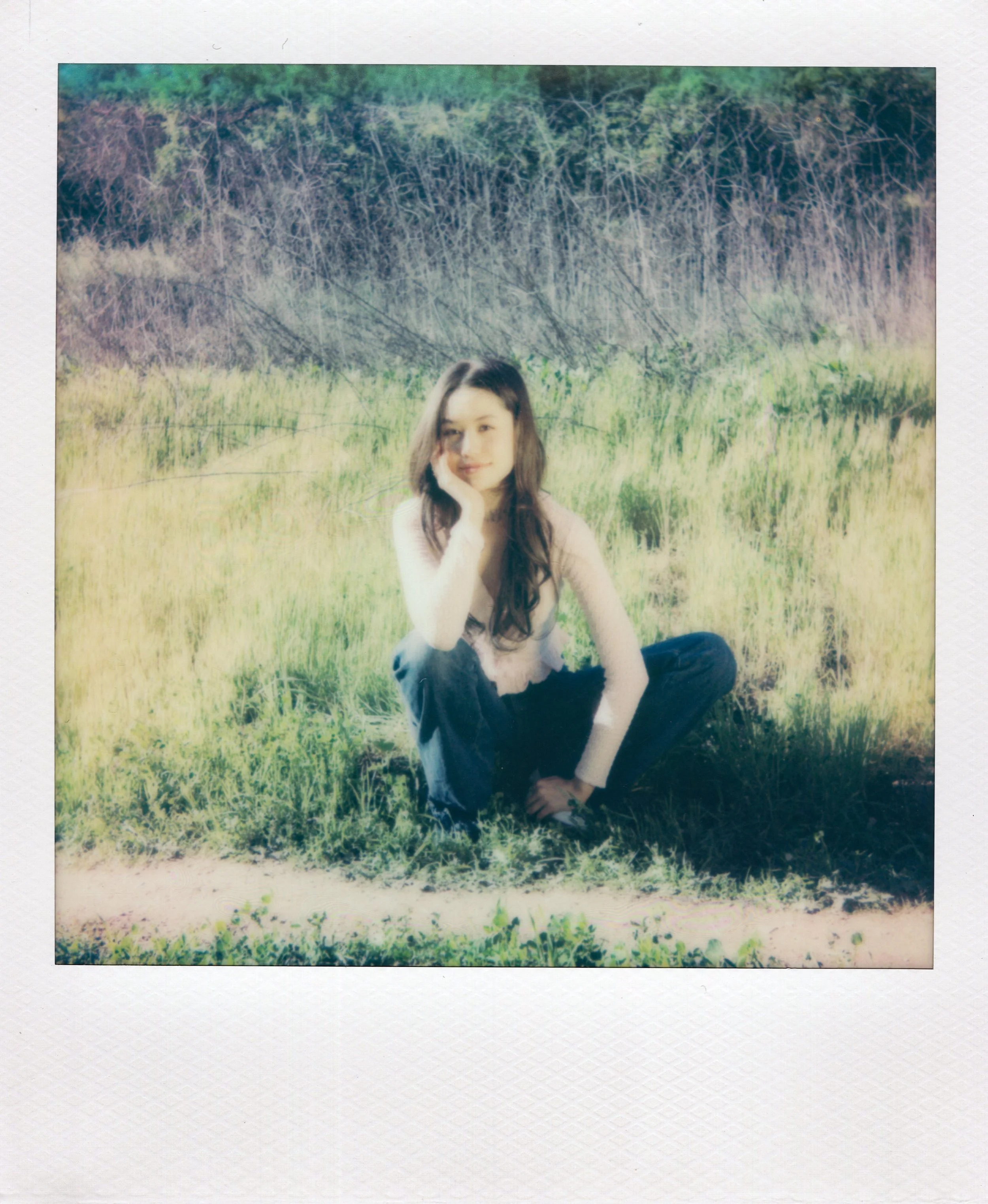
“We can call it naivety, but it’s this freedom where we all were so much more instinctual, impulsive, and curious when we were little. That dreamer mindset.”
Cariann: That’s really beautiful. I didn’t realize that all of these movies have been written for a decade already.
Trinity: Totally! It’s a whole story and I think the best is yet to come. There’s just so much deeper to dive into these characters and into the world of Pandora. It feels like everything’s just kind of started.
Cariann: My fingers are crossed, my toes are crossed, everything is crossed because I want to see four and five as well. [Laughs]
It’s interesting that you say it was written a decade ago, it’s still so similar to what we’re seeing in the world. It begs the question, does life imitate art or does art imitate life? I don’t really know.
Trinity: Seriously.
Cariann: And then to think that art has two lives. It’s a thing when you write it and then the relationships it develops with the people that watch and take different things from it. That’s such a fascinating concept to me.
Trinity: A quote that changed my life was one that our beloved Taylor Swift said, and she was talking about how art is a mirror; so what you think about it and how you receive it is way more of a reflection of you than the art. I feel like I keep finding experiences where that quote hits me differently, whether it be music or acting. That’s what I think a lot about when I’ve been talking to different people about this movie and just the way we all find these universal things that we connect upon, but also these things that are so personal to us. It’s really, really cool.
Cariann: It’s so cool. I do think that the best art is like a mirror. I’m even at the point where I’m like, if I read a book and I don’t like it, it’s probably just because I don’t like it in that circumstance at that time, you know? If my circumstances were different, I could take that book a totally different way.
Kass and I were talking about this the other day — it’s just so crazy how subjective everything is.
Trinity: Yes! Or have you ever found a book, a movie, a show, or music, something, later in life or at a different time of your life and you’re like, “Wait, I don’t know why I didn’t connect to this earlier because all of a sudden this is the most important thing to me right now.”
Cariann: I did that with Game of Thrones. I didn’t watch it until last year after everyone had already obsessed over it and I became so into it. When something comes out and I don’t immediately watch it, I know it’ll find me when it needs to.
Trinity: That was something I figured out last year, that so many things that I used to feel like did not speak to me all of a sudden were the artists I’m always listening to or the movies that would make it into my Letterboxd, you know?
Cariann: Yes! You got to work on Life of Chuck as well, right? What was it like working with [Mike] Flanagan?
Trinity: I really love Mike’s whole filmography and I was so excited to work with him. That project, all of the memories I have from it — that’s something I’ll always hold so dear in my heart. It was the most fun time. We danced until our feet couldn’t anymore. I really loved my character, Cat McCoy, and since I’m homeschooled too, I was like, “Wow, I’m getting to live these clichés and experiences that I thought I never would get to do.”
Mike is a really warm person. He brings together the whole set as one united team and allows us to forget that we’re having a time cruncher working because we’re all just having the most massively fun time. And for a guy that’s always doing horror, he’s just got a smile on his face. And I just love his care — this is something I love about both Mike and Jim — I really love their care for the world, their care about their children, and their children’s children, and about the messages in our lives.
I really loved how Mike felt this film was a time capsule for his kids to look back on later, for all of us, and to make something that’s so thought provoking; it makes you feel this uplift of hope while also kind of grounding you in a sense of deep sorrow.
Cariann: I love Mike Flanagan and when I saw Hill House, my life changed. There was before Hill House and then after Hill House, that’s how I felt like my brain was working.
Trinity: I love that.
Cariann: Getting to work with James Cameron and then Mike Flanagan. Dang! [Laughs]
Trinity: [Laughs] I know, I feel like a very lucky girl.
Cariann: I feel like maybe it’s setting your standards at a good place going forward in the jobs that you take, because those are artists that take such great care in their stories.
Trinity: Definitely. They’re at the core of their stories. They direct, they write, and they are so deeply entrenched with these characters. It’s always something that will inspire me. I think Mike and Jim are people who inspire me to look at life as something not defined. To think out of the box because that’s really something that they embody.
Cariann: Yeah, and you can do it all. You can do any part of it that you want to.
Trinity: Yes!
Cariann: Did you make a playlist for Cat, too, your character?
Trinity: I did! Especially because Life of Chuck was the first script I’d read that had music already in it since it was an integral part of the era and the dancing and the whole vibe. That was so exciting to me. I was reading the script and there were songs to reference — I just immediately went into deep study and made a playlist. They were songs that made me connect to Cat and songs that were in the film, like My Sharona and Give Me Some Loving. I heard those songs over and over again. Particularly Give Me Some Loving because we only had a week to learn the choreography to that three minute dance by the amazing Mandy Moore — which was another fan girl moment for me. [Laughs] That song is in my head forever.
Cariann: I just love hearing about all of your work and you are so passionate. It’s energizing to hear.
Trinity: Oh, thank you.
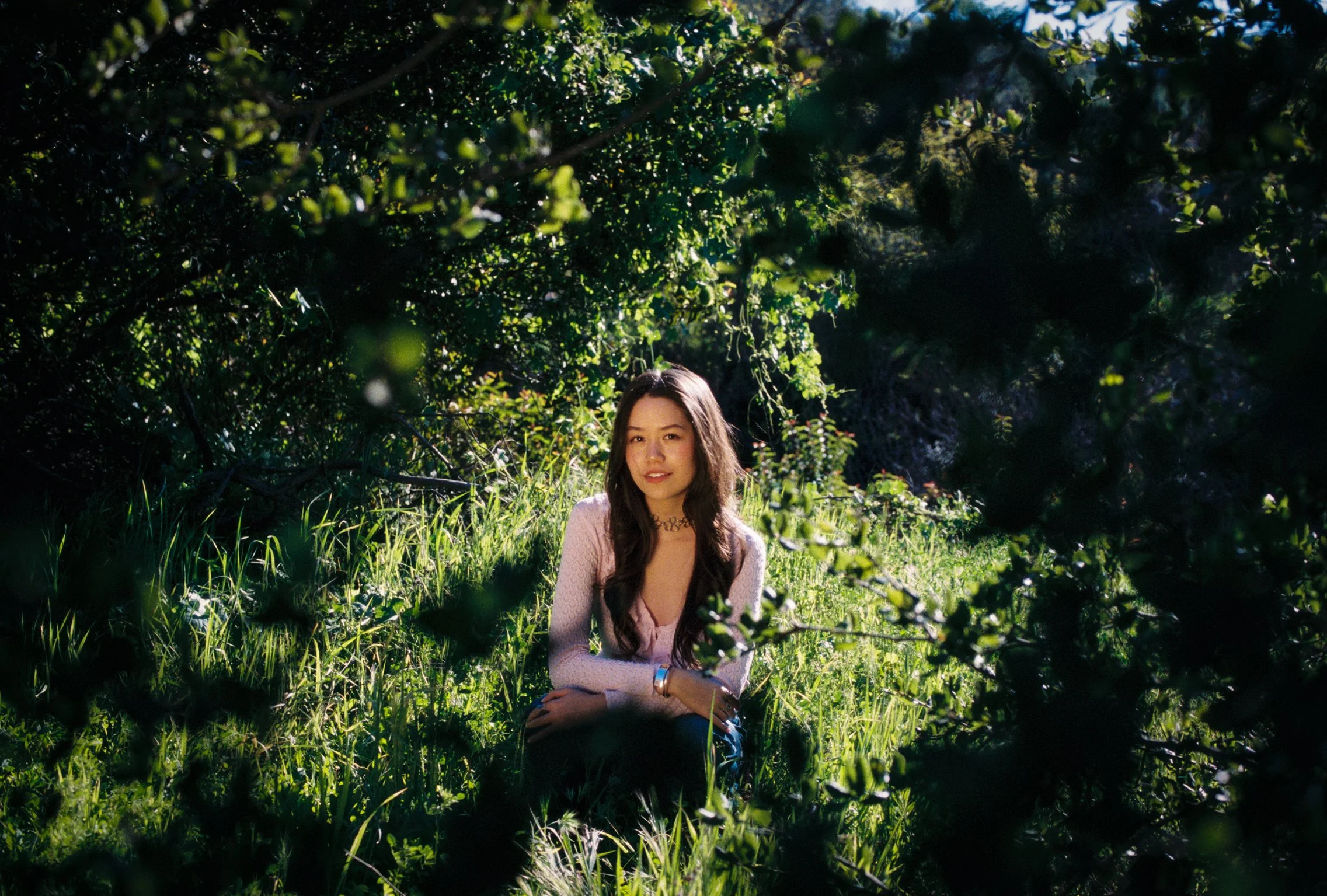
Cariann: What are your dream roles or types of people that you want to play and explore? Are there dream projects you’d like to maybe write one day?
Trinity: I would love to do a romcom. That’s something that I’m very obsessed with in this era of my life. I can’t remember a time where I wasn’t a huge romcom girl. I just kind of devour the classics to the modern — although I think the older ones are a lot better, if I’m allowed to say.
Cariann: Girl, you’re allowed to say.
Trinity: I think my fav is 10 Things I Hate About You, and then on the modern side, my fav is To All the Boys I’ve Loved Before. But yeah, I’d love to get into the romcom world.
The thing about To All the Boys I’ve Loved Before is that that was the first time I’d really seen an Asian lead in a romcom and I really saw myself in it. That really changed something in me. I was like, “Oh gosh! I would love to be a character people see themselves in,” whether that is because they haven’t seen themselves on screen much or at the emotional core of things. It’s important to feel seen and feel like your story is represented.
I’ve also always wanted to delve into the supernatural. I’ve always thought it would be so cool to play a vampire or something. I had a huge Twilight phase, so the vampire thing is not surprising, but I’ve wanted to dive into that and even a bit of the horror genre. There’s just so much I want to dive into. I feel like I’ve barely cracked the caramel on the crème brûlée.
Cariann: But what an amazing time to be at it. Everything is possible. Kass, my creative partner, just had her thirtieth birthday party and it was 13 Going on 30-themed.
Trinity: I love that.
Cariann: It was amazing. We love romcoms as well.
Trinity: Can I keep that idea in mind, maybe steal it when I turn thirty?
Cariann: I don’t want to speak for Kass, but [Kass gives thumbs up on screen] — thumbs up! Amazing.
It was so cute. Her best friend painted the dollhouse from 13 Going on 30 and then all of our placecards were little pieces of doll furniture with our names on them. It was so intentional and so beautiful. The most magical night.
Trinity: It sounds like it, my goodness.
I would just love to be behind these stories. I mean, writing is always something that I’ve loved more as a self-discovery thing, especially in songwriting, but I’ve always imagined how cool it would be to write these characters and write a story that just comes from the heart and to see it through from there. I just cannot wait to get into that.
Cariann: To have characters that people fall as in love with as you are with [the characters you created].
Trinity: Exactly. Like what you guys were talking about with 13 Going on 30. I think stories just hit people in a way that always inspires me.
Cariann: It’s that second life or third, tenth, hundredth life of the art, right? It’s that it gets woven into someone’s story. That’s what’s so magical about it.
Trinity: Wow. I never heard it put that way. That kind of changed my life. [Laughs] Yes. It’s like, what if I worked on a movie and then one day someone had their 30th birthday party and dedicated the whole party to it and were painting a dollhouse. That’s so magical.
Cariann: I see that in your future.
Trinity: Thank you. We’re manifesting it for me. You just made me realize, isn’t that just the most beautiful example of people getting to experience so much love and community because of something? I love the word ‘girlhood’ because of that. It doesn’t have to be just us girls, even though that’s so fun. [Laughs]
Cariann: I know, right. [Laughs]
Trinity: Just the — we belong in this love for something and our love for each other and how it is personalized to us.
Cariann: I do want more girlhood. I want more girl power, girlhood movies and stories. I’m on the same wavelength as you on that. There’s something so magical about it.
Trinity: Yes! I think so, too. On the girlhood topic, on the Avatar premiere red carpet, Zoe [Saldaña] called all of us gals to come together and take just a girls photo. She said, “It’s so rare that we’re outnumbering the male leads,” and she was just really happy and proud to have us all together, standing united, and I just felt like my heart was flying in that moment. Looking at these people that are role models to me and for Zoe to say it doesn’t happen a lot, as someone who’s worked so long in this industry, to be surrounded by so many girls and women and in a story that represents them as warriors or moms or daughters and sisters. The whole three dimensional spectrum of things.
Cariann: That’s so beautiful. The story really does paint women as warriors, which I love so much. The fact that it feels that way off screen too is, I mean, you couldn’t ask for anything better.
Trinity: Definitely.
Cariann: Is the premiere stuff overwhelming? How has it been?
Trinity: It’s really cool. It definitely feels like you blink and it’s over, especially for a buildup like Avatar has had. It’s this one night or this couple of weeks of press and all of a sudden we’re done and when’s the next time we’ll see each other again? Mostly, it feels like a huge reunion, but it is the most surreal thing.
One of my favorite things about the premieres is that I’ve gotten to meet the Avatar fans through it and feel their outpouring of love and happiness. It’s so infectious. We’re caught in it together and oftentimes we’re both caught in the cold. [Laughs] That was Paris. We could [all] see our breath and goosebumps, yet we could just go on and on forever. That was a really special thing about the premieres. I think I still haven’t processed it. It was such a whirlwind.
Cariann: Experiences like that are so singular. It takes some time, I’d imagine, to process it. When I have to leave the house, I have to process that, so I can’t even imagine getting my photo taken on a red carpet.
Trinity: Definitely.
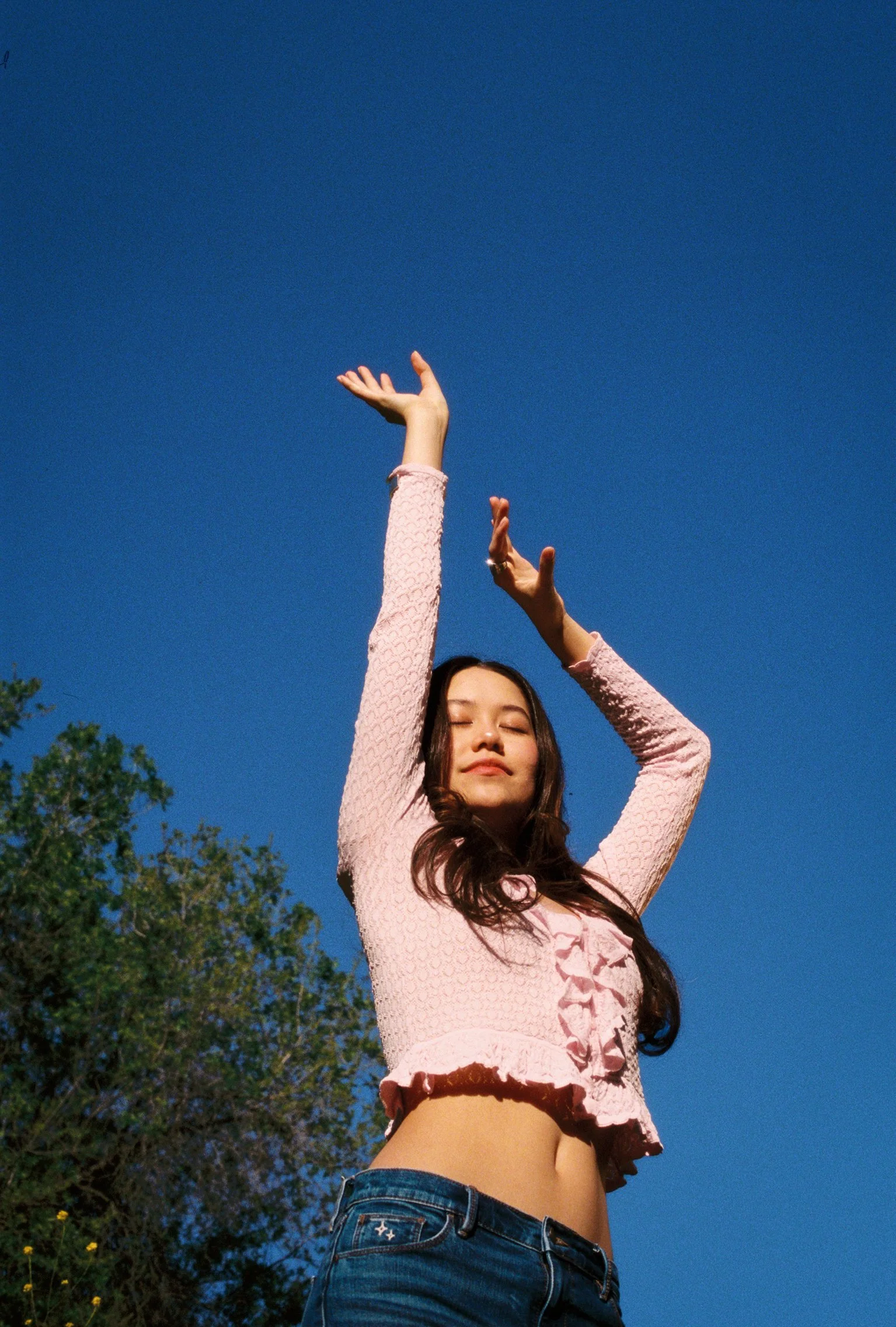
Cariann: And your music! Do you have new music coming out? What’s the tea there?
Trinity: Yes! I released my second single of this era almost two weeks ago. I have a song coming Friday, February 11th, called I Like Like You. And you’re the first person I’m telling that to! But it’s about time.
I’m just diving into when the crush becomes all too consuming and you let it consume you for the plot and for the fun of it. I talked to you about how much I love bringing in the cinematic side and how these songs are all a story. So, my first single, You Make Me Want to Dance, was the party — when this person really made me want to dance and go for it. Chemistry was the moment before You Make Me Want to Dance when I was still caught up in overthinking. I Like Like You is the moment after the party and all of those emotions and the turmoil that I enjoy.
Cariann: It’s the New Year’s Day of the saga.
Trinity: Yes! Seriously! And there’s only more to come.
Cariann: Oh, I’m so excited! I cannot wait. Also, when I was listening to your music, I have to tell you, it’s made for romcoms. So, like, you’re already on your way there.
Trinity: Thank you! Oh my gosh, that would be a dream.
Cariann: I'm keeping my fingers crossed for that. I can't wait for the new song. And just thank you for being so generous and gracious and kind. It was so lovely to meet you.
Trinity: So lovely to meet you. I really enjoyed talking to you.
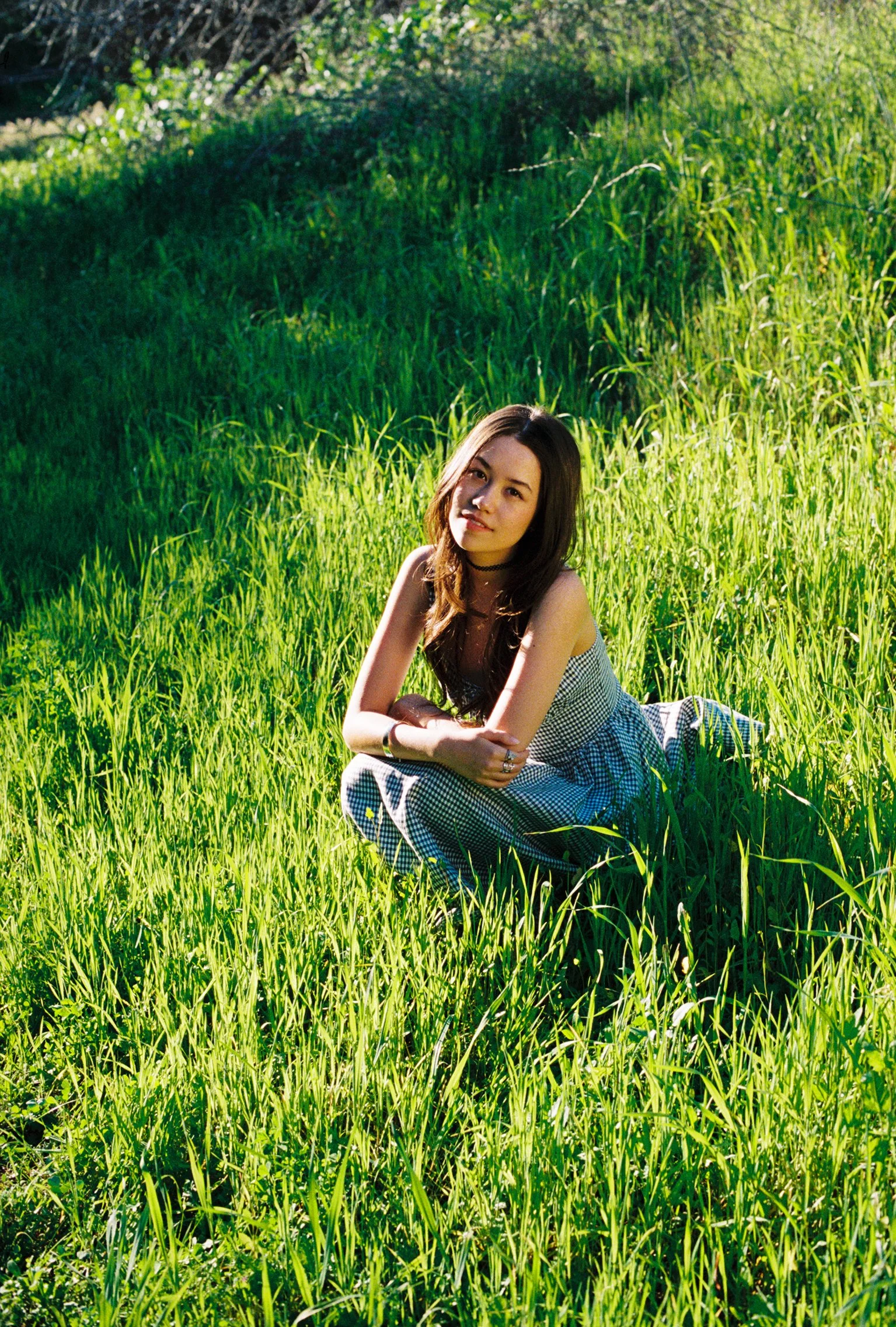
This conversation has been condensed and edited for clarity.
Interview By Cariann Bradley | edited by Kass Ringo | design by Madeline Westfall | Photos By DIMitrI TZOYTZOYROKOS